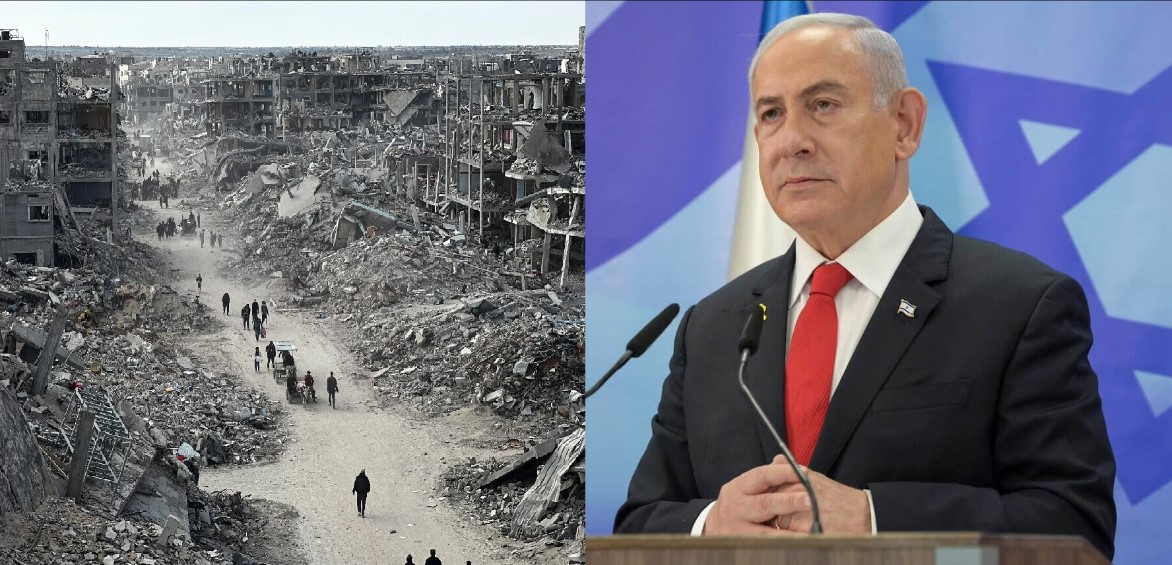
JERUSALEM : Israeli Prime Minister Benjamin Netanyahu on Tuesday set out Israel’s position on the post-war future of the Gaza Strip, rejecting proposals for foreign troop deployments, opposing any move toward Palestinian statehood, and stating that reconstruction would not proceed until the territory is fully demilitarized.
Netanyahu spoke at a press conference in Jerusalem after the Israeli military confirmed the recovery of the remains of Master Sgt. Ran Gvili, the last Israeli hostage held in Gaza. With the hostage issue declared closed following the return of all 251 captives, living and deceased, the prime minister said Israel was entering what he described as the next phase of the conflict.
Focus on Demilitarization
According to Netanyahu, Israel’s primary objective is the dismantling of Hamas’s military capabilities, including its weapons stockpiles and underground tunnel network. He said this goal would be a prerequisite for any further political or economic steps related to Gaza.
Netanyahu rejected the idea that reconstruction could begin alongside ceasefire arrangements, stating that rebuilding efforts would only be considered after complete demilitarization. He said Israel would pursue this objective through continued military pressure if necessary.
Rejection of Foreign Military Presence
The prime minister also addressed reports that foreign forces could play a role in stabilizing Gaza after the war. He dismissed suggestions that Turkey or Qatar might contribute troops to an international force or peacekeeping mission in the territory.
Netanyahu said Israel would not accept military involvement from countries it views as having close political or financial ties to Hamas. His remarks came amid reports of discussions between Israeli and U.S. officials over post-war governance frameworks, including proposals for an international administrative body to oversee Gaza.
Israeli officials have expressed concern that the inclusion of Ankara or Doha in such arrangements could undermine Israel’s security objectives. Netanyahu’s public comments appeared intended to establish clear limits on acceptable foreign involvement.
Position on Palestinian Statehood
Netanyahu reiterated his longstanding opposition to the establishment of a Palestinian state, including any sovereign entity in Gaza. He said Israel would maintain security control over the area between the Jordan River and the Mediterranean Sea, explicitly including the Gaza Strip.
He framed this position as a core element of Israel’s security doctrine and said it would not change under international pressure.
Relations with Washington
The remarks also highlighted areas of tension between Jerusalem and Washington. While Netanyahu said he shares the U.S. administration’s stated goal of a demilitarized Gaza, he rejected elements of U.S.-backed proposals that involve broader international participation.
Netanyahu additionally criticized the previous U.S. administration, alleging that restrictions on arms transfers had led to ammunition shortages during the war. He claimed these shortages contributed to Israeli military casualties, an assertion that has been disputed in the past and is likely to draw renewed scrutiny.
Next Steps
With hostage recovery operations concluded, Netanyahu said Israel’s remaining military missions are focused on eliminating Hamas’s armed capabilities and preventing Gaza from being rearmed in the future. He acknowledged domestic and international pressure to move toward a political settlement but said his government would prioritize security considerations.
No timeline was provided for the completion of demilitarization or for any future arrangements regarding Gaza’s governance or reconstruction.
——— End of Article ———