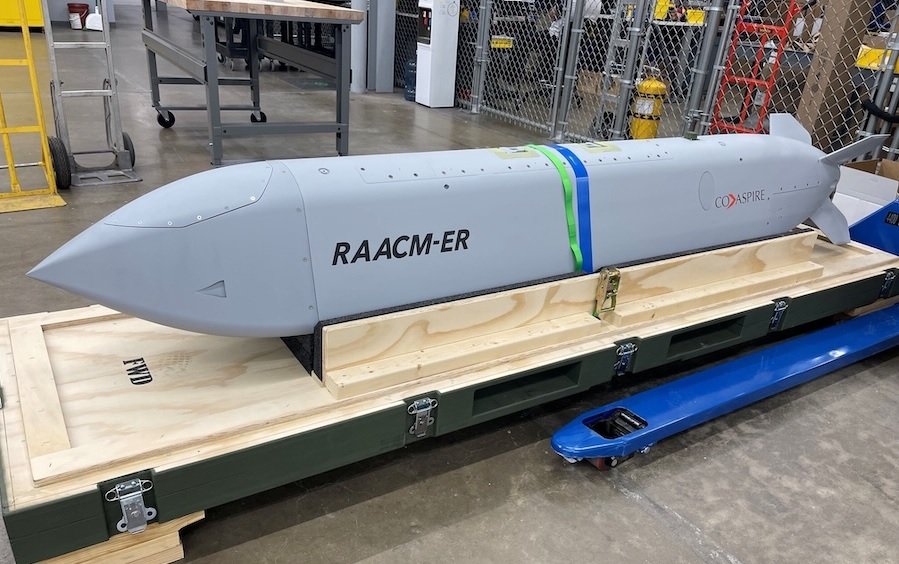
PATUXENT RIVER, Md. : The U.S. Naval Air Systems Command (NAVAIR) has issued a Request for Information (RFI) to identify industry sources capable of developing and producing a next-generation extended-range anti-radiation missile under the Advanced Emission Suppression Missile (AESM) – Enhanced Capabilities program. The effort is being managed by the Program Executive Office for Unmanned Aviation and Strike Weapons (PEO U&W).
The solicitation outlines the Navy’s requirement for a weapon system that surpasses the standoff range of current anti-radiation missiles fielded by the U.S. Navy and U.S. Air Force. The new munition is intended to address evolving threat environments, particularly modern integrated air defense systems and advanced radar networks.
Production Targets and Acquisition Timeline
According to the RFI, NAVAIR projects a potential production demand of up to 300 All-Up-Rounds (AURs) annually. To support operational timelines, the command has established an accelerated acquisition schedule, requiring that the weapon system be fieldable within two years of program initiation.
To meet this timeline, respondents must demonstrate that the foundational technologies supporting the proposed system are at a Technology Readiness Level (TRL) of 7 or higher. This indicates that system prototypes must already have been demonstrated in an operational environment.
Platform Compatibility and Open Architecture Requirements
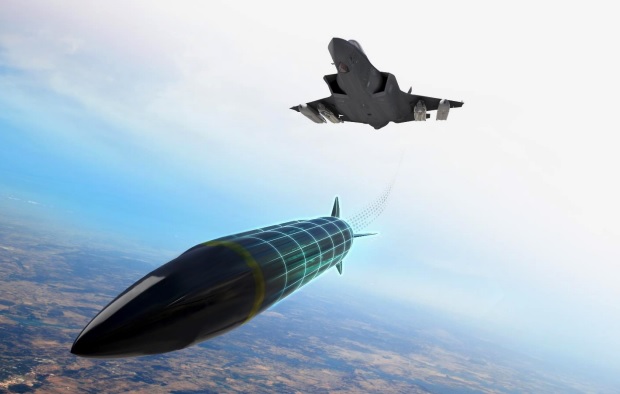
The RFI places significant emphasis on integration with existing U.S. tactical aircraft. The missile must be fully compatible with the F/A-18 family of aircraft, including the F/A-18E/F Super Hornet and the EA-18G Growler, as well as the F-35 Lightning II.
To ensure seamless integration across platforms, the weapon must employ a Weapons Open System Architecture (WOSA). Hardware and software components must comply with MIL-STD-1760 aircraft interface standards, which govern electrical, mechanical, and data interface requirements between aircraft and stores. Additionally, the system must incorporate Universal Armament Interface (UAI) connectivity, enabling compatibility with current and future aircraft without extensive airframe modifications.
Navigation and Guidance in Contested Environments
The RFI specifies detailed navigation and guidance requirements to enable operations in contested, denied, or degraded electromagnetic environments. The missile’s primary navigation suite must combine an Inertial Navigation System (INS) with M-Code GPS capability.
The GPS component must incorporate integrated anti-jam features to maintain performance in electronically contested conditions. In addition, the missile must include an alternative navigation source to provide redundancy in the event of GPS disruption or denial. The RFI does not specify the exact nature of this alternative navigation method.
Multi-Domain Engagement Capability
In addition to traditional air-to-ground anti-radiation roles, the new missile must support multi-domain engagement capability. The system is required to engage both air-to-ground and air-to-air targets.
To fulfill this requirement, the weapon must incorporate an advanced seeker with broad frequency coverage capable of detecting and targeting modern radar systems across multiple operational domains. This expands the missile’s mission set beyond conventional Suppression of Enemy Air Defenses (SEAD) and Destruction of Enemy Air Defenses (DEAD) profiles.
Electronic Counter-Countermeasures and Threat Defeat
The RFI outlines comprehensive survivability and countermeasure requirements. The missile must incorporate robust Electronic Counter-Countermeasures (ECCM) capabilities to maintain effectiveness against advanced defensive systems.
Specifically, the weapon must be capable of recognizing and defeating:
-
Active radar jamming
-
Chaff and flares
-
Anti-anti-radiation missile (anti-ARM) techniques, including emitter shutdown tactics and the use of decoys
These requirements are intended to ensure a high probability of kill against sophisticated air defense systems employing evasive or deceptive countermeasures.
Logistics, Reliability, and Sustainment
NAVAIR’s RFI also establishes clear logistical and sustainment criteria. The missile must maintain high operational availability while minimizing maintenance requirements.
A key reliability benchmark specifies that the munition must achieve a storage reliability rate of 0.9 or greater after 15 years in inventory. This requirement reflects long-term sustainment planning and lifecycle cost considerations.
Security, Cyber Compliance, and Export Considerations
Prospective vendors must comply with current Department of Defense security and cybersecurity regulations. This includes adherence to the Cybersecurity Maturation Model Certification (CMMC) framework. Contractors must also be capable of maintaining SECRET-level Facility and Personnel clearances.
In addition to domestic requirements, NAVAIR is evaluating the system’s international market potential. Respondents must indicate whether an exportable configuration is currently available. If not, vendors are required to outline the engineering modifications and security measures necessary to develop a version suitable for Foreign Military Sales (FMS).
Industry Engagement Phase
As an RFI, the solicitation represents a market research effort and does not constitute a formal request for proposals. NAVAIR is seeking detailed industry feedback regarding technical maturity, production capacity, integration pathways, and export viability.
The AESM – Enhanced Capabilities initiative reflects the Navy’s objective to field an extended-range, open-architecture, multi-role anti-radiation missile capable of operating in contested electromagnetic environments while remaining compatible with current and future U.S. tactical aircraft fleets.
——— End of Article ———