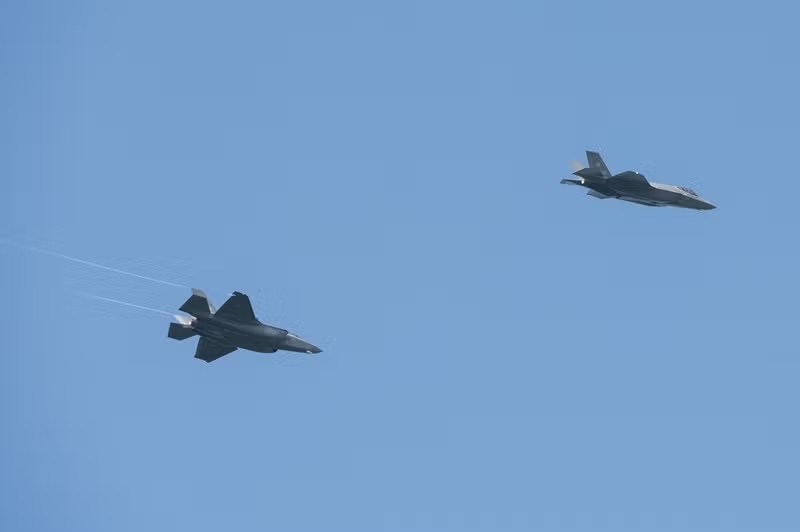
ÄMARI AIR BASE, Estonia — April 4, 2026 : NATO has formally concluded the Italian Air Force’s deployment to Ämari Air Base, ending two consecutive rotations under the Baltic Air Policing (BAP) mission, as operational responsibility transitions to the Portuguese Air Force for the next four-month cycle.
The Italian contingent operated under Operation Baltic Eagle III as part of NATO’s Enhanced Air Policing and Eastern Sentry Vigilance Activities, maintaining continuous airspace security along the Alliance’s eastern flank. The deployment, which began on August 1, 2025, involved a combined force of approximately 800 personnel and multiple advanced air and ground-based defense assets.
Deployment Composition and Assets
The Italian Air Force initially deployed F-35A Lightning II aircraft from the 32nd Wing at Amendola and the 6th Wing at Ghedi. These were later replaced by Eurofighter Typhoon multirole fighters drawn from four wings: the 4th Wing (Grosseto), 36th Wing (Gioia del Colle), 37th Wing (Trapani), and 51st Wing (Istrana).
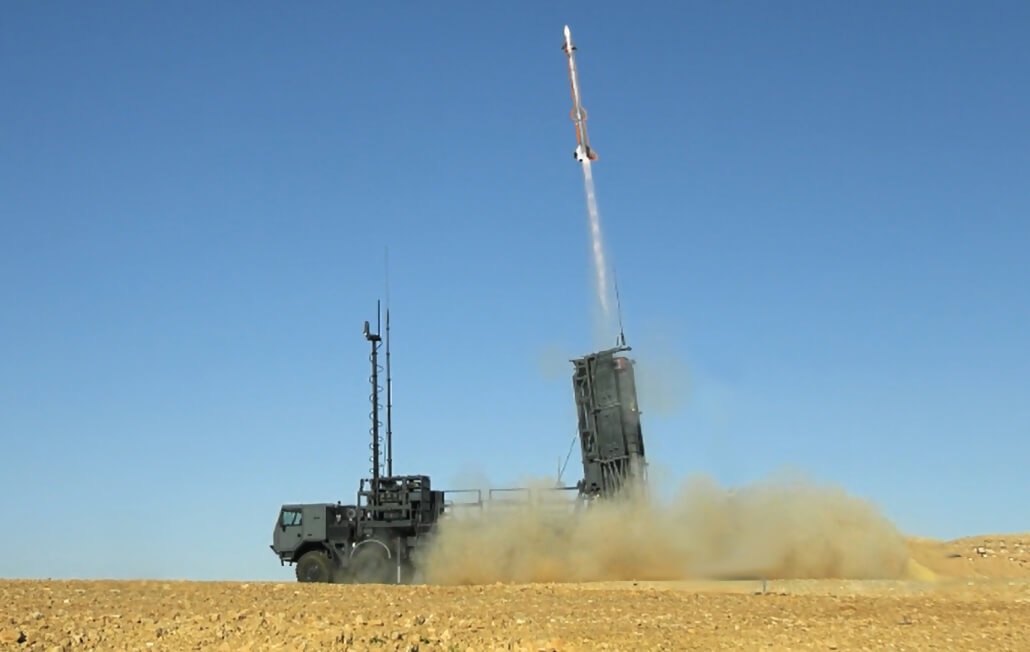
In addition to fighter aircraft, the deployment included the Gulfstream G550 CAEW (Conformal Airborne Early Warning) platform, providing airborne command and control capabilities. On the ground, an Italian Army SAMP/T air defense system was integrated into NATO’s Integrated Air and Missile Defence (IAMD) architecture, ensuring layered protection and coordination between air and land-based assets.
Operational Activity and Air Policing Performance
Throughout the mission, Italian aircraft maintained a 24/7 Quick Reaction Alert (QRA) posture, enabling rapid response to unidentified or uncoordinated aircraft approaching NATO airspace.
During the deployment, the Italian detachment recorded more than 1,300 flight hours across operational and training sorties. Pilots conducted over 40 Alpha Scrambles, responding to potential airspace incursions and irregular aerial activity.
In total, more than 60 aircraft were intercepted. A notable incident occurred on March 18, 2026, when Italian Eurofighter Typhoons intercepted a Russian Navy Su-30SM multirole fighter that briefly violated Estonian airspace near Vaindloo Island.
The mission also contributed to four Flexible Deterrence Options (FDOs), integrating Italian assets into NATO’s broader command and control framework and enhancing coordination with Allied forces.
Multinational Training and Integration
Operating within the Eastern Sentry framework launched in late 2025, the Italian deployment emphasized interoperability with NATO partners and regional forces. Personnel participated in multiple joint exercises and training activities designed to strengthen coordination across domains.
Exercise Furious Wolf focused on integrating air operations with Joint Terminal Attack Controllers (JTACs), improving coordination between air and ground units. Italian aircraft also conducted close air support (CAS) training with Latvian land forces.
Air-to-air training missions were carried out alongside Spanish, Portuguese, and Finnish aircraft to refine joint operational procedures. Additionally, the Italian contingent participated in counter-unmanned aerial systems (C-UAS) training, conducting defensive operations against Estonian drone systems to address evolving UAV threats.
Support to the host nation included JTAC-related activities and community engagement initiatives, further strengthening cooperation with Estonian forces.
Command Remarks and Mission Assessment
Colonel Fabio De Michele, commander of the Italian Air Force detachment, stated that the unit fulfilled its assigned objectives in safeguarding Baltic airspace. He highlighted that sustained operations in a complex operational environment demonstrated effective coordination between Italian Air Force and Army personnel, as well as strong cooperation with Estonian counterparts.
Estonian Minister of Defense Hanno Pevkur acknowledged the Italian contribution, noting that their performance during challenging operational conditions reinforced NATO’s deterrence posture in the region.
Transition to Portuguese Air Force
Following the formal handover ceremony on March 31, the Portuguese Air Force has assumed responsibility for the mission at Ämari Air Base. Portugal has deployed F-16 fighter aircraft to maintain uninterrupted Quick Reaction Alert coverage.
This rotation marks Portugal’s second deployment to Ämari and its ninth participation in the Baltic Air Policing mission since its establishment in 2004.
Continuity of NATO Air Policing Mission
The Baltic Air Policing mission provides continuous protection of the airspace over Estonia, Latvia, and Lithuania, which do not operate their own fighter aircraft fleets. NATO officials stated that regular rotations of Allied air units ensure a persistent and adaptable air defense posture in the region.
The conclusion of the Italian deployment and seamless transition to Portuguese forces reflects NATO’s ongoing implementation of its integrated air and missile defense strategy, maintaining operational readiness and coordination across Allied nations.
——— End of Article ———