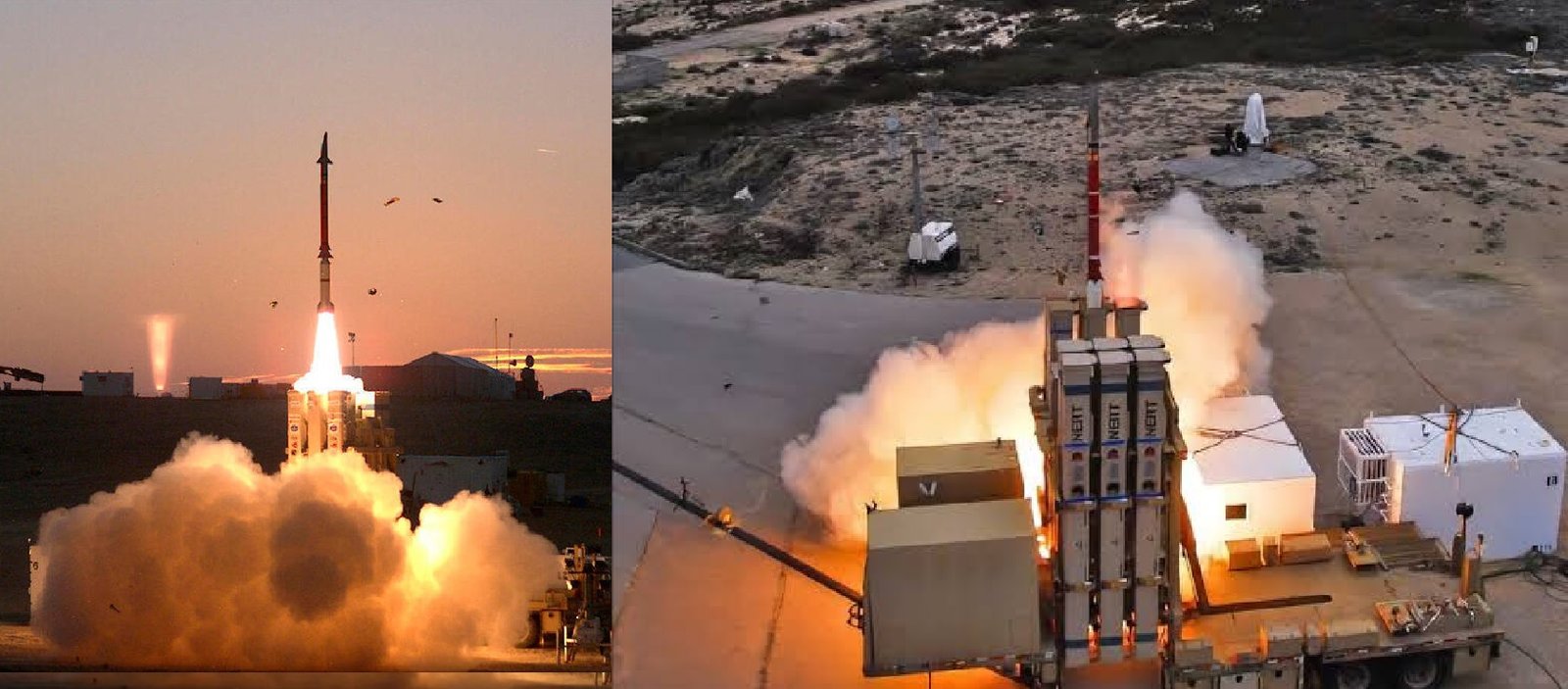
Jerusalem, — Israel has upgraded its David’s Sling air defense system to intercept a wider range of ballistic missiles and drones, extending its role in defending against Iranian missile attacks. The improvements are also intended to help Israel sustain weeks of continuous attacks while reducing reliance on more expensive interceptors.
According to a Bloomberg report, the upgraded system has an extended interception range and improved capabilities against different ballistic threats. An Israeli Air Force official responsible for air defense investigations said recent fighting with Iran provided operational data that helped engineers improve the system.
Lower Interceptor Costs
David’s Sling uses the Stunner interceptor, jointly developed by Israel's Rafael Advanced Defense Systems and US-based RTX (formerly Raytheon).
Each Stunner interceptor costs approximately $1 million, compared with more than $4 million for a US-made Patriot PAC-3 interceptor. An Arrow 3 interceptor costs approximately $2.5 million to $3 million.
The lower reported cost could help Israel manage large missile barrages while preserving its more expensive Arrow interceptors for longer-range and more advanced ballistic threats. However, the systems have different capabilities and are not direct substitutes in every engagement.
Role in Israel's Air Defense Network
David’s Sling forms the middle layer of Israel's multi-tier air defense network. It operates between Iron Dome, which primarily handles shorter-range rockets, and the Arrow 2 and Arrow 3 systems, which are designed to intercept longer-range ballistic missiles.
The system was jointly developed by Rafael and RTX, with cooperation from the US Missile Defense Agency. Its Stunner interceptor uses a hit-to-kill approach, destroying incoming threats through direct impact rather than relying on a conventional explosive warhead.
Combat Experience Led to Upgrades
David’s Sling was first used against Iranian long-range ballistic missiles during the June 2025 conflict, when it successfully intercepted several missiles launched from approximately 1,500 kilometres away.
The system was also used extensively during the 40-day conflict in 2026. However, some Iranian missiles penetrated Israel's air defenses. On March 21, 2026, interceptors failed to stop incoming missiles during attacks on the southern cities of Arad and Dimona.
The combat experience provided valuable operational data for further improvements. In February 2026, Israel's Missile Defense Organization and the US Missile Defense Agency announced the successful completion of a series of complex David’s Sling tests based on lessons from recent fighting.
Iran's Missile Arsenal and Interceptor Supply Pressure
The upgrade comes as Israel and the United States face pressure to replenish their air defense interceptor stocks. Conflicts in the Middle East and Ukraine have increased demand for advanced missile defense weapons, while production of systems such as the Patriot PAC-3 faces challenges in meeting international requirements.
Western intelligence assessments cited by Bloomberg estimate that Iran still possesses at least 1,700 ballistic missiles and produces approximately 50 additional missiles each month.
This creates a major cost and supply challenge for countries defending against repeated missile attacks. Using expensive interceptors against every incoming threat can quickly reduce available stocks.
The United States is also facing growing demand for Patriot missiles. Ukrainian President Volodymyr Zelenskyy has said Ukraine needs approximately 350 PAC-3 interceptors per month to defend against Russian attacks.
Growing International Interest
David’s Sling has also attracted international customers. Finland and Greece have ordered the system, while Germany has purchased Israel's Arrow 3 air defense system.
The latest upgrades are intended to give Israel more options when responding to large missile attacks. By assigning a wider range of threats to David’s Sling, the Israeli military can preserve its more expensive long-range interceptors for targets that require them.
——— End of Article ———