WASHINGTON : NASA has selected two U.S. commercial aerospace companies to carry out detailed studies on how existing privately developed vehicles could be adapted to support sustained hypersonic flight research, marking a further step in the agency’s effort to move critical technologies from laboratories into operational flight environments.
The agency announced that it has awarded contracts to Stratolaunch and SpaceWorks Enterprises under its Hypersonic Technology Project, which is managed within NASA’s Advanced Air Vehicles Program. The work is intended to address a long-standing challenge in hypersonics: the limited availability of affordable, reusable flight platforms capable of reaching speeds above Mach 5.
NASA officials said the studies are designed to close the gap between ground-based testing, such as wind tunnels and computational modeling, and full-scale experimental flight programs that are costly and infrequent. Hypersonic flight is generally defined as travel at speeds of Mach 5 or greater, equivalent to roughly 3,800 miles per hour at altitude.
Focus On Air-Breathing Hypersonic Systems
Historically, hypersonic speeds have been achieved primarily by rockets and missile systems, which carry both fuel and oxidizer onboard. While effective for short-duration missions, those systems are not well suited to reusable aircraft concepts. NASA’s current research emphasis is on air-breathing hypersonic propulsion, including advanced ramjet and scramjet configurations that draw oxygen from the atmosphere rather than relying on onboard oxidizers.
According to NASA, air-breathing designs could enable longer flight durations, lower vehicle mass, and repeated operations from conventional runways. These characteristics are seen as essential for future scientific, defense-related, and potential commercial applications.
“With these awards, NASA will collaborate with the commercial hypersonics industry to identify new ways to evaluate technologies through flight tests while addressing the challenges of reusable, routine, air-breathing hypersonic flight,” said Dr. Nateri Madavan, director of NASA’s Advanced Air Vehicles Program.
Details Of The Awarded Studies
The contracts, awarded in August, fund six-month feasibility studies rather than immediate flight testing. Each company is tasked with examining how its existing vehicle designs could be modified to host NASA research payloads, sensors, and experimental hardware, as well as how those platforms could be integrated into NASA’s broader test and evaluation framework.
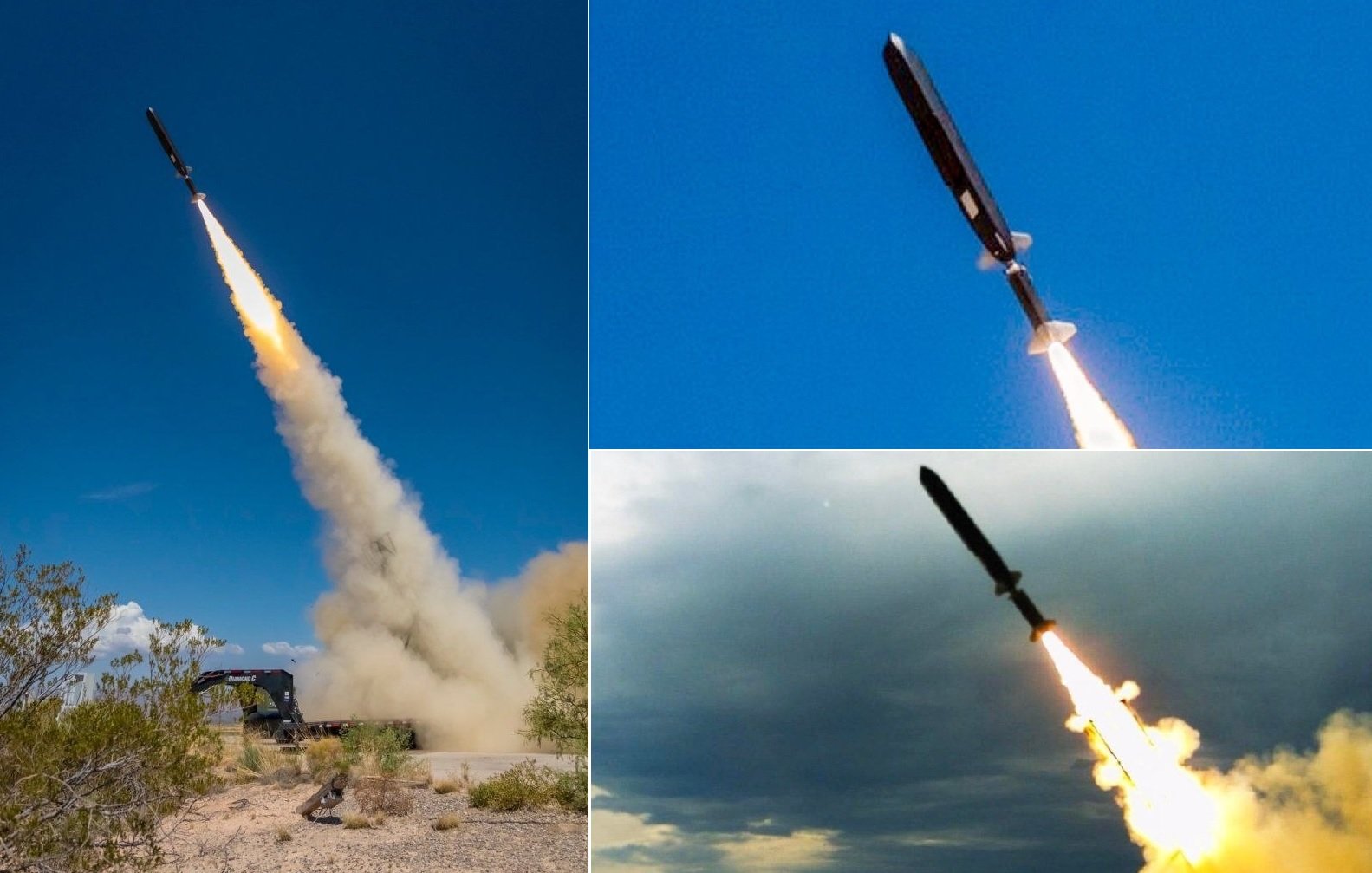
Stratolaunch received approximately $1.2 million to study the potential use of its Talon-A vehicle as a hypersonic testbed. Talon-A is a reusable, autonomous vehicle designed to be air-launched from the company’s Roc carrier aircraft, currently the world’s largest airplane by wingspan. After release at high altitude, Talon-A is intended to accelerate to hypersonic speeds, conduct its test mission, and then glide back for a conventional runway landing. NASA officials have highlighted the vehicle’s reusability and runway recovery as key advantages for frequent data collection.
SpaceWorks Enterprises was awarded roughly $500,000 to evaluate modifications to its X-60 platform. The X-60 was originally developed as an aerial target and experimental vehicle capable of carrying instrumentation for high-speed flight research. Under the NASA study, SpaceWorks will assess how the platform could be adapted to support repeated hypersonic test flights and generate high-rate aerodynamic, thermal, and structural data.
Data Collection And Research Objectives
NASA said the studies will examine a wide range of technical and operational factors, including achievable flight envelopes, payload capacity, thermal protection requirements, flight safety considerations, and overall cost per mission. The agency is particularly interested in gathering data that can be difficult or impossible to obtain in wind tunnels, such as real-world boundary layer behavior, high-temperature material performance, and integrated propulsion–airframe interactions at hypersonic speeds.
The information collected during these studies will be used to inform future decisions on flight test campaigns and infrastructure investments. NASA emphasized that the work does not commit the agency to a specific vehicle or vendor but is intended to expand the range of viable options for hypersonic experimentation.
Role Within NASA’s Long-Term Strategy
The results are also expected to support planning for NASA’s proposed Making Advancements in Commercial Hypersonics (MACH) initiative. The MACH concept envisions a structured framework for routine hypersonic flight testing using commercial platforms, standardized payload interfaces, and predictable scheduling. By relying on commercially developed vehicles, NASA aims to reduce the need to design and build unique experimental aircraft, often referred to as X-planes, for each new research effort.
NASA officials said such an approach could significantly lower costs and increase testing frequency, enabling faster technology maturation. It would also align with broader federal policy goals that encourage public-private partnerships in advanced aerospace development.
While commercial hypersonic passenger travel remains a long-term prospect, NASA noted that the immediate focus of the program is research and technology validation. Applications include improved thermal protection systems, more efficient propulsion concepts, advanced guidance and control, and materials capable of withstanding repeated exposure to extreme temperatures and stresses.
The agency said it will review the findings from both studies later this year before determining next steps, which could include follow-on contracts or flight demonstration opportunities.
——— End of Article ———