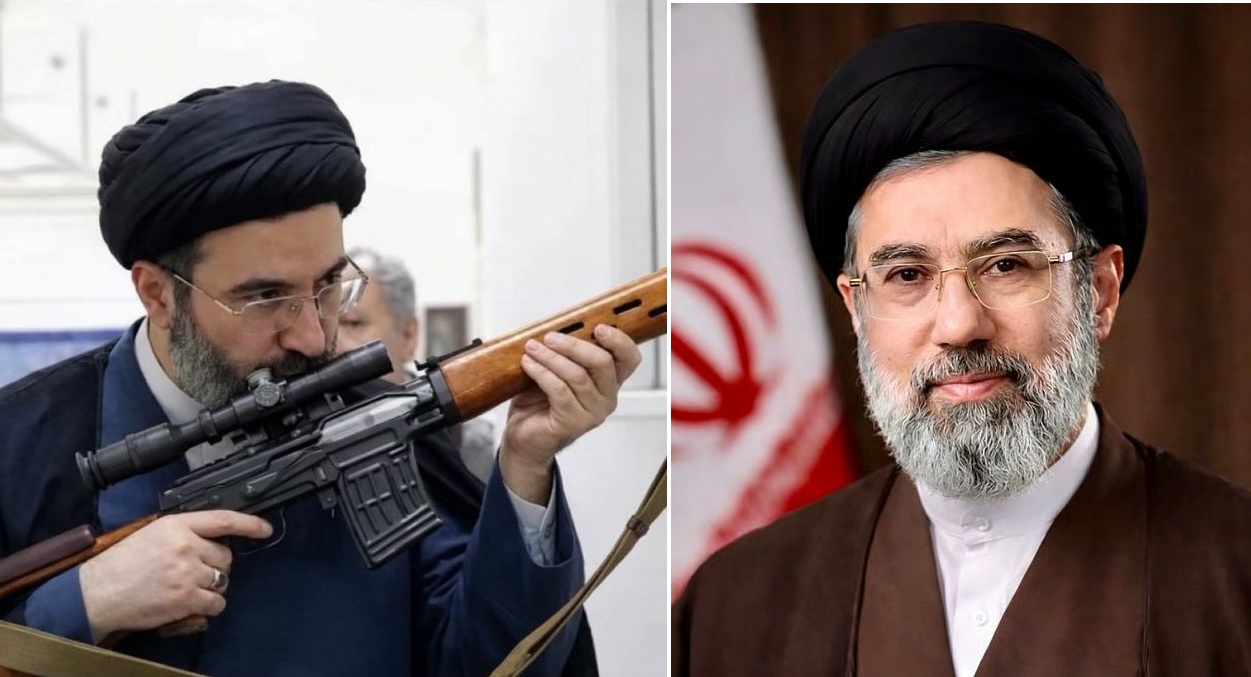
TEHRAN — March 9, 2026 : Iran’s Assembly of Experts has formally appointed Mojtaba Khamenei as the third Supreme Leader of the Islamic Republic, succeeding his father Ali Khamenei, who was killed in a U.S.–Israeli strike on February 28 during the opening phase of the current regional conflict.
The decision was confirmed during an extraordinary session of the 88-member clerical body on Monday in Tehran. The Assembly of Experts is constitutionally responsible for selecting and supervising Iran’s Supreme Leader. Iranian state media reported that senior political and military officials quickly pledged allegiance following the announcement.
Leadership Transition Amid Wartime Conditions
Mojtaba Khamenei, 56, assumes the highest political and religious authority in Iran at a time of ongoing military confrontation involving Iran, the United States, and Israel. His appointment follows the death of his father during airstrikes targeting Iranian military installations and security compounds.
Shortly after the selection was confirmed, the Islamic Revolutionary Guard Corps (IRGC) issued a statement pledging full loyalty to the new leader and affirming its “complete obedience and self-sacrifice” under his authority. Commanders of the Iranian armed forces and other senior officials also publicly recognized the transition.
Iranian officials indicated that the selection process followed constitutional procedures and internal consultations within the Assembly of Experts. According to clerical sources cited in Iranian media, the choice reflected the leadership’s assessment of continuity in national security and foreign policy during the ongoing conflict.
Background and Education
Born on September 8, 1969, in the northeastern city of Mashhad, Mojtaba Khamenei is the second of six children of Ali Khamenei. He completed his secondary education at the Alavi School in Tehran before pursuing advanced religious studies in the seminary city of Qom beginning in 1999.
He holds the clerical rank of hojatoleslam, placing him among mid-ranking Shiite clerics. Unlike many senior figures within the Islamic Republic, Mojtaba Khamenei has never held a formal government office and has rarely appeared in public or delivered speeches.
Despite the absence of an official position, analysts have long described him as an influential figure operating behind the scenes in Iranian political and security circles. He is widely believed to have maintained close relationships with senior commanders of the Islamic Revolutionary Guard Corps and other security institutions.
Mojtaba Khamenei also briefly served in the military during the Iran-Iraq War while still a teenager.
Personal Losses in February Strike
The leadership transition follows a series of personal losses for the new Supreme Leader during the February 28 strike on his father’s compound in Tehran. The attack, which occurred on the first day of the ongoing conflict, killed Ali Khamenei and several members of the family.
Among those reported killed were Mojtaba Khamenei’s mother, Mansoureh Khojasteh Bagherzadeh, who died from wounds sustained during the bombing, and his wife, Zahra Haddad Adel. One of his sons was also reported killed in the strike, along with other relatives including a sister and a niece.
Iranian sources stated that Mojtaba Khamenei survived the attack.
Long-Standing Succession Speculation
For more than two decades, Mojtaba Khamenei had been viewed by political observers as a potential successor to his father. Reports from analysts and diplomatic sources frequently cited his connections to security institutions and his influence within conservative clerical networks.
According to Mohsen Heydari Alekasir, members of the Assembly of Experts considered the strategic environment facing Iran when evaluating candidates. He stated that one of the factors in selecting the new leader was the expectation that Iran’s adversaries would strongly oppose the choice.
Foreign policy analysts have suggested that Mojtaba Khamenei may adopt policies similar to or more hard-line than those of his predecessor, particularly in relation to the United States and Western governments.
International Reaction
The appointment prompted immediate reactions from foreign governments. U.S. President Donald Trump publicly criticized the selection, describing Mojtaba Khamenei as an unacceptable choice and stating that Iran’s leadership would face continued pressure without changes in policy.
Iranian officials rejected the remarks, reiterating that the leadership transition was an internal constitutional matter without external involvement.
Meanwhile, Russia expressed support for the succession process, while China stated its opposition to any attempt to target Iran’s new leader.
Ongoing Conflict and Economic Pressure
Mojtaba Khamenei assumes leadership during the second week of the ongoing regional conflict. Iranian forces have launched retaliatory strikes against Israel and targets in several Gulf states since the beginning of hostilities.
The conflict has also affected global energy markets, with oil prices rising above $100 per barrel amid concerns over regional stability and potential disruptions to supply.
Domestically, Iran continues to face economic pressure and political tensions, factors that analysts say will shape the early phase of Mojtaba Khamenei’s leadership.
Next Steps for the New Leadership
As of Monday evening, Mojtaba Khamenei had not appeared publicly since the February 28 strike. Iranian state television broadcast images of gatherings in multiple cities where supporters carried portraits of Ali Khamenei and expressed support for the leadership transition.
Iranian authorities have not announced a timeline for formal inauguration ceremonies or policy addresses. Officials stated that the new Supreme Leader will continue overseeing national security and foreign policy decisions in accordance with the framework established by the Islamic Republic’s constitution.
——— End of Article ———