PARIS — March26, 2026 : European missile manufacturer MBDA has announced a major industrial expansion plan, committing €5 billion in investments between 2026 and 2030 while significantly increasing missile production capacity following record financial results in 2025. The company outlined its strategy during its annual results presentation, where Chief Executive Officer Éric Béranger detailed both operational growth and long-term restructuring aimed at meeting sustained global demand for air defense and strike systems.
The expansion comes amid heightened demand driven by ongoing conflicts in Ukraine and the Middle East, as well as renewed European defense spending after years of reduced investment in air-defense capabilities by several countries, including Denmark and Belgium.
Record Financial Performance in 2025
MBDA reported strong financial growth across key indicators for 2025. Revenues increased to €5.8 billion, up from €4.9 billion in 2024, while order intake reached €13.2 billion compared with €13.8 billion the previous year. The company’s order backlog rose to a record €44.4 billion by the end of December, up from €37 billion a year earlier.
European customers accounted for approximately 70 percent of total orders, reflecting the region’s accelerated rearmament efforts. MBDA, jointly owned by Airbus and BAE Systems (each holding 37.5 percent) and Leonardo (25 percent), operates across France, the United Kingdom, Italy, and Germany with an integrated industrial structure.
Workforce Expansion and Industrial Investment
To support rising demand, MBDA plans to recruit 2,800 employees in 2026, adding to its existing workforce of approximately 20,000. The company has doubled its previously planned five-year investment program from €2.5 billion (2025–2029) to €5 billion for the 2026–2030 period.
The investment will focus on expanding production infrastructure, strengthening supply chains, and introducing specialized manufacturing systems for high-demand missile programs.
Production Ramp-Up and Manufacturing Changes
MBDA has already doubled its missile production between 2023 and the end of 2025, including a 33 percent increase in output in 2024 compared to 2023. For 2026, the company aims to increase overall missile production by 40 percent.
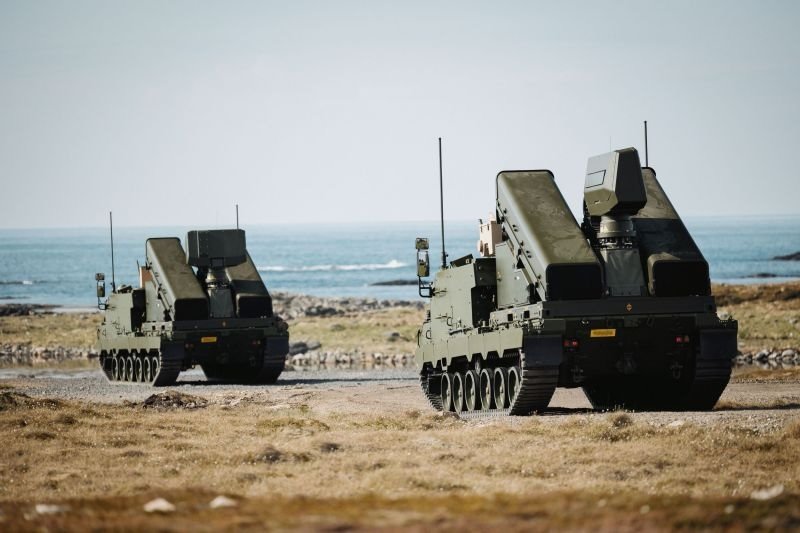
A central element of this expansion is the Aster missile program. MBDA plans to double Aster missile production in 2026 by introducing dedicated manufacturing lines and specialized machinery. Final assembly is currently conducted in France, while a second assembly line is being established in Italy.
Production facilities in Bourges and Selles-Saint-Denis in France, as well as Fusaro in Italy, are being expanded to support the increased output. The Aster missile forms the core of the SAMP/T air defense system, developed by the Eurosam consortium of MBDA and Thales. The system is regarded as Europe’s primary alternative to the U.S. Patriot system and is also deployed for naval air defense by the French, Italian, and British navies.
Increased Demand for MICA and Other Systems
Demand has also risen significantly for the MICA missile, which is used in both air-to-air and ground-based configurations. The system has been employed operationally by French Air Force Dassault Rafale fighters to intercept multiple Shahed-type drones during deployments supporting the United Arab Emirates, resulting in accelerated consumption of stockpiles.
MBDA’s broader product portfolio includes the Mistral missile, Meteor missile, SCALP-EG / Storm Shadow, and Exocet missile, all of which continue to see operational use and sustained demand.
Advanced Programs and Future Systems
MBDA is continuing development across several next-generation programs. The French-British Stratus missile program has completed its assessment phase and is moving toward full development. The program includes two systems: Stratus LO, a low-observable subsonic cruise missile intended to replace SCALP-EG/Storm Shadow, and Stratus RS, a high-supersonic missile designed to replace Exocet. Italy has joined as a partner in the Stratus LO component.
The missiles are being designed for multiple mission profiles, including deep strike, anti-ship operations, suppression and destruction of enemy air defenses (SEAD/DEAD), and engagement of high-value airborne targets such as airborne early warning aircraft.
In parallel, the MBDA-led HYDIS² program consortium, comprising 19 partners, has narrowed its work to two interceptor concepts, with a final selection expected by the end of the year.
Work is also progressing on remote carrier drones within the Future Combat Air System, in cooperation with Airbus and Spain’s Sener. MBDA indicated that development under this “Pillar 3” framework remains on track despite broader industrial disagreements within the FCAS program.
Expansion into Low-Cost and Rapid Deployment Systems
MBDA is increasing its focus on low-cost, mass-producible systems, including one-way effectors designed to counter large volumes of inexpensive drones. The company also highlighted its ability to rapidly adapt existing systems, citing a recent case where an air-to-air missile was modified for helicopter integration in less than 10 days for an undisclosed customer.
Export Discussions and International Cooperation
On the export front, MBDA confirmed ongoing discussions with Gulf countries regarding procurement of the SAMP/T system, conducted through both direct engagement and government-to-government channels. The company did not disclose the countries involved.
Additionally, MBDA is exploring partnerships with European nations beyond its core industrial base to enable localized production of certain missile systems, particularly to support large-scale manufacturing requirements.
Pricing and Industrial Constraints
Despite the expansion in production, CEO Éric Béranger stated that it remains unclear whether higher output will lead to reduced unit costs. Pricing will continue to depend on customer negotiations, while the company must also recover the costs associated with its expanded industrial investments.
He noted that MBDA was historically structured for lower production volumes and is now undergoing a transition toward sustained, higher-rate manufacturing supported by specialized equipment and an expanded supply chain.
——— End of Article ———