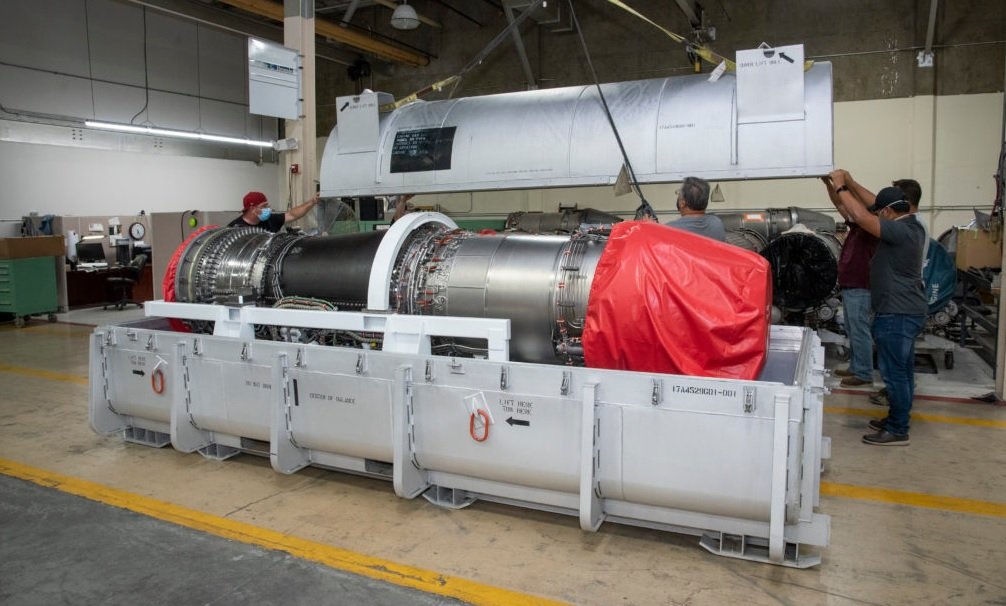
SYRACUSE, N.Y. : The U.S. Army has taken a significant step in its Air And Missile Defense Modernization Program with the delivery of the first Next-Generation Sentinel A4 Radar from Low-Rate Initial Production (LRIP) Lot 2, according to an announcement by Lockheed Martin. The delivery coincides with the completion of Phase I Of Initial Operational Test And Evaluation (IOT&E), advancing the program toward broader operational use and a future Full-Rate Production decision.
Program Milestone And Production Status
The Sentinel A4, formally designated AN/MPQ-64A4, is intended to replace the legacy Sentinel A3 Radar currently in service with the U.S. Army. The newly delivered unit is the first of 19 Radars procured under the LRIP Lot 2 Contract. These systems are being produced to support continued Operational Testing, Training, and Early Fielding as the Army transitions its Short-Range Air Defense Sensor Fleet.
Completion of IOT&E Phase I indicates that the radar has met initial Performance and Integration Benchmarks required to proceed with further testing. Additional phases of Operational Evaluation are planned to validate Reliability, Suitability, and Effectiveness under a broader range of operational conditions.
Technical Characteristics Of The Sentinel A4
The Sentinel A4 represents a comprehensive redesign of the Sentinel Radar Family. Unlike the mechanically scanned architecture of earlier variants, the A4 employs an Active Electronically Scanned Array (AESA) using Gallium Nitride (GaN) Technology. This design supports Faster Beam Steering, Improved Target Discrimination, and Higher Power Efficiency.
According to program data released by Lockheed Martin, the Sentinel A4 provides approximately a 175 Percent Increase In Detection Range and a 225 Percent Improvement In Sensitivity compared with the Sentinel A3. These enhancements allow earlier detection and continuous tracking of a wide range of Aerial Threats, including Unmanned Aircraft Systems, Cruise Missiles, and both Rotary- And Fixed-Wing Aircraft. The radar is also designed to operate in Dense Electromagnetic Environments and under Electronic Attack.
The system provides Full 360-Degree Coverage and is capable of Simultaneous Air Surveillance And Counter-Fire Missions. In addition to air targets, the radar can detect and track Rockets, Artillery, and Mortars, calculate Points Of Origin, and support Counter-Battery and Force Protection Operations.
Integration And Networked Operations
During IOT&E Phase I, the Sentinel A4 was integrated with the Forward Area Air Defense Command And Control (FAAD C2) System. This integration is central to the Army’s approach to Networked Air And Missile Defense, enabling the radar to share Real-Time Sensor Data across multiple Command-And-Control Nodes and Weapon Systems.
The Open-Architecture Design of the Sentinel A4 allows it to interface with Existing And Future Army Networks. This supports a Sensor-To-Shooter Construct in which Detection, Tracking, and Engagement Functions are distributed across a Connected Force rather than tied to a single platform.
Role In Future Air And Missile Defense
The Sentinel A4 is planned as a key sensor supporting the Army’s Indirect Fire Protection Capability (IFPC). In this role, it is intended to provide Persistent Surveillance and Targeting Data for the defense of Maneuver Forces and Fixed Sites, including Command Posts, Logistics Hubs, and Critical Infrastructure.
By combining Air Surveillance and Counter-Fire Functions in a single system, the radar is expected to reduce the number of sensors required in a defended area while improving overall Situational Awareness. Its enhanced performance is aligned with the Army’s requirements to address the growing availability of Low-Cost Drones, Cruise Missiles, and Precision Indirect-Fire Systems.
Next Steps And Fielding Outlook
Lockheed Martin stated that deliveries of the remaining 18 LRIP Lot 2 Radars will continue in line with the Army’s Testing And Fielding Schedule. These systems will be used to support additional Operational Tests, refine Employment Concepts, and train Air Defense Units.
Data gathered during the remaining IOT&E Phases will inform the Army’s decision on Full-Rate Production. If approved, full-rate production would lead to the gradual replacement of the Sentinel A3 Inventory with the Sentinel A4 across Army air defense units, completing a major element of the service’s Short-Range Air Defense Modernization Effort.
——— End of Article ———