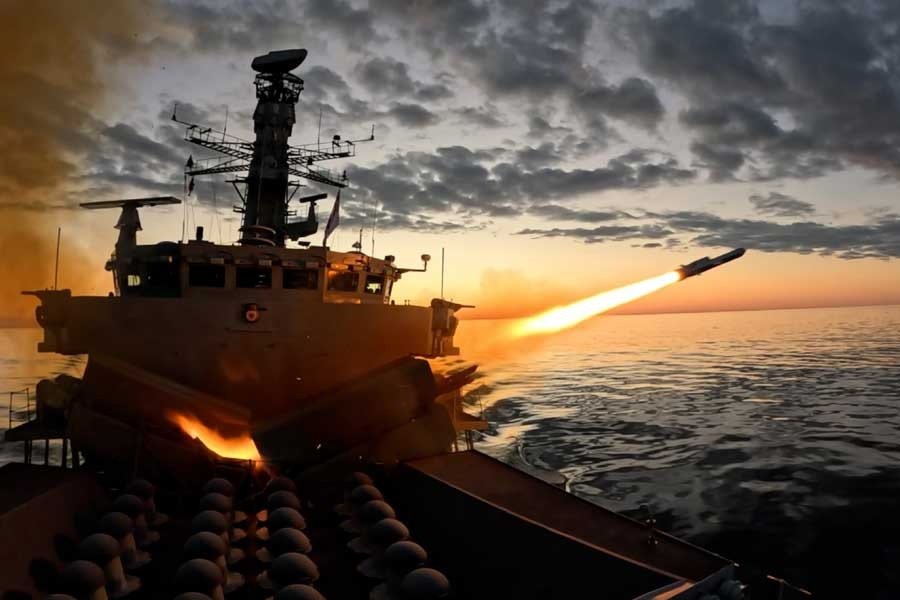
GRAND PRAIRIE, Texas — March 24, 2026 : Lockheed Martin has completed the first integrated live-fire and vertical-launch test of a HELLFIRE missile from its newly developed GRIZZLY containerized launcher, marking a key step in the development of a rapidly deployable, low-observable precision strike system.
The demonstration validated the system’s ability to load, target and vertically launch a missile directly from a standard 10-foot Tricon shipping container. According to the company, the test met all launch requirements and confirmed real-time trajectory performance, establishing baseline operational capability for the platform.
System Design and Development Approach
The GRIZZLY launcher has been developed using a combination of commercial off-the-shelf (COTS) materials and existing, field-proven weapon architectures. Central to the system is the integration of the M299 launcher, a widely deployed multi-platform launcher used across U.S. military rotary-wing aircraft, including the AH-64 Apache.
The M299 system supports both HELLFIRE and Joint Air-to-Ground Missile (JAGM) families and is capable of firing multiple missile variants in any sequence. It is designed to operate across a wide range of environmental conditions and is already fielded across U.S. Army, Navy and Air Force platforms, as well as with allied forces.
By leveraging this existing launcher architecture along with COTS components, Lockheed Martin completed the transition from concept to live-fire testing within six months. This accelerated development cycle reflects a design approach focused on reducing acquisition timelines, lowering production costs and minimizing logistical requirements compared to fully bespoke systems.
Test Outcomes and Technical Validation
The March 24 test campaign demonstrated several key system functions, including containerized loading, vertical launch execution and missile guidance performance. The launcher successfully executed a precision strike using a HELLFIRE missile, with telemetry confirming that trajectory parameters aligned with expected performance thresholds.
The use of a containerized configuration did not affect launch integrity or missile performance, indicating compatibility between the enclosed launch architecture and the missile system. Data collected during the tests will be used to support further refinement and incremental capability enhancements.
Operational Characteristics and Deployment Model
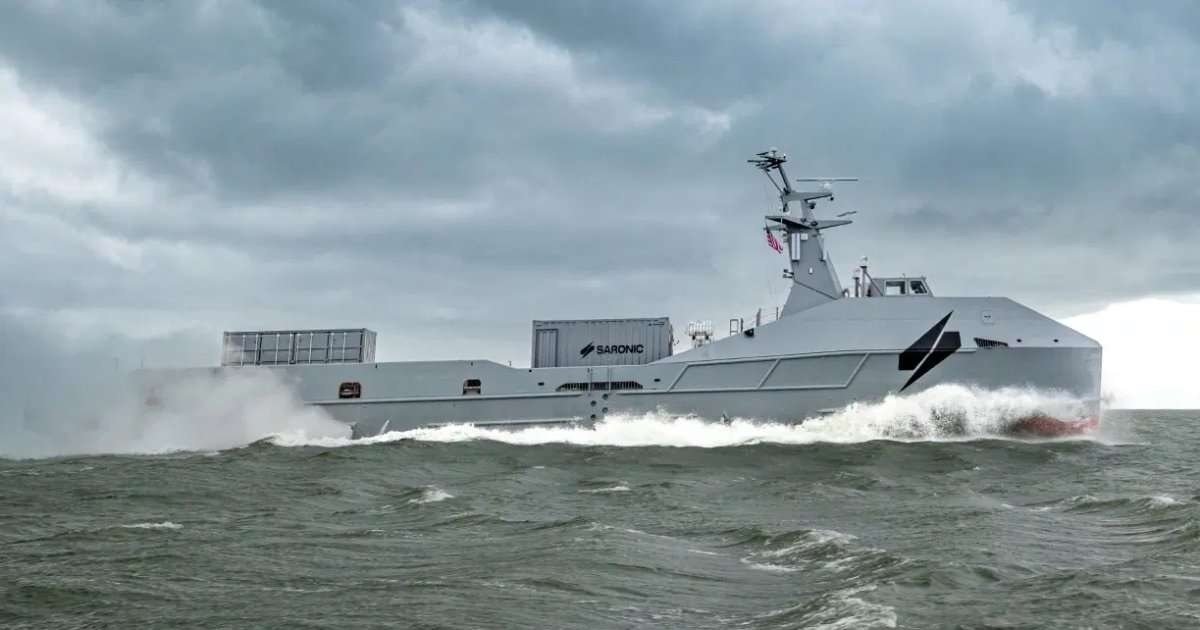
The GRIZZLY system is designed as a containerized, expeditionary launcher that can be deployed using standard logistics infrastructure. Its compatibility with 10-foot Tricon containers enables transportation via commercial trucks, cargo aircraft and naval platforms without the need for specialized handling equipment.
The containerized design also reduces the system’s visual signature, allowing it to blend into conventional logistics environments such as ports, storage facilities and forward operating bases. This low-observable profile enables flexible placement in both permissive and contested environments.
The launcher is command-and-control (C2) and sensor agnostic, allowing integration with existing U.S. military targeting networks, including air-search radars and external sensor systems. This architecture eliminates the need for dedicated or proprietary sensor suites and supports interoperability across multiple services and operational domains.
Role Within U.S. Military Operations
The GRIZZLY launcher is intended to complement existing artillery, point-defense and missile-launch systems by providing a distributed precision fires capability. Its mobility and modularity allow forces to position launch units across a wide geographic area, supporting both offensive and defensive operations.
The system’s distributed deployment model enables the establishment of localized strike and air defense coverage without reliance on fixed launch infrastructure. This approach enhances operational flexibility and supports expeditionary missions, particularly in scenarios involving dispersed or rapidly evolving threats.
The ability to deploy multiple containerized launchers across different locations also contributes to a layered defense architecture while complicating adversary targeting and planning.
Cost, Logistics and Sustainment Considerations
Use of commercial off-the-shelf components and existing launcher technology reduces both acquisition and lifecycle costs. The reliance on proven systems such as the M299 simplifies maintenance and sustainment requirements while ensuring compatibility with current HELLFIRE and JAGM missile inventories.
The reduced logistics footprint allows for easier transport, storage and deployment, making the system suitable for rapid-response scenarios. Additionally, the absence of complex infrastructure requirements supports deployment in austere or forward environments.
Future Development and Program Outlook
Lockheed Martin stated that data gathered from the live-fire test will support rapid insertion of product improvements as development continues. The company is working in coordination with the U.S. government to further refine the system and align it with evolving operational requirements.
The GRIZZLY launcher is positioned as part of Lockheed Martin’s broader precision fires portfolio, extending the operational application of the M299 launcher system into ground-based, containerized configurations.
Further testing and evaluation are expected to focus on system scalability, integration with joint command networks and expanded mission profiles, as the platform moves toward potential operational deployment.
——— End of Article ———