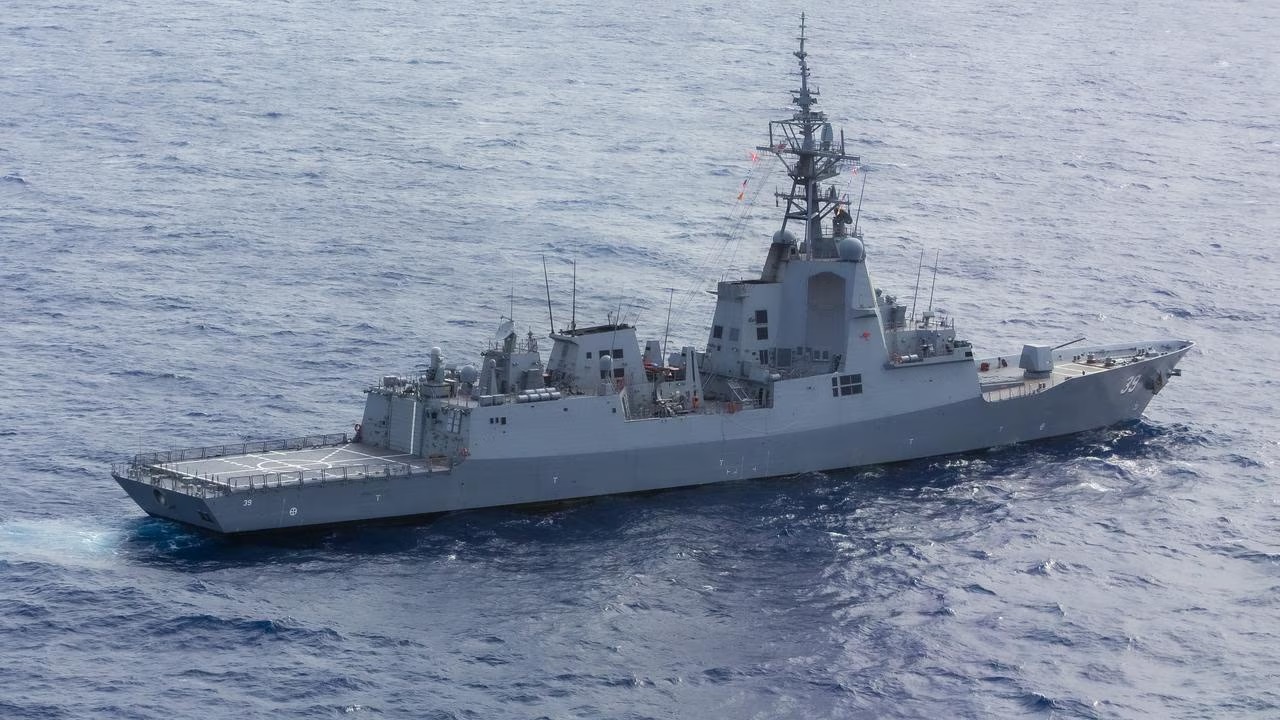
CANBERRA : Lockheed Martin Australia has secured a nine-month contract extension to continue sustainment of the Aegis Combat System fitted to the Royal Australian Navy’s Hobart-class guided-missile destroyers. The extension, confirmed in February 2026, is the fourth awarded under the existing sustainment arrangement and will maintain program continuity through the end of the year.
The agreement covers engineering, logistics and systems management support for the three Hobart-class vessels — HMAS Hobart, HMAS Brisbane and HMAS Sydney — all equipped with the Aegis Combat System.
Hobart-Class Destroyers and Aegis System
Under the extension, Lockheed Martin Australia will deliver combat systems engineering services, including software and hardware upgrades, baseline management, system alignment, and material condition assessments. The work supports the operational readiness of the destroyers and ensures configuration control across the fleet.
A central component of the sustainment program is the transition to Aegis Baseline 9. This upgrade strengthens Integrated Air and Missile Defense (IAMD) capability by improving sensor integration and engagement coordination against air and missile threats. The modernization aligns the Royal Australian Navy’s configuration with current international Aegis standards, supporting interoperability with allied navies, including the United States Navy.
The company is also responsible for design coordination related to integration of the Tomahawk Weapon System. This follows HMAS Brisbane’s Tomahawk cruise missile launch in 2024, which expanded the vessel’s long-range strike capability.
Expanded Operations in South Australia
The extension includes an expanded operational footprint in Adelaide, South Australia. Lockheed Martin Australia is increasing staffing within its Technical Services and Logistics Support team to support the Destroyer Capability Enhancement (DCE) program.
Activities in Adelaide will focus on recovery, cataloguing and inventory management of de-activated equipment removed during ship modernization cycles. These tasks will be conducted in coordination with the Osborne Naval Shipyard and are expected to create additional supply-support roles, contributing to workforce continuity within South Australia’s maritime sector.
Engineering Oversight and International Coordination
The Sydney-based Aegis team remains central to sustainment delivery. Responsibilities include production of engineering documentation, maintenance of combat system baselines, execution of configuration audits, and completion of technical assessments required for high-intensity maritime operations.
The program incorporates technical “reach-back” support to Lockheed Martin’s United States facilities, enabling access to global Aegis software updates, technical advisories, and system improvements. This structure ensures compatibility with broader Aegis developments and maintains alignment with allied operational standards.
Regional Deployment Support
The contract extension follows sustained operational activity by the Hobart-class fleet. In late 2025, HMAS Brisbane became the first active Royal Australian Navy vessel to undergo specialized maintenance at Yokosuka Naval Base, Japan. Lockheed Martin personnel supported the deployment to maintain combat system readiness during the vessel’s regional presence operations.
Workforce and Industrial Base
Lockheed Martin Australia employs more than 140 maritime specialists dedicated to the Aegis sustainment program. The company serves as the industry custodian of the system in Australia, supporting the Hobart-class destroyers and preparing for future Aegis integration on the Hunter-class frigates.
Headquartered in Canberra, the company employs over 1,800 personnel nationwide across defense and aerospace programs. The latest extension ensures continued engineering, logistics and systems management support for the Royal Australian Navy’s Aegis-equipped surface combatant fleet through 2026.
——— End of Article ———