ROME — March 23, 2026 : Italian aerospace and defense company Leonardo will begin manned-unmanned teaming (MUM-T) flight demonstrations in 2026, integrating its M-346F light combat aircraft with Baykar’s KIZILELMA unmanned combat aerial vehicle (UCAV) as part of efforts to develop collaborative combat capabilities for future air combat systems.
The announcement was made by Leonardo Chief Executive Officer Roberto Cingolani during a press conference outlining the company’s 2026–2030 industrial plan. The demonstrations represent a structured step toward operational integration of crewed and uncrewed platforms.
Test Framework and Timeline
The demonstration will involve a single M-346F aircraft acting as the controlling platform, paired with two KIZILELMA unmanned fighters operating as coordinated wingmen.
The testing programme is structured in two phases. An initial flight test is scheduled between April and May 2026 and will be conducted without public disclosure. A second demonstration later in 2026 will be formally announced and is expected to be open to broader observation.
Cingolani described the initiative as an initial operational scenario to validate command-and-control concepts between crewed aircraft and autonomous systems.
Platform Configuration and Capabilities
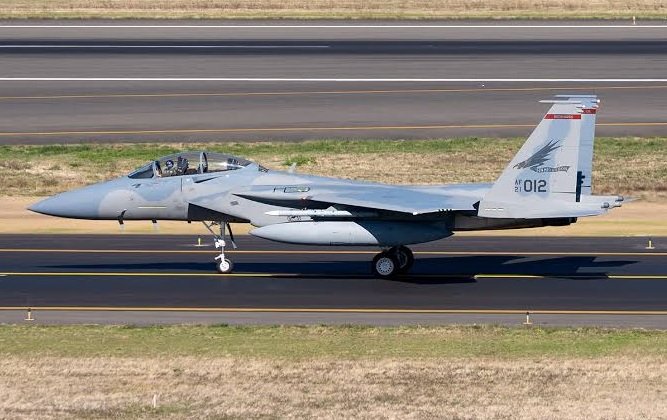
The M-346F, based on the Block 20 configuration of Leonardo’s M-346 family, is configured to function as an airborne command platform for MUM-T operations. It incorporates a large area cockpit display, active electronically scanned array (AESA) radar, Link 16 datalink, and electronic countermeasure systems, along with the ability to carry air-to-air and air-to-surface weapons across seven external hardpoints.
These features allow the aircraft to manage mission coordination, data exchange, and targeting while maintaining pilot situational awareness and reducing workload.
The KIZILELMA UCAV, developed by Turkish company Baykar, is a jet-powered unmanned combat aircraft designed with low radar cross-section characteristics, high-speed performance, and the capability to conduct air-to-air and strike missions. The platform has previously demonstrated formation flight operations and beyond-visual-range engagement capabilities.
Industrial Collaboration and Integration
The integration of the platforms is expected to be carried out through LBA Systems, a 50:50 joint venture between Leonardo and Baykar established in June 2025. The entity is responsible for the design, development, production, and support of unmanned aerial systems within a European industrial framework.
Under this arrangement, Baykar contributes the unmanned platforms, while Leonardo provides mission systems, sensors, payload integration, and certification expertise aligned with European standards.
Production activities for KIZILELMA are planned at Leonardo’s Grottaglie facility in southern Italy, with additional manufacturing support across other Italian sites.
Role in the Global Combat Air Programme
The primary objective of the MUM-T demonstrations is to support development within the Global Combat Air Programme (GCAP), a trilateral initiative involving Italy, the United Kingdom, and Japan to develop a sixth-generation fighter aircraft.
The tests are intended to validate collaborative combat aircraft (CCA) concepts, where a manned aircraft operates alongside multiple autonomous platforms performing roles such as surveillance, electronic warfare, and strike missions.
Approximately one year earlier, Cingolani outlined several options for such demonstrations, including the use of unmanned variants of the M-345 and M-346 platforms. The selection of KIZILELMA reflects its stealth-oriented design and fighter-like performance, which are considered suitable for integration with next-generation combat aircraft.
Broader Operational Context
The development of MUM-T capabilities is part of a wider transition across the defense sector toward integrated human-machine teaming and distributed air combat architectures.
Similar efforts have been demonstrated by other programs, including a recent test by Turkish Aerospace Industries (TUSAŞ) involving the HÜRJET advanced jet trainer and the ANKA-III stealth UCAV, where autonomous formation flight and cooperative operations were successfully conducted.
Programme Outlook
The planned demonstrations in 2026 will provide operational data on command-and-control integration, autonomy, and mission coordination between crewed and uncrewed systems. These outcomes are expected to inform both the GCAP programme and potential future export-oriented solutions for allied air forces.
The Leonardo–Baykar partnership, formalized through earlier agreements in 2025, is positioned to support the development of certified unmanned systems for European and international markets, with the M-346F and KIZILELMA pairing serving as an initial demonstration of collaborative combat capability.
——— End of Article ———