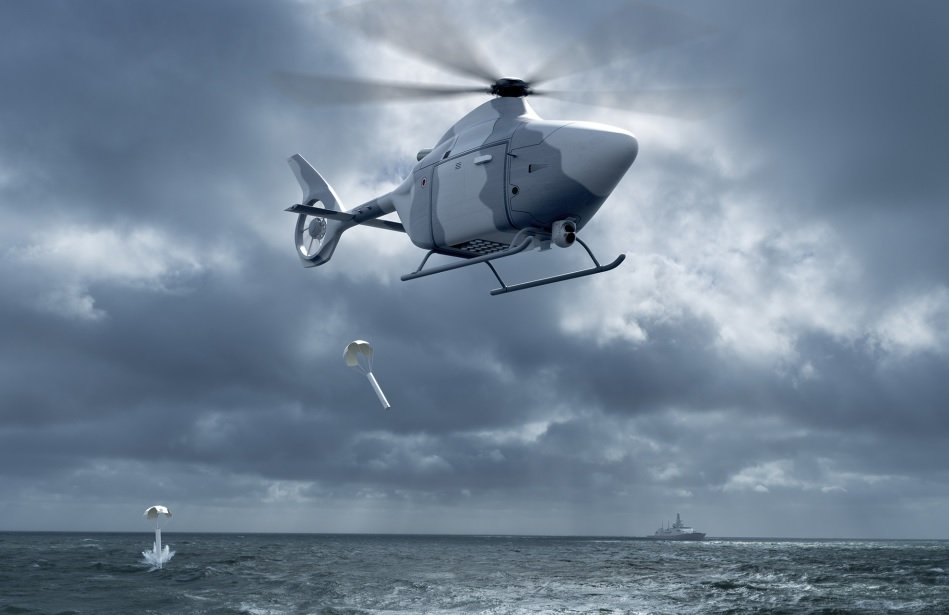
YEOVIL, UK — Leonardo has selected Shield AI’s Hivemind software to develop advanced autonomous capabilities for its Proteus uncrewed rotorcraft demonstrator. Announced on October 29, 2026, the agreement will allow Leonardo engineers to integrate the Hivemind Software Development Kit (SDK) and develop mission-specific autonomous systems.
The partnership will support missions including anti-submarine warfare, airborne early warning, intelligence gathering, surveillance and reconnaissance, and logistics in contested environments.
Developing Proteus Autonomous Capabilities
Leonardo developed Proteus with the Royal Navy and UK Defence Innovation under the Rotary Wing Uncrewed Air System (RWUAS) Phase 3B Technology Demonstrator Programme.
The aircraft completed its maiden flight on January 16, 2026, from Predannack Airfield in Cornwall, using Leonardo’s proprietary autonomy software under the supervision of ground-based test pilots.
Based on the AW09 single-engine helicopter, Proteus features a modular payload bay capable of carrying approximately one tonne of equipment, equivalent to two standard NATO 463L pallets.
Leonardo to Retain Software Control
Under the agreement, Leonardo engineers will use Hivemind to build, test, deploy and update their own autonomous pilots. The arrangement allows Leonardo to retain ownership of the capabilities it develops and modify them independently as missions, sensors and threats evolve.
“Leonardo builds some of the most widely flown rotorcraft in the world, and Hivemind gives its engineers new tools to add autonomy to them,” said Tom Schaefer, Shield AI’s vice president of Hivemind engineering.
Leonardo’s vice president of market development for Helicopters UK, Adam Wardrope, said AI-powered autonomy is increasingly necessary for military and security operations in both wartime and peacetime.
Supporting Royal Navy Maritime Aviation Strategy
The Proteus programme supports the Royal Navy’s Maritime Aviation Transformation (MATx) strategy, which outlines its maritime aviation plans through 2040 under the principle of “uncrewed where possible, crewed where necessary.”
Autonomous helicopters such as Proteus could undertake tasks currently performed by crewed Merlin and Wildcat helicopters, supporting the Navy’s future operational requirements.
Leonardo supports both helicopter types at its facility in Yeovil, Somerset, where the company employs a significant portion of its approximately 8,000 British workers.
The original Proteus development contract was awarded in 2022 and valued at £60 million. Leonardo extended programme funding to mid-2027, as confirmed in mid-2026.
Neither Leonardo nor Shield AI has disclosed the value or duration of the new Hivemind agreement.
——— End of Article ———