A highly classified Pentagon assessment circulating among senior U.S. national security officials has reportedly reached a conclusion rarely acknowledged in public briefings or congressional testimony: in a full-scale war over Taiwan, the United States repeatedly fails to prevent China from achieving its military objectives.
The document, known inside defence circles as the “Overmatch Brief,” synthesises the results of multiple classified war games and force-on-force simulations conducted over recent years. According to officials familiar with its contents, the outcome is not marginal or scenario-dependent. Across variations in timing, escalation ladders and rules of engagement, U.S. forces suffer heavy losses early and are unable to deny Beijing control of the battlespace around Taiwan.
Pentagon officials emphasise that the assessment is not a judgement on American troop quality or combat motivation. Instead, it is a blunt diagnosis of structural disadvantage in a theatre shaped by geography, missile density, industrial capacity and the physics of modern warfare.
The End of Carrier Dominance
At the centre of the assessment is the declining survivability of U.S. aircraft carriers inside the Western Pacific. For decades, carrier strike groups have been the backbone of American power projection. In the Taiwan scenarios, they are among the first assets neutralised.
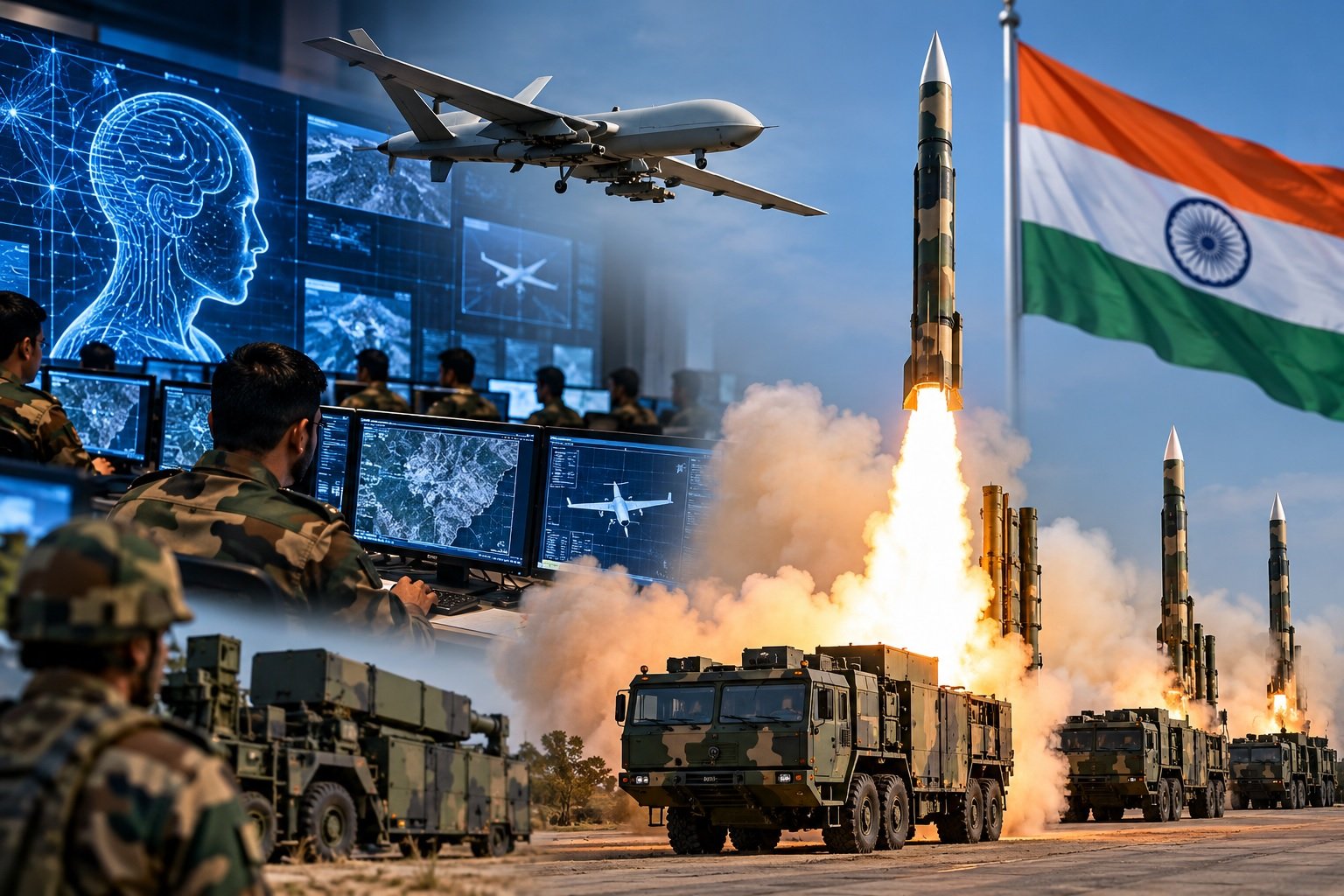
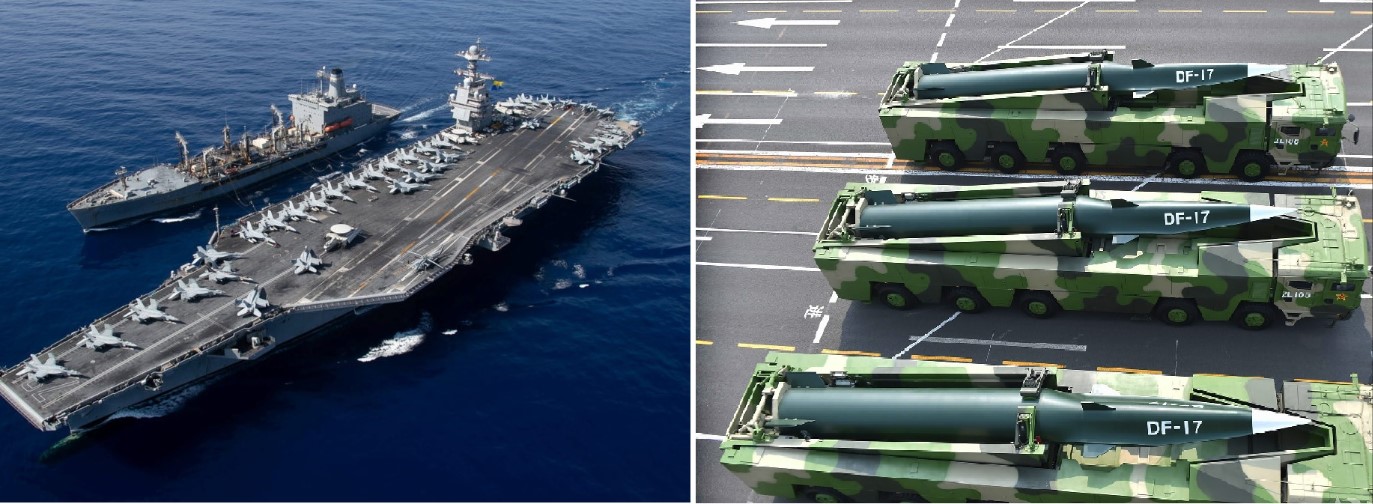
Simulations show that China’s anti-access/area-denial network, built specifically to target large surface vessels, overwhelms carrier defences within days or even hours. Weapons cited in the assessment reportedly include the DF-21D and DF-26 anti-ship ballistic missiles, often referred to as “carrier killers,” supported by YJ-18 and YJ-21 anti-ship cruise missiles launched from submarines, destroyers and bombers. Hypersonic glide vehicles such as the DF-17 further compress reaction times, reducing the effectiveness of interceptor systems like the SM-3 and SM-6 missiles carried by Aegis destroyers.
Even the U.S. Navy’s most advanced platform, the USS Gerald R. Ford, a $13-billion nuclear-powered carrier equipped with electromagnetic catapults and advanced radar, is assessed as unable to operate safely within effective strike range of Taiwan once hostilities begin. The loss or withdrawal of carriers strips U.S. forces of their primary means of sustained airpower.
Missile Saturation and the Opening Hours
The Overmatch Brief reportedly concludes that the decisive phase of the conflict occurs before U.S. forces can meaningfully assemble. China’s People’s Liberation Army Rocket Force now fields thousands of short-, medium- and intermediate-range missiles designed to strike air bases, ports, fuel depots and command centres across the region.
Key U.S. facilities in Japan and Guam, including Kadena Air Base and Andersen Air Force Base, are repeatedly hit in simulations by salvos of DF-15, DF-16 and DF-26 missiles. Hardened shelters reduce casualties but do not prevent runway cratering, fuel fires and the degradation of sortie generation. Even advanced aircraft such as the F-35A, F-22 Raptor and B-21 Raider are rendered ineffective if they cannot launch, refuel or receive targeting data.
Missile defence systems, including Patriot PAC-3, THAAD and Aegis Ashore, are assessed as insufficient against sustained saturation attacks. Interceptors are expensive and finite; offensive missiles are cheaper and more numerous. The imbalance becomes decisive within days.
Cyber and Space: The Invisible First Strike
Contrary to public perceptions of a dramatic missile opening salvo, the Pentagon assessment reportedly warns that a Taiwan conflict would likely begin in cyberspace and orbit.
Chinese cyber units, linked to the Strategic Support Force, are assessed to have pre-positioned malware within networks supporting U.S. bases, logistics contractors and regional infrastructure. In simulations, the first effects are power outages, corrupted logistics databases, disrupted satellite communications and degraded command-and-control systems.
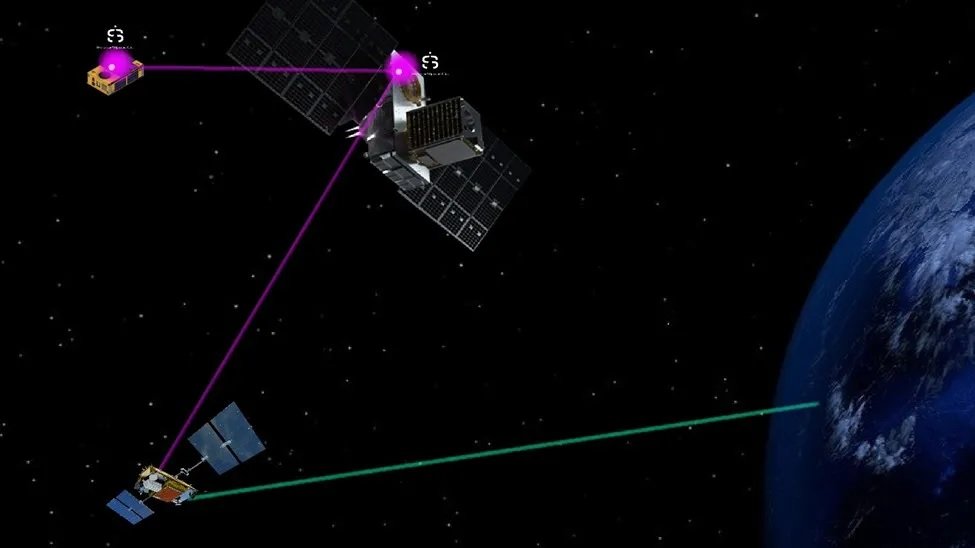
At the same time, Chinese counter-space capabilities, including co-orbital satellites, ground-based lasers and anti-satellite missiles such as the SC-19, are used to blind or degrade U.S. reconnaissance and navigation satellites. The loss of GPS accuracy and real-time ISR further compounds U.S. operational paralysis.
Industrial Power Decides Endurance
Beyond the opening phase, the assessment highlights an industrial imbalance that favours Beijing. The United States relies on a relatively small number of highly complex platforms: nuclear carriers, stealth aircraft, guided-missile destroyers and submarines that take years to build and are difficult to replace.
China, by contrast, has structured its force around mass, redundancy and rapid replacement. Shipyards along the Yangtze River reportedly produce destroyers, frigates and amphibious vessels at a pace unmatched globally. Missile production lines can replace expended munitions in weeks or months. Losses are expected and absorbed.
In prolonged scenarios, U.S. stockpiles of precision-guided munitions, including JASSM-ER, LRASM and Tomahawk cruise missiles, are depleted faster than they can be replenished. Chinese production continues to outpace attrition.
Geography as a Weapon
The assessment repeatedly returns to geography as the most unforgiving variable. Taiwan lies roughly 130 kilometres from China’s coast, well within the densest layer of Chinese missile and air coverage. U.S. forces must operate across the vast distances of the Pacific, stretching supply lines and amplifying every loss.
Each sunk ship or destroyed aircraft increases logistical strain, political risk and financial cost. In the simulations, even successful U.S. strikes do not reverse momentum once China establishes local dominance.
Spending More, Achieving Less
One of the most uncomfortable findings, according to officials familiar with the document, is that overall defence spending does not translate into local superiority. China spends an estimated 1.7 percent of its GDP on defence, compared with roughly 3.4 percent for the United States. Yet in the Taiwan theatre, missile density, proximity and production scale outweigh raw expenditure.
The assessment questions whether continued investment in legacy platforms aligns with the realities revealed by the war games. Despite this, U.S. procurement plans still include additional Ford-class carriers and manned aircraft optimised for contested environments they may not survive.
Why the Document Will Remain Secret
The Overmatch Brief is unlikely ever to be released publicly. Officials warn that formal acknowledgement of repeated defeat against a named adversary would undermine deterrence, unsettle allies such as Japan and Australia, and expose vulnerabilities in U.S. doctrine, basing and logistics.
Instead, its conclusions are emerging indirectly, through anonymous briefings, think-tank reports and carefully worded testimony, gradually conditioning policymakers and the public to a harsher strategic reality without a single definitive admission.
Beijing’s Strategic Patience
The assessment also underscores a crucial point often overlooked in public debate: China is not rushing. Chinese leadership has repeatedly signalled that action over Taiwan would only come when success appears near-certain. Failure would be politically catastrophic for Beijing, making caution itself a strategic advantage.
Steady modernisation of missile forces, naval shipbuilding, cyber capabilities and space assets continues without the pressure of immediate conflict. Time, the assessment suggests, is not neutral.
A Question Washington Cannot Avoid
The Pentagon’s own planners are reportedly grappling with the implications of their findings. The question is no longer framed solely as whether the United States would choose to defend Taiwan, but whether it can do so at an acceptable cost, and whether its current force structure reflects the realities its classified war games already reveal.
For now, the most candid acknowledgement of those realities remains locked behind classified markings, known only through fragments and leaks. But within the corridors of power, according to those familiar with the Overmatch Brief, the verdict is already clear.
——— End of Article ———