Munich : KNDS Deutschland and TYTAN Technologies have signed a Memorandum of Understanding (MoU) to expand their strategic cooperation in the development and fielding of counter-unmanned aircraft system (C-UAS) solutions for European armed forces. The agreement was finalized in Munich and is aimed at strengthening the protection of military land platforms and deployed personnel against the growing operational use of unmanned aerial systems.
The signing ceremony took place in the presence of Katherina Reiche, Germany’s Federal Minister for Economic Affairs and Energy. Under the expanded partnership, the two companies will focus on integrating autonomous “drone-on-drone” interception technologies into KNDS’s existing and future portfolio of armored and combat vehicles.
Integration Experience as the Basis for Expansion
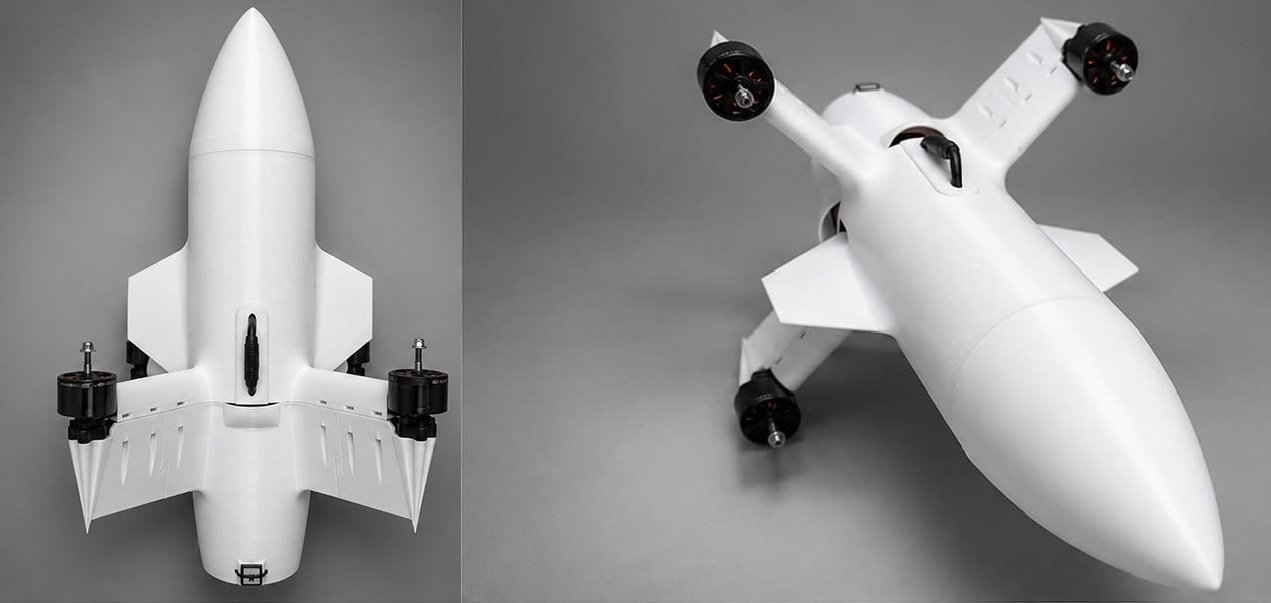
The new agreement builds on prior technical cooperation between the two firms. In 2025, TYTAN’s Interceptor-S kinetic effector was successfully integrated into the mission compartment of the BOXER RCT30, a configuration that enables the rapid launch of interceptor drones from a modular canister system installed within the vehicle.
This integrated solution was demonstrated during the Experimentalserie Land trials conducted by the Bundeswehr at Munster and Bergen in autumn 2025. The demonstrations validated the concept of deploying autonomous interceptor drones directly from mobile land platforms, allowing crews to respond to aerial threats without relying on external air-defense assets.
Operational Focus and Industrial Objectives
According to both companies, the expanded cooperation is designed to address operational requirements identified in recent high-intensity conflicts, where small and medium unmanned aerial systems have been employed extensively for reconnaissance, targeting, and attack roles.
The partnership outlines several areas of focus. These include the protection of KNDS land systems and their crews through the integration of TYTAN’s autonomous interception technology, as well as the joint development of a standardized European mobile UAS launch solution. Such standardization is intended to support interoperability among NATO and European Union member states operating multinational forces.
In addition to vehicle-mounted applications, the cooperation also covers the further development of C-UAS solutions for static base defense and mobile frontline air-defense roles, allowing the same core technology to be adapted to different operational environments.
Statements from Industry Leadership
Balázs Nagy, Chief Executive Officer and co-founder of TYTAN Technologies, stated that the partnership brings together complementary industrial capabilities and operational experience. He noted that both companies have experience delivering systems that have been validated under operational conditions and that the cooperation is intended to establish a common benchmark for future C-UAS solutions in Europe.
Mathias Nöhl, Executive Vice President for Digitalization at KNDS, emphasized the importance of industrial agility in responding to rapidly evolving threats. He said that cooperation with technology-focused companies such as TYTAN supports the faster integration of new capabilities into existing land systems, with the objective of improving protection for deployed soldiers.
Political and Security Context
Minister Reiche highlighted the relevance of counter-UAS technologies in the current security environment, referring to lessons derived from ongoing conflicts in Eastern Europe. She described drones as dual-use systems that are relevant both for the protection of critical infrastructure and for defending against hostile aerial threats. Reiche also emphasized that effective capability development increasingly depends on rapid testing and field-based innovation.
Technical Characteristics of the Interceptor-S
The Interceptor-S system is designed as a kinetic effector intended to neutralize Class II unmanned aerial threats. According to TYTAN, the interceptor is capable of speeds exceeding 250 kilometers per hour and can engage targets at distances of up to five kilometers. The system is positioned as a cost-effective complement to traditional missile-based air-defense solutions, particularly against low-cost drones that would otherwise impose a disproportionate financial burden if countered with larger interceptors.
With the signing of the MoU, KNDS Deutschland and TYTAN Technologies intend to move from demonstration and integration activities toward broader deployment concepts, aligning industrial development with emerging European defense requirements while maintaining compatibility with allied force structures.
——— End of Article ———