TOKYO, June 30, 2026 — Japan's Ministry of Defense has officially begun developing a vertical launch system (VLS) for a future class of non-nuclear diesel-electric submarines, marking a major step in expanding the strike capabilities of its undersea fleet. The program will run from 2026 to 2029 with a budget of approximately 3.9 billion yen (about $24.8 million).
The new VLS is being designed to launch multiple missile types, including a submarine-launched version of Japan's Hyper Velocity Gliding Projectile (HVGP) and modern cruise missiles. The land-based HVGP, designated Type 25, has already been deployed for the defense of Japan's remote islands. Its naval variant is expected to provide the Japan Maritime Self-Defense Force (JMSDF) with a long-range stand-off strike capability from submerged platforms.
Vertical Launch System Design
Official concept renders released by the Ministry of Defense show a modular VLS configuration. Each launcher block is expected to contain seven to eight vertical launch cells, while future submarines are projected to carry two to three blocks, providing a total of 14 to 24 launch cells.
The system is designed to accommodate various missile types, including hypersonic glide weapons, ballistic missiles, and cruise missiles, significantly expanding the range of missions future submarines can perform.
Engineering Challenges
Integrating a vertical launch system into a diesel-electric submarine requires overcoming complex engineering challenges. Developers are focused on preserving the submarine's acoustic stealth, underwater maneuverability, and stability during missile launches.
To reduce development costs and accelerate the program, engineers will use advanced virtual simulation technology to evaluate the launcher under realistic maritime conditions before building physical prototypes.
Expanding Submarine Strike Capabilities
Japan's current submarines primarily launch U.S.-made Harpoon anti-ship missiles through 533-mm torpedo tubes, limiting both payload capacity and strike flexibility. A dedicated VLS will allow future submarines to carry a larger number of long-range weapons while adding dedicated land-attack capability alongside traditional anti-ship missions.
Supporting Next-Generation Submarines
The VLS program is closely linked to Japan's next-generation submarine development. In December 2023, Kawasaki Heavy Industries (KHI) unveiled a concept for a successor to the Taigei-class featuring a vertical launch system, a larger hull, improved land-attack capability, and an upgraded power plant.
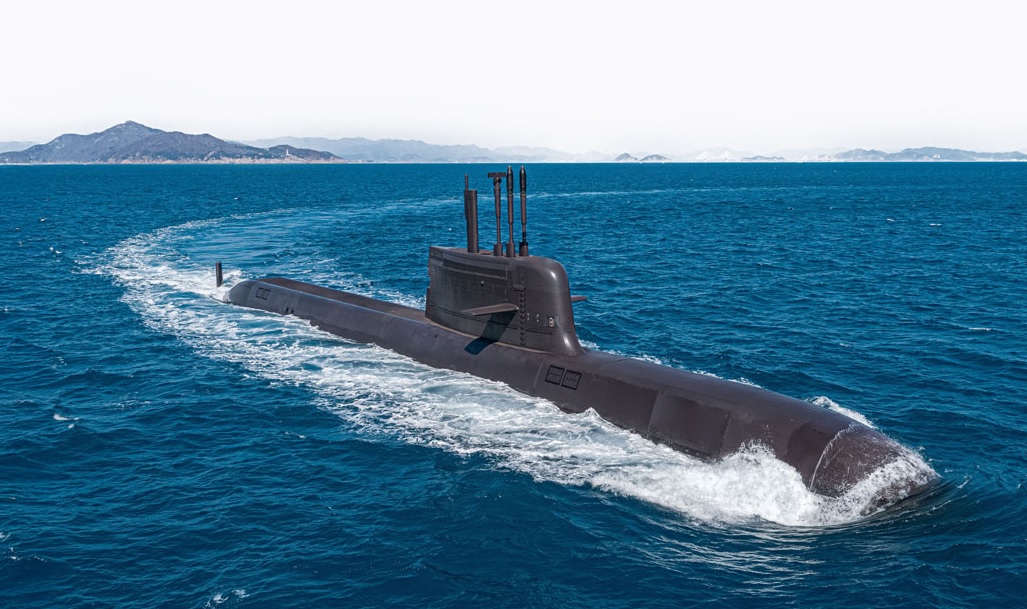
Japan is also modernizing its current fleet. On October 15, 2025, KHI launched JS Sogei, the sixth Taigei-class submarine equipped with lithium-ion batteries. The submarine retains six 533-mm torpedo tubes and is scheduled to receive the new 12SSM-ER cruise missile, which has entered production for both surface ships and submarines.
Strategic Significance
The VLS initiative is part of Japan's broader defense modernization program aimed at strengthening long-range stand-off capabilities in the Indo-Pacific. Defense Ministry advisory panels have also recommended studying next-generation propulsion systems that could support longer submerged operations for future VLS-equipped submarines.
With one of the world's most advanced diesel-electric submarine fleets, jointly built by Kawasaki Heavy Industries and Mitsubishi Heavy Industries, Japan's introduction of a submarine-based vertical launch system represents a significant enhancement of its future underwater strike capability.
——— End of Article ———