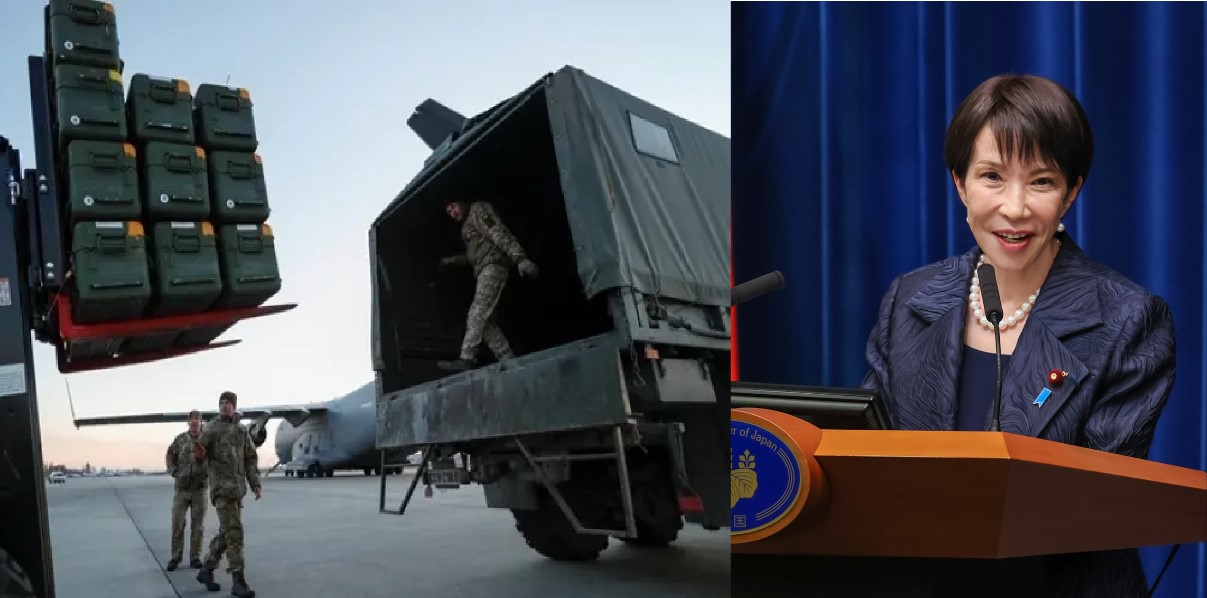
Tokyo : Japan is preparing to formally join a NATO-coordinated mechanism aimed at accelerating the procurement and delivery of U.S.-manufactured defense equipment to Ukraine, marking a further expansion of Tokyo’s involvement in Euro-Atlantic security efforts linked to the war in Eastern Europe.
According to reporting by NHK, citing unnamed alliance officials, the Japanese government plans to announce its participation in the Prioritized Ukraine Requirements List (PURL) in the near future. The program is overseen by NATO and is designed to coordinate international financial contributions toward equipment requested by Ukraine and sourced from the United States.
Japanese officials have already briefed several NATO member states and Ukrainian representatives on Tokyo’s intention to enter the framework, the broadcaster reported.
Scope of Japan’s Contribution
Japan’s participation will be limited to non-lethal defense support, reflecting long-standing constitutional and legal restrictions on the export of lethal military equipment. Under the PURL framework, Tokyo’s financial contributions are expected to be directed toward defensive items assessed as high priority for Ukraine’s armed forces.
Alliance sources cited by NHK said the funding is likely to focus on radar systems used to enhance air-defense and early-warning capabilities, as well as protective equipment such as bulletproof vests, body armor, and related gear for Ukrainian personnel. These items are intended to improve force protection and situational awareness rather than provide offensive capability.
A NATO official told NHK that non-lethal equipment funded through the program plays a critical operational role on the battlefield, particularly in sustaining air-defense networks and reducing casualties among Ukrainian forces. The official described Japan’s planned participation as a notable development in the international support structure for Ukraine.
How the PURL Mechanism Operates
The PURL mechanism was established in July 2025 by the United States, in coordination with NATO, to streamline the delivery of urgently required U.S.-made defense equipment to Ukraine. Participating countries provide voluntary financial contributions that are pooled and used to purchase items from U.S. stockpiles or production lines.
The list of priority equipment is compiled based on requests from Ukraine and is regularly updated by NATO’s military leadership. The process is overseen by the alliance’s top military commander, the Supreme Allied Commander Europe (SACEUR), who identifies packages aligned with Ukraine’s most immediate operational needs.
Japan’s entry into PURL expands the program’s reach beyond the North Atlantic area. More than 24 countries are currently involved, including Indo-Pacific partners such as Australia and New Zealand, reflecting a broader international alignment in support of Ukraine.
Japan’s Broader Support for Ukraine
Tokyo’s planned role in PURL builds on its ongoing financial, humanitarian, and technical assistance to Ukraine since Russia’s full-scale invasion began. While Japan has consistently avoided providing lethal military aid, it has become one of Ukraine’s significant non-military supporters.
In late 2025, Japan transferred 8.8 billion yen (approximately $56.6 million) to Ukraine under its Emergency Recovery Program. In January 2026, the Japan International Cooperation Agency (JICA) approved an additional 4 billion yen (more than $25 million) for medical assistance and mine-clearance operations.
The Japanese government has also approved a broader package totaling $6 billion in humanitarian and technical assistance for Ukraine in 2026, covering infrastructure recovery, energy support, healthcare, and administrative capacity building.
International Context
Japan’s participation in the NATO-led PURL initiative comes as Ukraine continues to seek sustained international assistance to counter Russia’s military operations and to maintain defensive capabilities. By joining the mechanism, Japan aligns its non-lethal support with a coordinated multinational framework, while remaining within its domestic legal constraints.
Officials familiar with the process said the move is intended to improve efficiency and predictability in Ukraine-related assistance, ensuring that financial contributions are translated more quickly into equipment delivery based on jointly agreed priorities.
——— End of Article ———