TOKYO : Japan has taken a significant step toward establishing a sovereign long-range strike capability, with the Acquisition, Technology and Logistics Agency (ATLA) confirming on January 16, 2026, that Kawasaki Heavy Industries has formally released detailed findings from an advanced long-range cruise missile technology demonstrator program. The disclosure represents the most comprehensive public account yet of a research effort that has been quietly shaping Japan’s future approach to stand-off strike, deterrence, and island defense.
The newly published material builds on research first outlined during ATLA’s Technology Symposium (November 11–12, 2025), but goes considerably further by detailing the demonstrator’s design philosophy, core technologies, and intended operational concepts. While the system is not intended for immediate induction into the Japan Self-Defense Forces (JSDF), officials describe it as a foundational program for a future indigenously developed cruise missile aligned with Japan’s long-term strategic requirements.
A Technology Demonstrator, Not an Operational Weapon
ATLA has stressed that the Kawasaki system is strictly a technology demonstrator, intended to validate critical subsystems rather than serve as a deployable weapon. The primary objective is to reduce development risk across multiple domains—propulsion, guidance, survivability, and payload integration—before committing to a full-scale development effort under the Ministry of Defense.
The research is closely tied to island defense scenarios, reflecting Japan’s growing focus on protecting its southwestern archipelago and maintaining credible long-range stand-off strike options in the Indo-Pacific. Japanese defense planners increasingly view long-range precision strike as a key deterrence instrument, particularly in a region marked by expanding missile arsenals and increasingly contested maritime environments.
Modular Architecture and Multi-Mission Design
A defining feature of the Kawasaki demonstrator is its modular architecture. Rather than being optimized for a single mission profile, the missile is designed to support a wide range of payloads and operational roles. According to ATLA-related disclosures and open-source assessments, the platform can accommodate conventional high-explosive warheads for land and maritime targets, as well as specialized penetrator payloads intended for hardened or underground facilities, including command and control centers.
The architecture also allows for non-kinetic payloads, such as electronic warfare (EW) and electronic countermeasure (ECM) modules, alongside reconnaissance and sensor packages. This flexibility underscores Japan’s increasing emphasis on multi-domain operations and networked sensor-shooter kill chains, where missiles function not only as strike weapons but also as information and effects nodes within the wider battlespace.
Propulsion at the Core of the Program
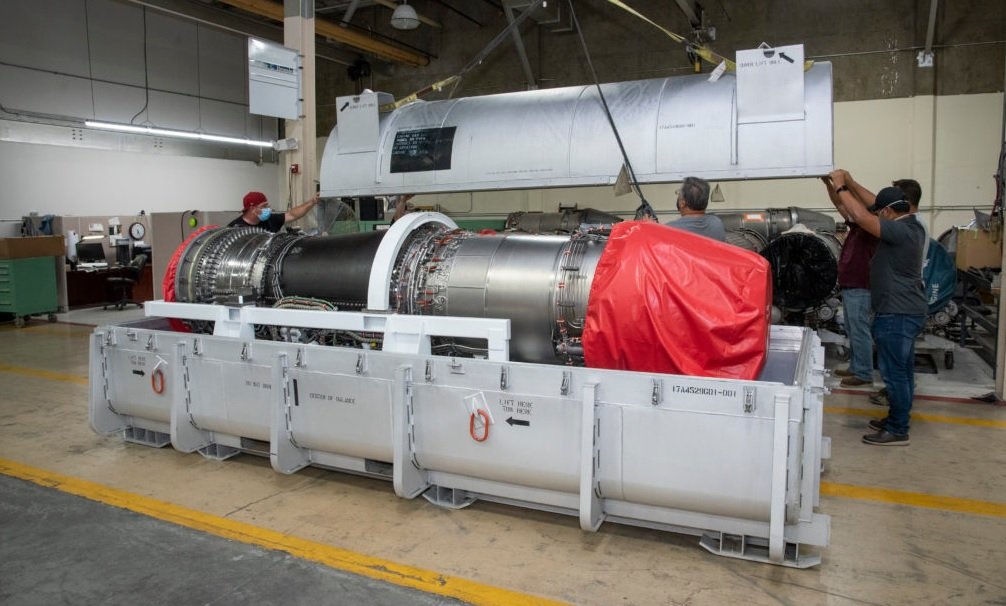
Propulsion technology lies at the heart of the demonstrator effort. Kawasaki has confirmed the development of compact air-breathing engines optimized specifically for cruise missile applications, with the prototype reportedly powered by a newly developed small turbofan engine.
Although ATLA has not released official performance figures, Japanese defense officials have indicated that the long-term objective is to significantly exceed the range of existing Type 12 Surface-to-Ship Missile Extended Range variants. In open-source defense analysis, this ambition is often interpreted as a notional engagement range of approximately 1,500 to 2,500 kilometers, though these figures remain unconfirmed.
The propulsion system is designed to sustain high subsonic cruise flight over extended distances while maintaining a compact form factor compatible with multiple launch platforms—a critical requirement for a missile intended to operate across land, sea, and potentially air domains.
Designed to Survive Modern Air Defenses
Survivability against advanced air defense systems is another central focus of the program. Kawasaki has highlighted a dedicated maneuvering system integrated into the missile’s flight control architecture, enabling complex and evasive terminal-phase trajectories.
According to developers, these maneuvers are specifically intended to defeat close-in weapon systems (CIWS) deployed on surface combatants, which typically attempt interception during the final kilometers of flight. By executing unpredictable lateral and vertical movements during the terminal approach, the missile is designed to degrade fire-control solutions for rapid-firing naval air defense guns and short-range interceptors. This emphasis reflects lessons drawn from modern naval warfare, where terminal defenses represent the last—and often most decisive—layer of protection.
Launch Flexibility and Vertical Integration
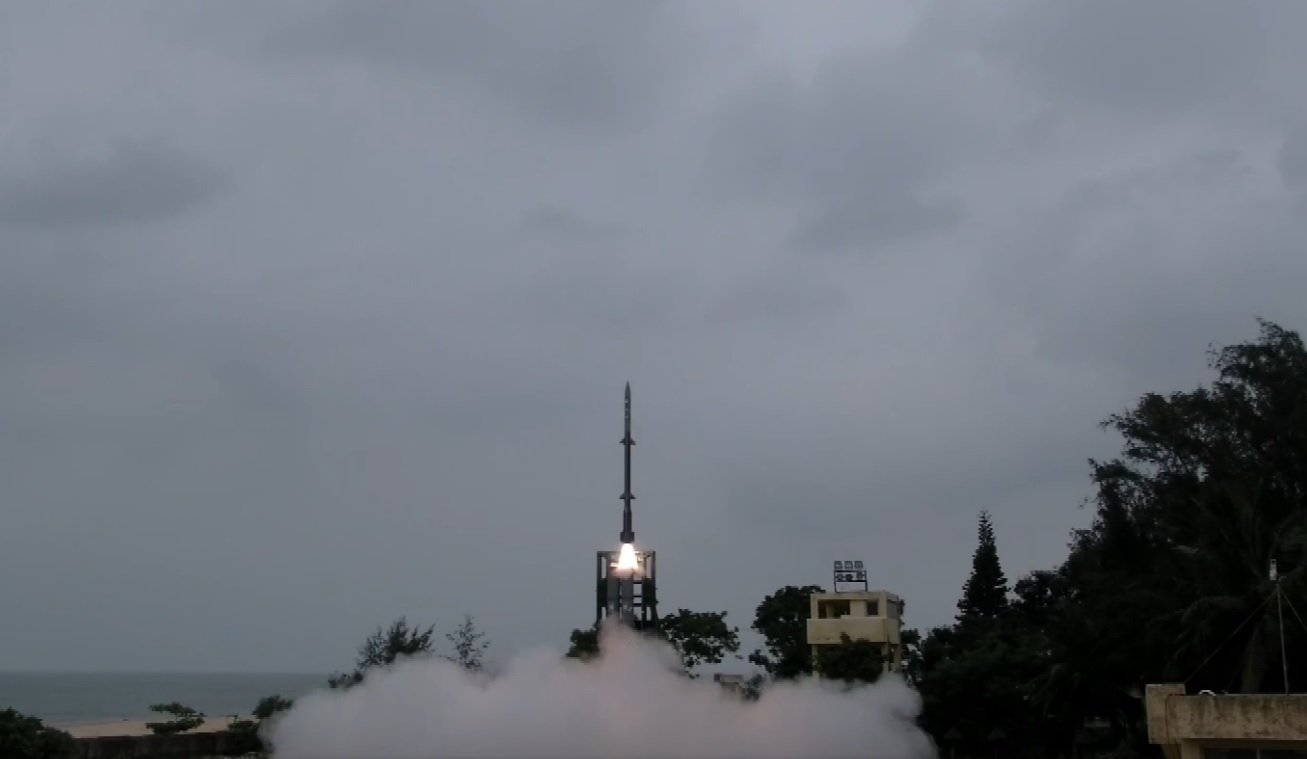
Imagery released by Kawasaki Heavy Industries and referenced in ATLA materials shows the demonstrator equipped with a booster stage, strongly indicating compatibility with vertical launch system (VLS) configurations. This suggests that future derivatives could be deployed from surface combatants and land-based launchers using standardized vertical launch interfaces.
Such launch flexibility aligns with Japan’s objective of fielding a common long-range strike weapon across multiple branches of the Self-Defense Forces, improving logistical efficiency while enhancing operational adaptability. A VLS-capable cruise missile would also integrate more seamlessly with Japan’s current and planned naval platforms.
Reducing Reliance on Imports
The demonstrator must be viewed within the broader context of Japan’s shift toward indigenous long-range strike capabilities. Since late 2024, the Ministry of Defense has formally pursued a national cruise missile program intended to complement—and potentially reduce reliance on—imported systems such as the U.S.-made Tomahawk.
The Kawasaki effort is widely regarded as a key industrial pillar supporting this strategy, providing Japan with domestic expertise in propulsion, guidance, and survivability technologies. While ATLA has avoided positioning the demonstrator as a direct replacement for foreign missiles, it is clearly intended to serve as a technological foundation for a future system tailored to Japan’s unique operational and geographic requirements.
Looking Toward the 2030s
Although ATLA has not disclosed a firm development timeline, Japanese defense planning documents and public statements suggest that an operational missile derived from current research could emerge in the early 2030s, with estimates commonly ranging from 2030 to 2033.
In parallel, Japan continues to expand its long-range strike portfolio through upgrades to the Type 12 missile family, alongside investments in hypersonic weapons, advanced sensor networks, and integrated command-and-control systems.
Taken together, the Kawasaki cruise missile demonstrator illustrates Japan’s methodical and incremental approach to rebuilding long-range strike capabilities. By prioritizing propulsion efficiency, terminal survivability, modular payload integration, and launch flexibility, ATLA and Japanese industry are laying the groundwork for a future indigenous cruise missile—one shaped not by rapid acquisition, but by sustained technology validation and strategic alignment with Japan’s evolving Indo-Pacific security environment.
——— End of Article ———