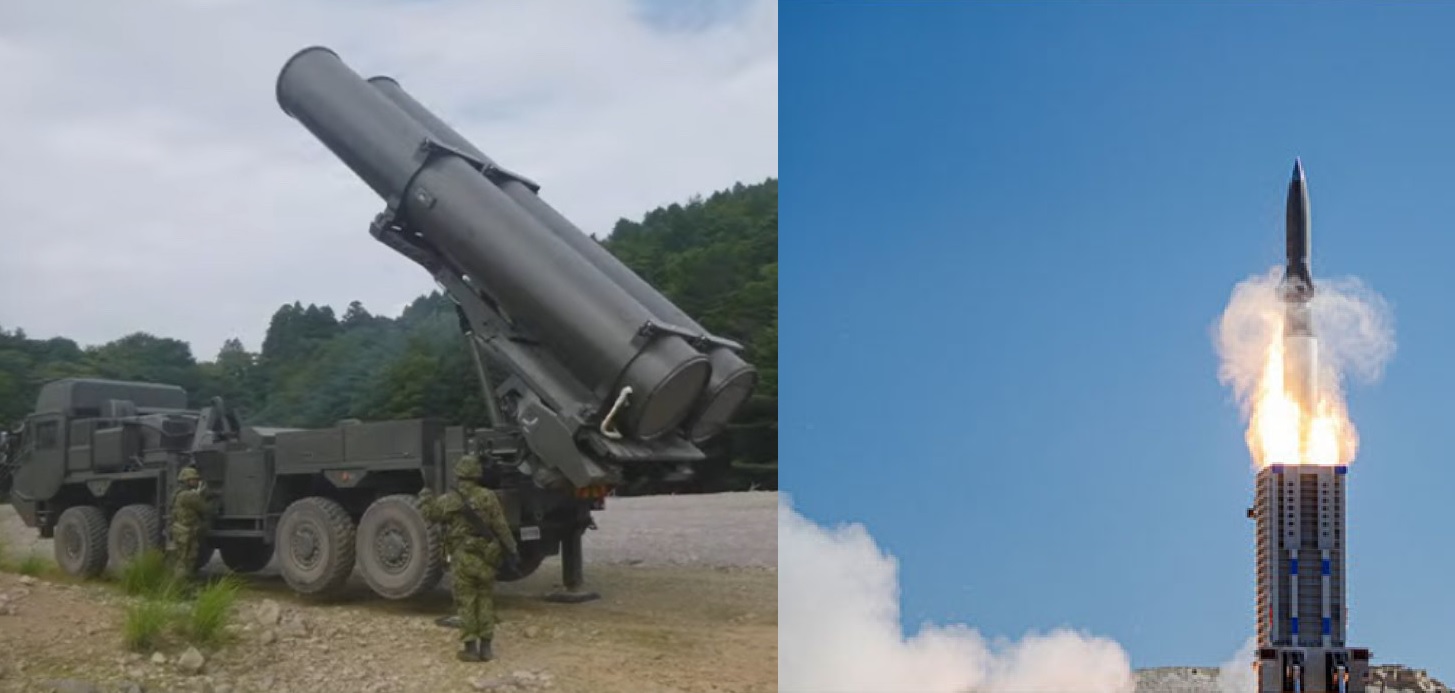
Japan has begun trial operations of its new Hyper Velocity Gliding Projectile (HVGP) missile system, marking a major advancement in the country’s fast-growing long-range strike capabilities. The system, under joint development by IHI Corporation and Mitsubishi Heavy Industries since 2018, is expected to be formally inducted next year into the Japan Ground Self-Defense Force.
Officials say the trial phase involves field testing, mobility exercises, and integration checks with Japan’s command-and-control network. Public demonstrations earlier this year showed the HVGP launcher mounted on an 8×8 truck, validating rapid deployment and launch readiness.
Expanding Japan’s Hypersonic Capabilities
The HVGP is designed as a ground-launched hypersonic missile, using a solid-fuel booster to propel a gliding warhead at extremely high speeds. Once released, the glide vehicle travels at hypersonic velocity—more than five times the speed of sound—while maneuvering to evade interception. Guidance relies on satellite navigation supported by an inertial system, with advanced seekers planned for future anti-ship roles.
Japan views this weapon as part of its broader stand-off defense strategy, giving the Self-Defense Forces the ability to strike threats from a safe distance.
Block 1: Ready for Service in 2026
The version now undergoing testing, the HVGP Block 1, is expected to enter full service in 2026.
Its key features include:
-
A range of 500–600 kilometers, enough to target hostile naval vessels or bases threatening Japan’s remote islands.
-
A maneuverable hypersonic glide vehicle mounted on a mobile truck-based launcher.
-
A mission focus on island defense, particularly in the southwestern region where Chinese naval movements have increased.
Defense sources note that some test data indicates Block 1 may even reach longer distances depending on flight trajectory.
Future Blocks to Reach 2,000–3,000 km
Japan is also developing follow-on variants—HVGP Block 2 and HVGP Block 2B—which represent a major expansion of range and capability.
These future versions are expected to incorporate waverider technology, enabling them to ride their own shockwaves and achieve greater efficiency and speed. Their projected range of 2,000 to 3,000 kilometers would allow Japan to conduct long-range precision strikes well beyond its immediate region. They are intended for both anti-ship and land-attack missions, including hardened or mobile targets.
Full deployment of these longer-range versions is planned for the early to mid-2030s.
Part of Japan’s Evolving Defense Strategy
The HVGP program is one of Japan’s most significant military developments in decades. It coincides with Tokyo’s shift toward a counterstrike capability, allowing Japan to hit enemy missile bases or other military assets if the country comes under attack.
Alongside HVGP, Japan is investing in extended-range Type-12 missiles, the acquisition of U.S. Tomahawk cruise missiles, and deeper cooperation with the United States on missile tracking and hypersonic defense.
Japan’s defense budget is also expanding toward 2% of GDP, reflecting a strategic shift driven by rising tensions with China, North Korea, and Russia.
Strategic Impact in East Asia
Regional analysts say Japan’s move into hypersonic weapons significantly alters the balance of power in East Asia. The HVGP gives Japan the ability to target high-value enemy assets—such as warships, missile sites, and command centers—with very little warning.
China and North Korea have already criticized Japan’s hypersonic development, claiming it threatens regional stability. Japanese officials argue instead that the system is purely defensive, intended to deter attacks and strengthen the security of Japan’s far-flung islands.
With trial operations now underway and full deployment approaching, Japan is set to enter the hypersonic era—reshaping its defense posture and reinforcing its position amid growing regional military competition.
——— End of Article ———