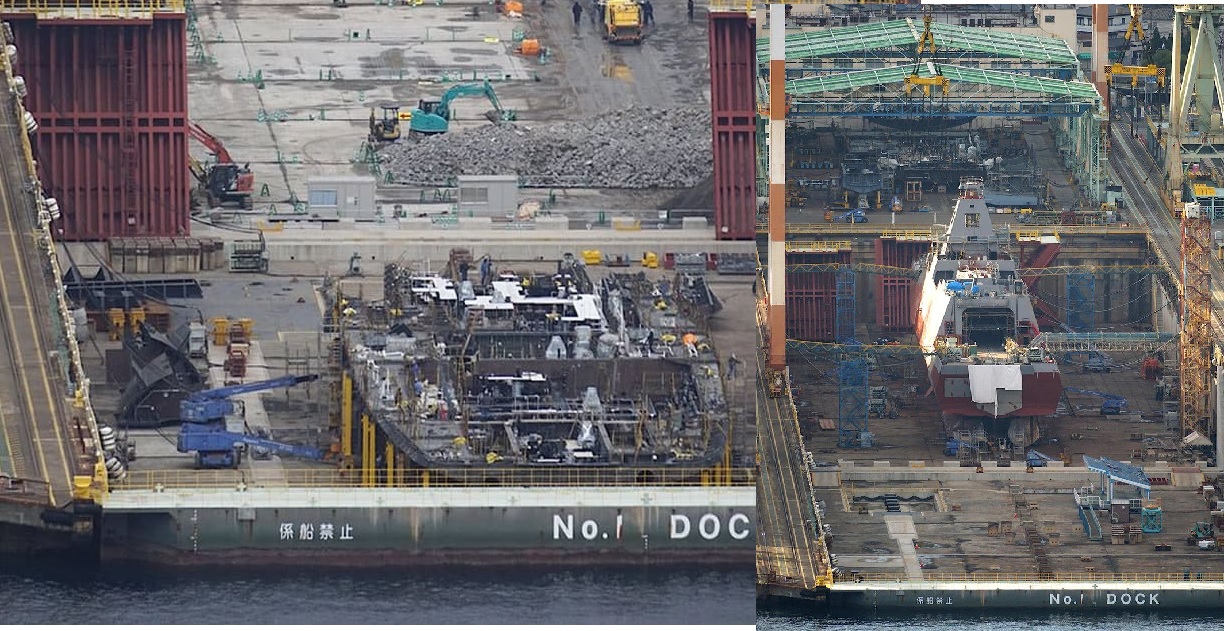
TOKYO — March 27, 2026 : Japan has formally entered the main production phase of its Aegis System Equipped Vessel (ASEV) program, with the Ministry of Defense confirming that both planned ships for the Japan Maritime Self-Defense Force (JMSDF) have been successfully laid down. The milestone marks a significant step in strengthening Japan’s sea-based ballistic missile defense (BMD) architecture following the cancellation of the Aegis Ashore system in 2020.
Construction Progress and Timeline
To accelerate delivery, the program has been divided between two major Japanese shipbuilders. The first vessel was laid down on July 18, 2025, at Mitsubishi Heavy Industries’ Nagasaki shipyard on Kyushu Island. It is scheduled for launch in fiscal year 2026 and is expected to enter service in March 2028.
The second vessel was laid down on February 5, 2026, at Japan Marine United’s Isogo shipyard in Yokohama. Launch is planned for fiscal year 2027, with commissioning targeted for March 2029. Both ships are progressing in line with the Ministry of Defense’s schedule for deployment.
Strategic Role Following Aegis Ashore Cancellation
The ASEV program was initiated after Japan halted plans for the Aegis Ashore system in 2020. In place of fixed land-based installations, Tokyo opted for mobile, sea-based platforms capable of sustained operations.
The two vessels are intended to provide continuous ballistic missile surveillance and tracking coverage over Japan. Their deployment is expected to reduce the operational burden on the JMSDF’s eight existing Aegis destroyers, which have been heavily tasked with monitoring missile launches, particularly from North Korea.
By transferring persistent BMD duties to the ASEVs, Japan aims to restore operational flexibility to its destroyer fleet. This will allow those ships to resume a broader range of missions, including fleet air defense, anti-submarine warfare, joint operations with United States forces, and Indo-Pacific deployments.
Design, Size, and Classification
The ASEVs are being built with a large hull design optimized for stability during extended deployments in challenging sea conditions. Each vessel will measure approximately 190 meters in length with a beam of about 25 meters. Standard displacement is estimated at 12,000 tons, increasing to approximately 16,000 tons at full load.
Due to their size and capability, Japanese defense officials are expected to classify the ships as guided missile cruisers (CG) rather than guided missile destroyers (DDG). In terms of displacement and dimensions, the ASEVs are projected to exceed Japan’s Maya-class destroyers and may surpass the size of advanced surface combatants such as the U.S. Navy’s Zumwalt-class and China’s Type 055 destroyers, making them among the largest non-carrier surface warships in the Western world.
Radar and Combat System Capabilities
Each ASEV will be equipped with the Lockheed Martin AN/SPY-7(V)1 radar integrated with the latest Aegis combat system. The radar consists of four fixed-array antenna faces, each measuring approximately 4.3 meters in height.
According to Japanese defense officials, the SPY-7 radar provides approximately five times the tracking capability of the AN/SPY-1 systems currently deployed on JMSDF destroyers. It is specifically designed to enhance detection and tracking of high-altitude ballistic missiles, including those following lofted trajectories, as well as to manage large volumes of simultaneous missile threats.
Program development has progressed through key testing milestones. Lockheed Martin delivered the first SPY-7 radar shipset in June 2025 and a second shipset on March 12, 2026. In mid-March 2026, the U.S. Missile Defense Agency and the JMSDF conducted live-target tracking exercises under the Japan Flight Test Experiment Aegis Weapon System (JFTX-01) off the U.S. East Coast. The tests validated the radar’s ability to detect, identify, track, and discriminate targets, with simulated engagements conducted during the trials.
Armament and Future Growth Potential
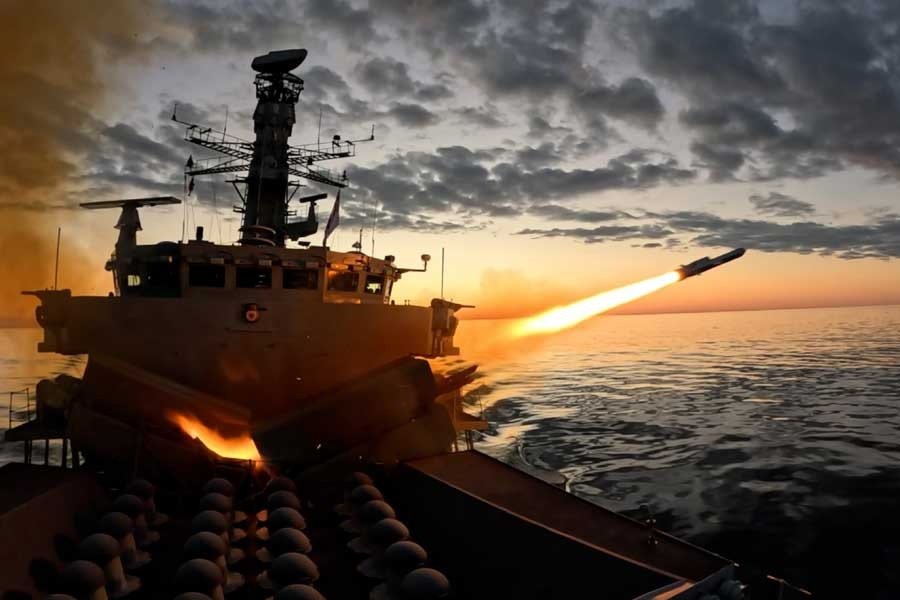
The ASEVs will be fitted with a 128-cell Vertical Launch System (VLS), an increase from the 96 cells deployed on Japan’s latest destroyers. The missile loadout will include SM-3 Block IIA interceptors, jointly developed by Japan and the United States, for exo-atmospheric ballistic missile defense.
The ships will also deploy SM-6 missiles capable of engaging advanced aerial threats, including hypersonic glide vehicles during their terminal phase. In addition to defensive systems, the vessels will support Japan’s counterstrike capability through the integration of extended-range Type 12 surface-to-ship missiles and U.S.-supplied Tomahawk land-attack cruise missiles.
The platform design incorporates additional space, weight, and power margins to support future upgrades. These include the planned integration of the Glide Phase Interceptor (GPI) for intercepting hypersonic threats earlier in flight, as well as potential installation of high-energy laser systems for counter-drone defense.
Program Cost and Industrial Scope
Procurement cost for each ASEV is estimated at approximately 392 billion yen (around $2.5 billion), with the total program cost for both ships reaching roughly 1 trillion yen (approximately $7.1 billion). The program represents one of Japan’s most significant recent investments in missile defense and naval capability expansion.
Expanding Role in Japan’s Missile Defense Network
Once commissioned, the two ASEVs are expected to become central components of Japan’s layered missile defense system. Their ability to sustain long-duration patrols and provide persistent surveillance is intended to enhance early warning and interception capabilities against evolving regional missile threats.
Construction continues at both shipyards, while radar integration and combat system validation efforts remain on track to support the planned entry into service by the end of the decade.
——— End of Article ———