TOKYO — March 14, 2026 : The Japanese government is examining the potential acquisition of Ukrainian-developed attack drones as part of a broader effort to strengthen the country’s coastal defense network and accelerate the modernization of its unmanned military capabilities.
According to diplomatic and government sources cited by Kyodo News, Tokyo is considering establishing a formal bilateral defense equipment transfer framework with Ukraine that would allow the procurement of combat-tested unmanned aerial systems while ensuring strict protection of classified military technologies. The initiative was originally proposed by Kyiv, which has been seeking deeper defense-industrial cooperation with Japan as part of its international partnerships.
Interest in Combat-Proven Drone Technology
Japanese defense planners are particularly interested in Ukrainian drones because of their operational experience in high-intensity warfare and their ability to operate effectively in environments saturated with electronic warfare (EW) systems.
Officials from Japan’s Ministry of Defense note that Ukraine has rapidly improved its drone platforms throughout the ongoing conflict with Russia, repeatedly refining designs and software based on battlefield feedback.
A representative of the ministry stated that Japan currently has limited operational experience with large-scale drone warfare, while Ukrainian developers have been able to improve the survivability, range, and electronic warfare resistance of their systems through continuous combat deployment.
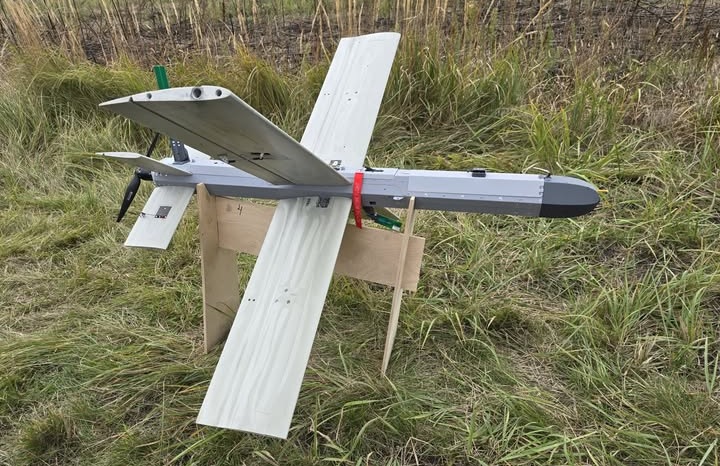
Ukrainian long-range strike drones, including systems such as the Lyutyi platform, have been used to conduct deep-strike operations against Russian energy infrastructure and logistics hubs. Combined operations conducted by Ukraine’s Special Operations Forces (SOF), the Security Service of Ukraine (SSU), and the Main Intelligence Directorate (HUR) have demonstrated the ability of these drones to reach strategic targets far behind Russian front lines, including facilities such as the Tamanneftegaz oil terminal.
Japanese officials view these operational lessons as valuable for rapidly strengthening their own unmanned capabilities.
Alternative Procurement Options Considered
During its evaluation process, Tokyo has also examined the possibility of acquiring unmanned systems from Israel, which is one of the world’s leading drone manufacturers. However, government sources indicated that purchasing systems from Ukraine may be viewed as a less politically sensitive option.
The assessment comes amid sustained international criticism of Israel’s military operations in the Gaza Strip, which has influenced procurement considerations in some countries seeking to avoid potential diplomatic complications.
Integration Into Japan’s SHIELD Defense Concept
The proposed acquisition is closely linked to Japan’s evolving defense strategy and its fiscal year 2026 defense budget, which begins in April.
The Ministry of Defense has allocated 277.3 billion yen (approximately $1.7 billion) for the development and procurement of unmanned systems. The funding supports the establishment of a new operational concept known as Synchronized, Hybrid, Integrated and Enhanced Littoral Defense (SHIELD).
The SHIELD framework is designed to create a multi-domain defensive network aimed at protecting Japan’s remote and strategically important islands from potential amphibious or naval attacks. The system envisions large-scale deployment of reconnaissance drones, strike drones, surveillance platforms, and autonomous maritime systems.
Defense planners intend for these unmanned assets to operate as a layered defensive architecture integrating air, surface, and underwater domains. Approximately 100 billion yen of the unmanned systems budget is specifically dedicated to drone-based coastal defense components, with operational implementation targeted for fiscal year 2027.
Ukrainian Offer of Naval Drone Technology
Ukraine has also offered Japan access to its rapidly evolving naval drone technologies, which have played a significant role in the Black Sea conflict.
By late 2025, Ukrainian forces were deploying upgraded versions of the Sea Baby unmanned surface vehicle. Some variants have been equipped with 122-millimeter rocket launchers, expanding their capabilities beyond traditional explosive attack missions. These naval drones have been used extensively against Russian naval assets operating in the Black Sea.
Ukrainian officials believe the technology could be adapted to help Japan defend its extensive maritime approaches and island chains.
In a February 2026 interview with Kyodo News, Ukrainian President Volodymyr Zelenskyy described potential defense cooperation with Japan as a “historic step,” emphasizing Ukraine’s experience in producing relatively low-cost unmanned systems capable of countering larger and more technologically advanced adversaries.
Potential Technology Exchange
Ukraine has indicated that it is interested in technological reciprocity as part of any defense cooperation agreement.
Japan possesses advanced missile and air defense manufacturing capabilities, including systems produced domestically under United States licensing arrangements. Ukrainian officials have suggested that joint production arrangements or knowledge exchanges involving air defense technologies could help strengthen Ukraine’s heavily strained air defense network, which continues to face sustained missile and drone attacks.
Adjusting Japan’s Defense Export Policies
To facilitate such cooperation, Japan is moving toward easing its historically strict defense equipment export restrictions.
Earlier in March 2026, the ruling coalition submitted a policy proposal under the leadership of Prime Minister Sanae Takaichi that would allow the export of lethal military equipment in principle under certain conditions.
The proposal includes provisions allowing the Japanese government to designate certain partner countries for exceptional defense cooperation if it aligns with Japan’s national security interests. Ukraine could potentially receive such status under a specialized defense equipment transfer agreement.
If approved, the revised rules could take effect as early as April 2026, creating a legal pathway for Japan to import Ukrainian combat drones while potentially exporting certain defense technologies in return.
Strategic Implications
Japan’s evaluation of Ukrainian drones reflects a broader effort to adapt to evolving security challenges in the Indo-Pacific region. The Russia–Ukraine war has demonstrated the growing role of unmanned systems in modern warfare, particularly in coastal defense, long-range strike operations, and asymmetric maritime conflict.
Japanese defense officials view the rapid innovation cycle seen in Ukraine’s drone industry as an important model for accelerating the development and deployment of unmanned systems within Japan’s defense architecture.
Discussions between Tokyo and Kyiv remain at an exploratory stage, and no final procurement decision has yet been announced. However, officials involved in the evaluation process indicate that the lessons learned from Ukraine’s battlefield experience are playing an increasingly significant role in Japan’s evolving defense planning.
——— End of Article ———