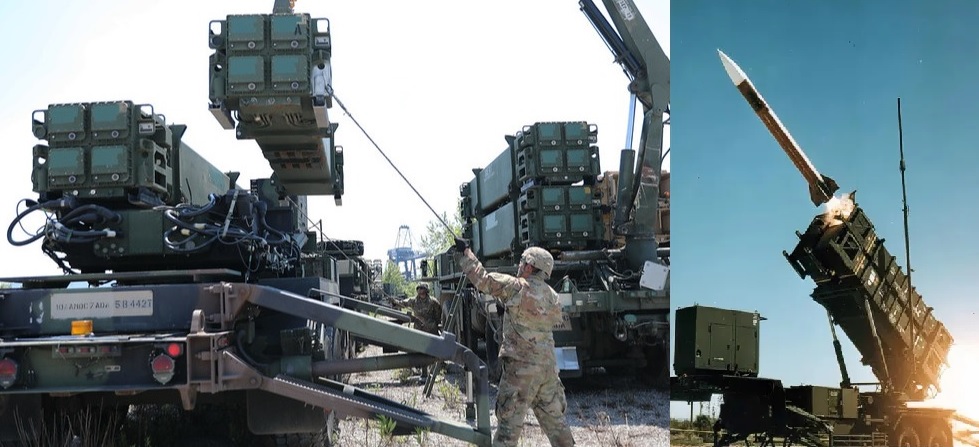
In a landmark move for its defence posture, Japan has delivered its first export shipment of domestically produced Patriot Advanced Capability-3 (PAC-3) interceptor missiles to United States, marking the first time Tokyo has supplied finished air-defence missiles abroad under its freshly loosened export regulations.
The Shipment and Its Significance
On November 20, 2025, the Japanese government confirmed that it had completed the delivery of PAC-3 missiles manufactured under licence by Mitsubishi Heavy Industries to the U.S. military at Washington’s request. Tokyo clarified the missiles were drawn from Japan Air Self-Defense Force stocks and stressed they are headed only to U.S. forces.
The transfer helps the U.S. replenish its missile-defence inventories, which have been heavily strained by commitments across Europe, the Middle East, and the Indo-Pacific. The U.S. requested the shipment to maintain allied air-defence support, including assistance to Ukraine.
Technical and Industrial Dimensions
The PAC-3 interceptor — particularly the MSE (Missile Segment Enhancement) variant — uses a hit-to-kill concept featuring an active Ka-band radar seeker that destroys incoming threats through direct impact. The dual-pulse solid rocket motor and enlarged control surfaces nearly double the defended footprint, expanding range and intercept altitude beyond earlier models.
The interceptors are produced by Mitsubishi Heavy Industries under licence from Lockheed Martin. Japan’s annual production capacity is around 30 missiles, with potential expansion once critical components like Boeing-built seekers become more available.
Shift in Japan’s Defence Export Policy
The transfer marks a historic departure from Japan’s long-standing restrictions on exporting lethal defence equipment. Until recently, Japan’s policies prevented exporting complete weapons produced under foreign licence.
By approving the PAC-3 shipment to the U.S., Tokyo signals its willingness to join allied defence supply chains and play a more proactive role in regional deterrence. The export aligns with Japan’s 2022 National Security Strategy, which identifies China’s military rise and North Korea’s missile developments as major threats.
Geostrategic and Diplomatic Implications
For the United States, the delivery provides critical relief for strained missile-defence stockpiles and supports broader global commitments. It also reinforces Japan’s value as a key industrial partner in alliance defence planning.
Japan’s move, however, has drawn criticism from China. Beijing argues that Japan is abandoning its pacifist stance and becoming more deeply embedded in U.S. containment strategies in the Western Pacific.
Next Steps and Challenges
Japan has not disclosed the exact number of missiles shipped or the delivery timeline. Both nations still face supply-chain bottlenecks, especially involving high-technology components.
Washington continues to encourage Japan to expand joint missile production and deepen industrial cooperation, with the PAC-3 export potentially serving as the first step in wider co-production efforts.
Japan’s export of domestically built PAC-3 interceptors to the United States marks a major strategic milestone. The move strengthens U.S. missile-defence capabilities while signaling Japan’s evolution into a more assertive security actor. As great-power competition intensifies in the Indo-Pacific, the transfer carries both symbolic weight and practical impact.
——— End of Article ———