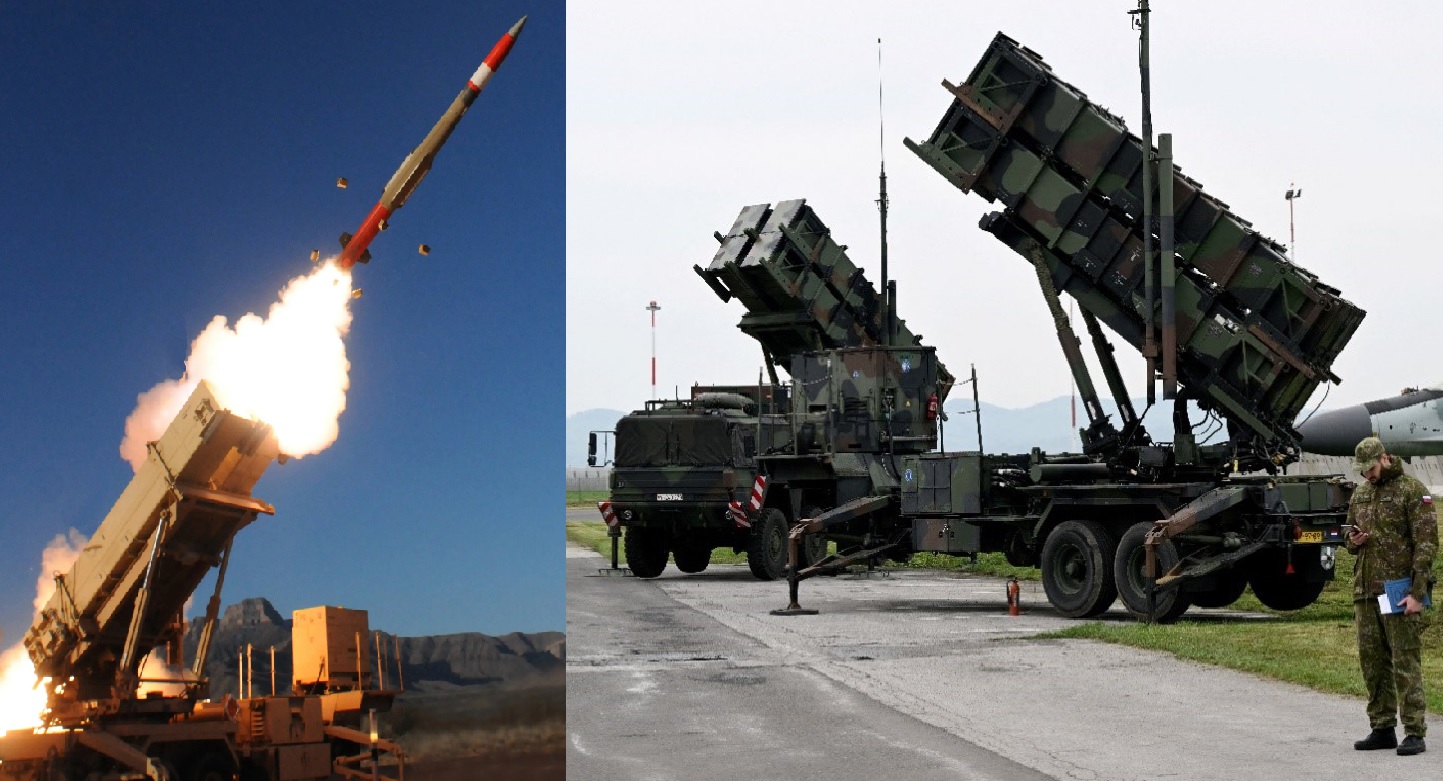
TOKYO — March 8, 2026 : Japan has awarded a major defense contract to strengthen its national air and missile defense capabilities, with the Ministry of Defense confirming a domestic order for Patriot Advanced Capability-3 Missile Segment Enhancement (PAC-3 MSE) interceptors to equip the country’s Patriot air defense systems.
The contract, published by the Acquisition, Technology and Logistics Agency (ATLA), was signed in December 2025 with Mitsubishi Heavy Industries, which serves as the sole qualified manufacturer of the PAC-3 missile within Japan. The agreement is valued at 43,439,880,000 yen, equivalent to approximately $275.33 million.
The missiles are intended for deployment with the Japan Air Self‑Defense Force (JASDF), which operates Japan’s ground-based Patriot air defense network responsible for defending key military installations, major population centers, and critical infrastructure.
Expansion of Japan’s Patriot Air Defense Capability
Japan maintains a layered missile defense architecture designed to counter regional threats, particularly ballistic and cruise missiles. Within this structure, the Patriot system forms the lower-tier interception layer responsible for terminal-phase engagement of incoming targets.
As of early 2026, the JASDF operates 24 Patriot air defense batteries consisting of approximately 120 launchers. These units are organized into six anti-aircraft groups, each responsible for protecting strategically important areas across the Japanese archipelago.
The new procurement is intended to support sustainment and modernization of this network by replenishing missile inventories and introducing the latest PAC-3 MSE interceptor configuration.
PAC-3 MSE Technical Characteristics
The PAC-3 MSE (Missile Segment Enhancement) interceptor represents an advanced evolution of earlier Patriot missiles. Unlike legacy air defense missiles that rely on explosive fragmentation warheads, the PAC-3 MSE uses hit-to-kill kinetic interception, destroying incoming threats through direct collision at high velocity.
Several design changes distinguish the MSE variant from previous PAC-3 configurations. The missile incorporates a larger dual-pulse solid rocket motor, enabling longer engagement ranges and higher maneuverability. It also features expanded aerodynamic control fins and upgraded thermal batteries, allowing improved performance against maneuvering targets.
These modifications significantly increase the missile’s operational envelope, enhancing its ability to intercept tactical ballistic missiles, cruise missiles, and aircraft at greater distances and higher altitudes than earlier PAC-3 interceptors.
Mitsubishi Heavy Industries’ Role in Production
Under the contract, Mitsubishi Heavy Industries will manufacture the PAC-3 MSE missiles domestically for the Japanese Ministry of Defense. The company has long served as the principal industrial partner for Patriot missile production in Japan and remains a key component supplier in the broader international Patriot program.
Japan holds a unique position in the global Patriot supply chain due to its manufacturing responsibility for certain specialized components. Notably, Japanese industry is the only producer of gyroscopes used in the guidance systems of Patriot PAC-2 missiles.
This role emerged after the United States lost domestic manufacturing capability for these components. When Washington sought to restart PAC-2 production, it requested assistance from Tokyo. On July 17, 2014, the Japanese government approved the export of these gyroscopes to the United States.
Mitsubishi Heavy Industries has continued producing the components under license for the Japan Air Self-Defense Force, maintaining the industrial capacity necessary to support both domestic requirements and allied supply needs.
Transfers to Support U.S. Stockpile Requirements
Japan has also contributed to allied missile inventories through direct transfers of Patriot interceptors.
In November 2025, Japanese Defense Minister Minoru Kihara announced the completion of deliveries of Japanese-manufactured PAC-3 missiles to the United States.
According to the Ministry of Defense, the transfer was intended to replenish American missile stockpiles that had been reduced due to the supply of weapons to partner nations, particularly Ukraine.
The Japanese government confirmed that the transferred missiles would remain under U.S. control and would be used strictly to meet the operational requirements of American forces stationed in the Indo-Pacific region.
Parallel Missile Procurement Programs
The PAC-3 MSE acquisition follows another recent order placed by the Japanese Ministry of Defense with Mitsubishi Heavy Industries for AAM-5B air-to-air missiles intended for Japanese fighter aircraft.
Together, these procurements form part of Japan’s broader effort to sustain and upgrade its integrated air and missile defense capabilities amid evolving regional security conditions.
The Acquisition, Technology and Logistics Agency did not disclose the number of PAC-3 MSE missiles included in the order or the expected delivery schedule in its contract announcement.
——— End of Article ———