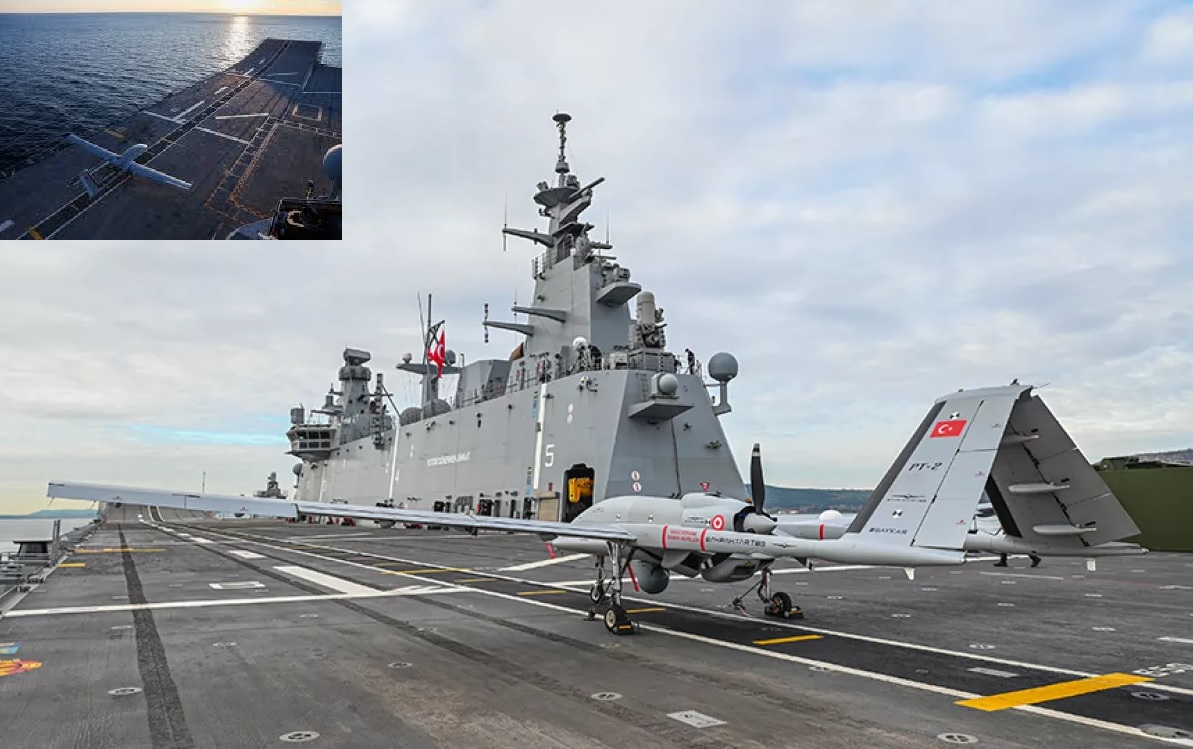
Rome, — March 30, 2026 : The Italian Navy is moving forward with plans to acquire the Bayraktar TB3 unmanned combat aerial vehicle (UCAV) for deployment aboard its aircraft carrier Cavour, marking a significant step in the service’s expansion of carrier-based unmanned aviation.
The plan was confirmed by Admiral Giuseppe Berutti Bergotto, Chief of the Italian Navy, during testimony before the Italian Senate’s Foreign Affairs and Defence Committee on March 25, 2026. He stated that the acquisition would be executed through Italian defense company Leonardo, under its joint venture arrangement with Turkish drone manufacturer Baykar.
Berutti Bergotto told lawmakers that Leonardo’s cooperation agreement with Baykar enables the procurement pathway, noting that the TB3 “can be integrated on board the Cavour,” providing both surveillance capabilities and the option to carry armament.
Acquisition Framework Through LBA Systems
The procurement will be handled via LBA Systems, a 50–50 joint venture established in June 2025 between Leonardo and Baykar and headquartered in Italy. The company is responsible for the design, development, production, and support of unmanned systems under the partnership.
Production of the TB3 for Italy is planned at Leonardo’s facility in Ronchi dei Legionari in northern Italy, while certification of the system within Italy is scheduled for completion in 2026. The collaboration combines Baykar’s airframe and platform development with Leonardo’s expertise in sensors, electronic systems, and NATO-standard integration.
First European Operator
With this acquisition, Italy is set to become the first European operator of the Bayraktar TB3. Indonesia has previously been identified as the first export customer overall, with plans to procure both land-based and naval variants of the platform.
Navalised UCAV Design and Capabilities
The Bayraktar TB3 is a navalised development of the widely deployed TB2 platform, specifically engineered for operations from short-deck aircraft carriers and amphibious assault ships.
Key design adaptations include folding wings to enable efficient deck handling and storage, reinforced landing gear for carrier operations, and maritime-optimized systems suited for harsh sea environments. The platform is powered by a TEI-PD170 turbo-diesel engine and has a maximum takeoff weight of approximately 1,450 kilograms.
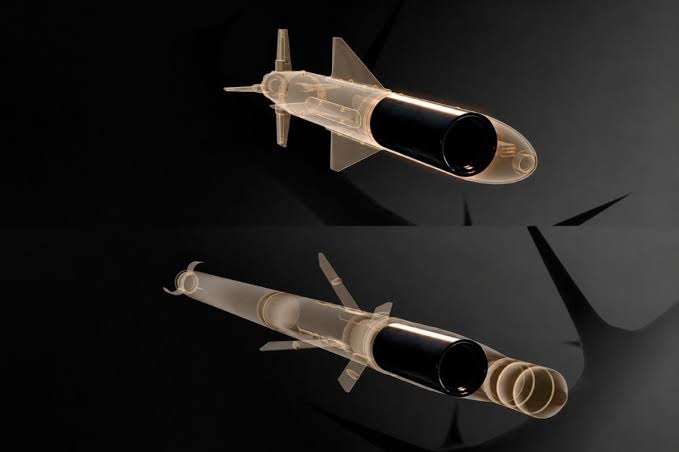
The TB3 offers an endurance exceeding 24 hours and supports a payload capacity of up to 280 kilograms. It is capable of carrying precision-guided munitions such as Roketsan’s MAM-L, as well as other modular payloads for intelligence, surveillance, and reconnaissance (ISR) missions. The system is also compatible with additional strike capabilities, including loitering munitions such as the Kemankeş series.
Demonstrated Performance in NATO Exercise
Operational performance of the TB3 was demonstrated during NATO’s Steadfast Dart 2026 exercise, conducted between January and March 2026 in the Baltic Sea. During the exercise, three TB3 UCAVs were deployed aboard the Turkish Navy’s amphibious assault ship TCG Anadolu.
The aircraft completed a total of 232 sorties, conducting fully autonomous take-offs and landings in cold-weather conditions. Missions included ISR operations and live-fire strike scenarios using MAM-L precision-guided munitions, demonstrating the platform’s capability to operate in challenging maritime and environmental conditions.
Integration with Carrier Air Wing
The Italian Navy currently operates F-35B short take-off and vertical landing (STOVL) fighters from Cavour. The addition of the TB3 will introduce an organic fixed-wing unmanned capability alongside these manned aircraft.
This integration is expected to support extended-duration ISR missions, improve situational awareness, and provide additional strike options while allowing high-end assets such as the F-35B to be reserved for more complex operational scenarios.
Broader Unmanned Systems Portfolio
The TB3 acquisition forms part of a wider effort by the Italian Navy to expand its unmanned systems capabilities across multiple platforms.
The Navy currently operates the ScanEagle UAV aboard FREMM-class frigates for maritime surveillance and reconnaissance tasks. In addition, Admiral Berutti Bergotto confirmed the recent acquisition of a vertical take-off and landing (VTOL) unmanned system known as the “Revolution” drone, developed by Italian company General Defence.
According to the Navy, the Revolution system is designed to extend surveillance capabilities from naval units and can deploy a secondary drone functioning as a loitering munition for strike missions.
Program Status
The integration of the TB3 is part of Italy’s broader strategy to develop a layered and distributed unmanned aviation capability within its naval forces. The system is expected to complement existing assets and enhance operational flexibility in maritime environments.
No details have been released regarding the number of TB3 units to be procured or the delivery timeline for the Italian Navy.
——— End of Article ———