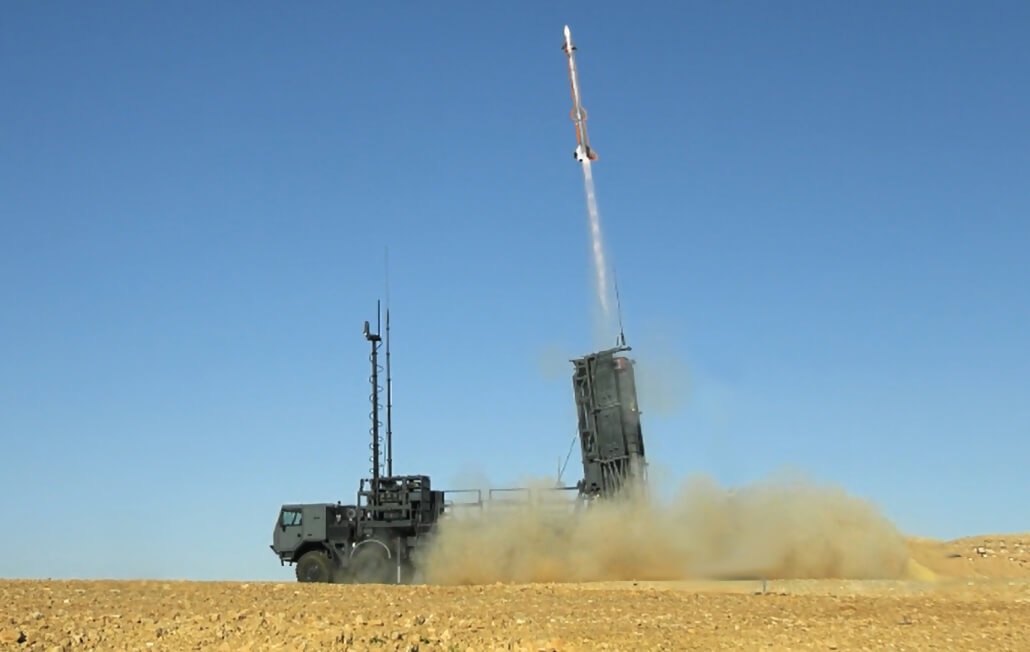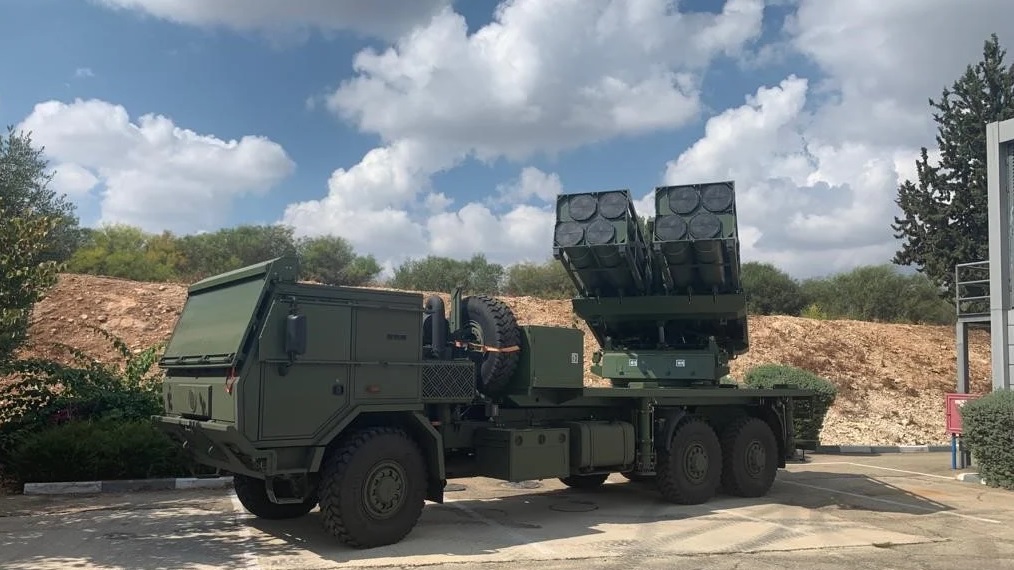
ATHENS / JERUSALEM, — April 6, 2026 : The Israeli Ministry of Defense and the Hellenic Ministry of National Defense have signed a government-to-government agreement for the procurement of the Precise and Universal Launching System (PULS) for the Greek Armed Forces. The contract, valued at approximately 2.3 billion Israeli shekels (around €650 million or $757.84 million), covers the supply of 36 rocket artillery systems manufactured by Elbit Systems.
The agreement was formally signed in Athens on April 6, 2026, following the completion of commercial negotiations between the parties. The program will be implemented over a four-year period, with an additional ten-year support and maintenance phase to ensure operational continuity and lifecycle sustainment.
System Configuration and Capabilities
Under the terms of the agreement, the Hellenic Armed Forces will receive PULS launchers along with a comprehensive package of munitions and support systems. The system is designed as a modular multiple rocket launcher capable of firing both unguided and precision-guided munitions from a single platform without requiring repositioning.
The munitions package includes training rockets for operational integration as well as a range of guided systems. Available munitions include Accular 122 mm rockets with a range of up to 35 kilometers, Accular 160 mm rockets with a range of up to 40 kilometers, EXTRA rockets with a range of up to 150 kilometers, and Predator Hawk rockets capable of reaching distances of up to 300 kilometers. The system supports multiple warhead types and incorporates guidance technologies such as GPS and inertial navigation.
The PULS architecture is designed for integration on both wheeled and tracked platforms, allowing compatibility with existing vehicle fleets. This adaptability is intended to reduce maintenance requirements and simplify training processes for operators.
Industrial Cooperation and Domestic Production
A key component of the agreement is industrial cooperation between Israeli and Greek defense sectors. As part of the arrangement, selected components of the PULS system will be produced in Greece in accordance with national procurement policies.
The partnership includes provisions for technology transfer and knowledge sharing, aimed at strengthening Greece’s domestic defense-industrial base. This framework is expected to support local manufacturing capabilities and align with broader national objectives related to defense self-sufficiency and industrial participation.
Procurement Background and Strategic Context
The acquisition forms part of the Hellenic Armed Forces’ ongoing artillery modernization program. Greek authorities have indicated that the systems are intended to enhance long-range precision strike capabilities, particularly in operational areas along the northeastern border with Turkey and across the Aegean island region.
The procurement was approved in December 2025 by the Greek parliament and the Government Council for National Security (KYSEA), which authorized the required funding. Following this approval, negotiations between the Israeli Ministry of Defense, Elbit Systems, and Greek authorities were finalized, leading to the signing of the agreement.
Elbit Systems will serve as the prime contractor for the program, while the Israeli Ministry of Defense is facilitating the export under a government-to-government framework.
Program Scope and Operational Role
The PULS system is designed to provide a flexible artillery solution capable of deploying a wide range of munitions from a single launcher. Its modular structure allows for rapid reconfiguration based on mission requirements, supporting both conventional and precision strike roles.
The acquisition aligns with Greece’s broader defense procurement strategy, which emphasizes long-range strike capabilities, interoperability with allied systems, and integration with existing ground forces infrastructure.
The agreement also reflects ongoing defense cooperation between Israel and Greece, which has included joint military exercises and additional equipment programs in recent years.
No further financial or technical details beyond the overall contract value, number of systems, and general scope have been disclosed in official statements.
——— End of Article ———