WASHINGTON, D.C., — April 5, 2026 : The United States military, supported by Israeli intelligence and operational coordination, successfully recovered the second crew member of a downed F-15E Strike Eagle in southwestern Iran following a high-risk combat search-and-rescue operation conducted between April 3 and April 5, 2026.
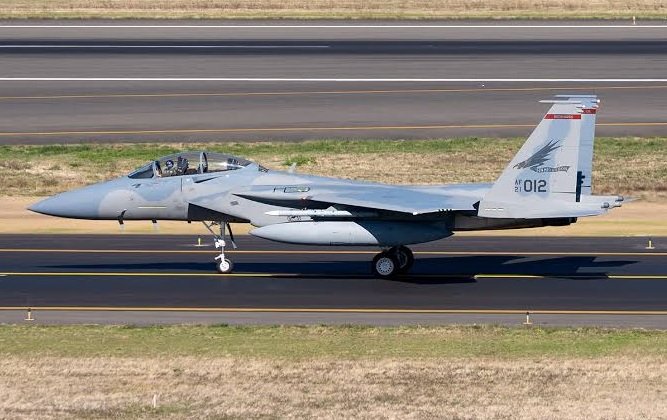
The aircraft, assigned to the U.S. Air Force’s 494th Fighter Squadron, was shot down by Iranian air defenses on April 3 during ongoing U.S.-Israel military operations against Iranian targets that began on February 28, 2026. The two-person crew consisted of a pilot and a weapons systems officer (WSO). The pilot was recovered shortly after the incident in a daylight extraction, while the WSO, a colonel, remained behind enemy lines for approximately 36 to 48 hours.
Evasion and Survival
Following the shootdown, the WSO survived the initial incident but sustained injuries and evaded capture in mountainous terrain in southwestern Iran. According to operational accounts, the officer utilized survival training to avoid Iranian search units, including movement through rugged terrain and climbing a ridge estimated at approximately 7,000 feet in elevation. During this period, Iranian forces, including elements associated with the Islamic Revolutionary Guard Corps (IRGC), conducted active search operations in the area.
Intelligence Verification and CIA Deception Operation
U.S. officials initially approached the situation with caution amid concerns that distress signals could be part of a coordinated Iranian deception effort. The Central Intelligence Agency (CIA) undertook identity verification measures to confirm the stranded individual was the missing WSO.
To support the recovery effort, the CIA executed a deception campaign inside Iran. Intelligence channels disseminated false information indicating that U.S. forces had already located the airman and were preparing to extract him via a maritime route. This information diverted Iranian search elements away from the actual search grid in the mountainous region.
Simultaneously, CIA assets identified the WSO’s position, reportedly located within a mountain crevice. The verified coordinates were transmitted to the Pentagon and the White House, enabling mission planning to proceed.
Israeli Intelligence Support and Operational Coordination
Israeli support played a continuous role throughout the operation. According to an Israeli security official, Israel provided real-time intelligence to U.S. forces during both planning and execution phases. The Israel Defense Forces (IDF) also suspended planned strike operations in the relevant area to avoid interference with the rescue mission and to ensure clearer airspace for U.S. aircraft.
Israeli assistance also included measures to counter local Iranian threats during the operation window. This coordination was maintained throughout the approximately 36 hours during which the WSO remained isolated.
Rescue Operation and Military Timeline
Following confirmation of the airman’s location, U.S. forces accelerated deployment. Operational reporting indicated that aircraft were mobilized within approximately 8 hours of location confirmation, and ground elements were inserted within roughly 12 hours.
The extraction mission took place during the night of April 4–5 and involved U.S. special operations forces supported by a large air package. Assets included HH-60 rescue helicopters, MC-130 aircraft, F-35 fighter escorts, MQ-9 unmanned aerial systems, and A-10 Thunderbolt II aircraft providing close air support.
During the operation, U.S. forces encountered resistance and ground fire from Iranian elements in the area. One A-10 aircraft sustained damage but was able to return safely with its pilot. The rescue teams successfully reached and extracted the WSO from the mountainous location.
Equipment Losses and Withdrawal
During the final phase of the extraction at a forward operating location, two U.S. C-130 transport aircraft became immobilized in mud. U.S. personnel destroyed both aircraft on the ground to prevent their capture. All participating U.S. forces were subsequently withdrawn from Iranian territory using alternate aircraft.
Outcome and Official Confirmation
On April 5, U.S. President Donald Trump confirmed the successful recovery of the second crew member. The WSO is reported to be in stable condition and receiving medical care, with expectations of recovery.
U.S. officials described the mission as a complex personnel recovery operation conducted in contested airspace and terrain. The operation involved integrated use of special operations forces, air assets, intelligence coordination, and deception measures.
The recovery of both crew members without U.S. fatalities occurred under high-risk conditions and reflected coordination between U.S. and Israeli defense and intelligence organizations during an ongoing conflict. No further official details were released regarding the specific intelligence shared by Israel or the full scope of operational coordination beyond the reported support period.
——— End of Article ———