NEW DELHI : Israel has offered India an advanced air-launched ballistic missile (ALBM) system, informally referred to in defense reporting as the “Golden Horizon,” for potential integration with the Indian Air Force’s Sukhoi Su-30MKI fleet. According to defense sources cited in strategic circles, the system has not been offered to any other country to date. If finalized, the proposal would mark one of the most sensitive missile-technology transfers between the two countries.
The missile is intended to provide the Indian Air Force (IAF) with extended stand-off strike capability by enabling launch from outside the engagement envelopes of adversary Beyond Visual Range (BVR) fighter aircraft and layered Surface-to-Air Missile (SAM) systems. Integrated onto the Su-30MKI heavy air-superiority platform, the system would expand the aircraft’s role from air dominance and conventional strike to strategic, long-range precision attack missions.
Technical Background and Design Lineage
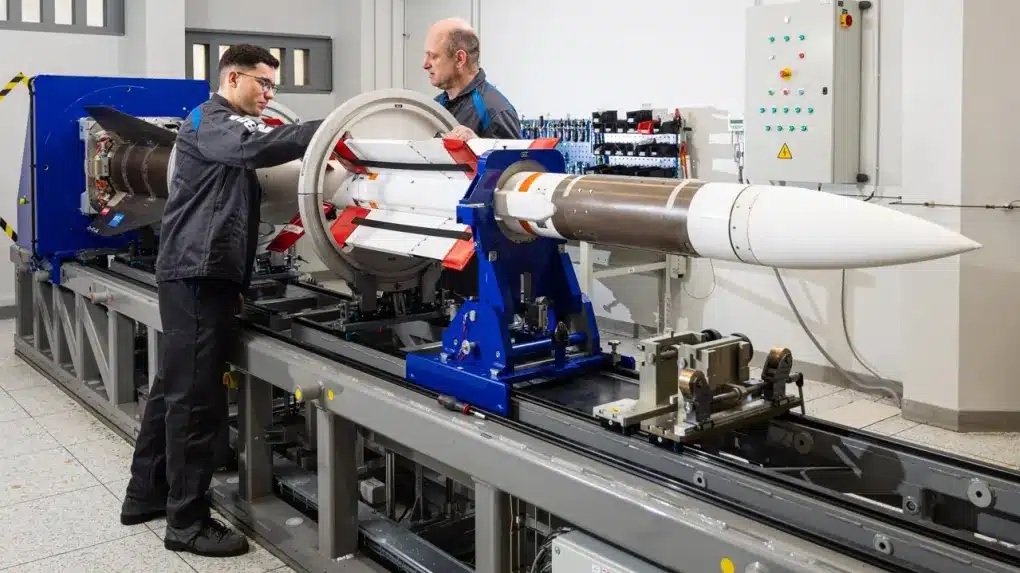
Available technical assessments indicate that the Golden Horizon ALBM is derived from Israel’s Silver Sparrow target missile program, developed to simulate long-range ballistic threats during missile defense testing. The baseline Silver Sparrow measures approximately 8 meters in length, weighs close to 3 tonnes, and is assessed to have a range of around 2,000 kilometers in its ground-launched configuration.
In its adapted air-launched role, the missile’s operational range depends significantly on launch parameters such as aircraft altitude, velocity, and release profile. Standard operational estimates place the ALBM’s effective range between 800 and 1,000 kilometers. However, intelligence-based assessments suggest that under optimized high-altitude and high-speed launch conditions from the Su-30MKI, the range could extend between 1,500 and 2,000 kilometers.
The missile follows a high-altitude ballistic trajectory after release, transitioning into a hypersonic terminal phase. This flight profile reduces engagement windows for interception systems and increases kinetic impact energy. The system is designed to strike hardened and high-value targets (HVTs), including fortified command centers, underground infrastructure, and critical strategic installations requiring deep penetration capability.
Operational Integration with the Su-30MKI
The Sukhoi Su-30MKI serves as the backbone of the IAF’s combat fleet and is capable of carrying heavy payloads over long distances. Integration of a 3-tonne-class missile would require structural, avionics, and fire-control modifications, along with flight certification and weapons separation trials. Given the aircraft’s high thrust-to-weight ratio and long combat radius, it is considered a suitable platform for carrying large stand-off munitions.
If inducted, the Golden Horizon would significantly expand the strike envelope of the Su-30MKI beyond current air-to-ground capabilities. The combination of extended range and ballistic flight characteristics would allow engagement of defended targets without entering dense enemy air defense networks.
Comparison with Other Israeli-Origin Systems in Indian Service
The proposed ALBM would complement existing Israeli-origin stand-off and precision-strike systems associated with India’s armed forces.
Air LORA, an air-launched version of the Long-Range Artillery quasi-ballistic missile, has an operational range of approximately 400 kilometers and is designed for precision strikes against defended targets such as airbases and radar installations.
Rampage, a supersonic, GPS-guided air-to-ground missile, has an approximate range of 250 kilometers and is optimized for tactical high-value targets. It has already been integrated into Indian aircraft platforms.
While both Air LORA and Rampage provide operational-level and tactical strike capabilities, the Golden Horizon is positioned as a strategic-level system offering substantially greater reach and deeper penetration capacity.
Strategic and Industrial Considerations
The offer of the Golden Horizon ALBM raises broader questions regarding India’s long-term missile development trajectory. While acquisition of the system would provide near-term enhancement of deep-strike capability, defense planners face the parallel issue of whether to pursue a fully indigenous air-launched ballistic missile program.
Developing a domestic ALBM would involve extended research, testing, and certification timelines, including propulsion adaptation for air launch, guidance refinement, re-entry vehicle optimization, and integration with existing aircraft. Such a program would align with India’s broader emphasis on indigenous defense production but may not align with immediate operational requirements.
Officials have not publicly confirmed contractual negotiations, cost details, technology-transfer provisions, or delivery timelines related to the Golden Horizon offer. If discussions progress, integration of the system into the Su-30MKI fleet would represent a significant addition to India’s long-range precision-strike architecture and further deepen strategic defense cooperation between India and Israel.
——— End of Article ———