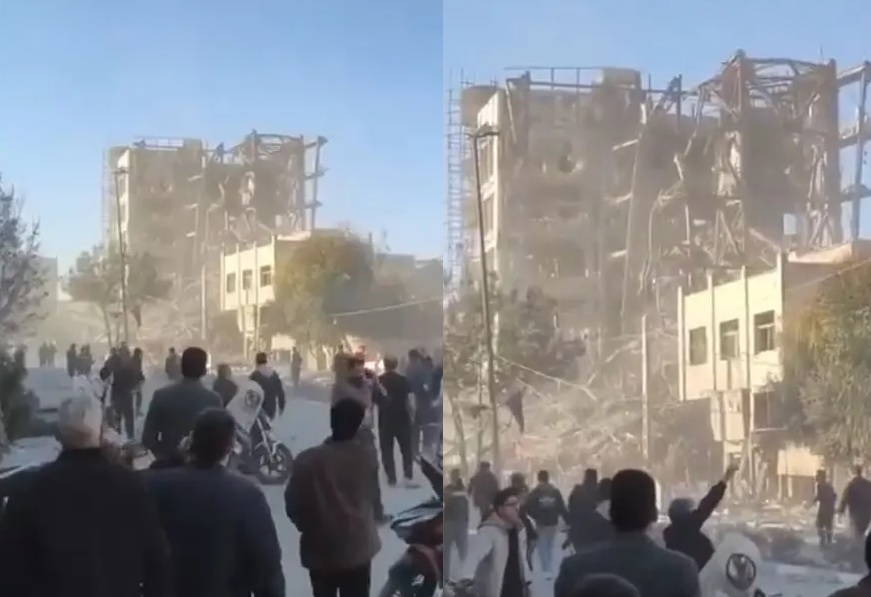
QOM, Iran — March 3, 2026 : A major airstrike targeted a building associated with Iran’s Assembly of Experts in the holy city of Qom on Tuesday, according to Israeli defense sources and multiple Iranian media outlets. The strike occurred while the clerical body was convening to select a successor to the late Supreme Leader, Ayatollah Ali Khamenei, who was killed in a joint U.S.-Israeli operation on February 28.
The Assembly of Experts, an 88-member body of senior clerics elected every eight years, is constitutionally mandated to appoint and oversee the country’s Supreme Leader. Under Article 111 of Iran’s Constitution, it is responsible for selecting a permanent successor in the event of death or incapacity.
Details of the Strike
Israeli media, including Kan News and The Jerusalem Post, reported that the Israeli Air Force carried out the strike with the objective of disrupting the leadership transition process. An Israeli defense official, speaking on condition of anonymity, stated that the purpose of the operation was to prevent the appointment of a new Supreme Leader following Khamenei’s death.
According to Israeli and international reports, the strike occurred during an active session of the Assembly in Qom, with some outlets claiming members were either counting ballots or engaged in a formal vote at the time of impact. It remains unclear how many of the 88 members were present inside the building.
The Times of Israel, citing a defense source, reported that the targeted structure was hosting senior clerics involved in the succession deliberations. The Yeshiva World stated that the strike took place amid discussions over Khamenei’s successor.
Conflicting Accounts on Damage and Casualties
Reports regarding the extent of the damage and potential casualties differ significantly.
Some Israeli media outlets described the building as severely damaged or flattened during the session, suggesting the strike directly targeted the assembled clerics.
Iranian state-linked media offered a different account. The Tasnim News Agency confirmed that a building linked to the Assembly of Experts in Qom was struck, describing the attackers as “American-Zionist criminals.” However, the semi-official Mehr News Agency reported that the structure hit was an old auxiliary building not in active use at the time and stated that no official session was being held there.
Iran’s state broadcaster IRIB reported that Assembly offices in both Qom and Tehran had been evacuated in advance, resulting in no casualties. The Tehran office, located in the former parliament building, was also reportedly struck overnight.
A Telegram channel known as Zed TV claimed that the strike targeted a formal session and resulted in deaths and injuries among members of the Assembly, though these claims have not been officially confirmed.
Footage circulated by Iranian and Israeli outlets showed visible structural damage, smoke, and debris at the Qom site. Images published by The Jerusalem Post depicted a heavily damaged structure.
Interim Leadership and Constitutional Process
Following Khamenei’s death, a three-member interim leadership council assumed temporary authority under Article 111 of the Constitution. The council consists of:
-
Masoud Pezeshkian, President of Iran
-
Gholam-Hossein Mohseni-Ejei, Chief Justice
-
Ayatollah Alireza Arafi, Member of the Guardian Council
This interim body is tasked with maintaining state functions until the Assembly of Experts formally appoints a new Supreme Leader. The targeting of the Assembly building represents a direct disruption of that constitutional process.
Broader Conflict Context
The strike comes amid an ongoing military confrontation involving U.S. and Israeli forces against Iranian targets. Iranian media reported that air defense systems intercepted several incoming projectiles in recent days, limiting damage in some areas.
According to the Iranian Red Crescent, at least 787 people have been killed in airstrikes across Iran since the conflict began. In response to earlier operations, Iran launched retaliatory missile and drone strikes against Israeli and regional targets.
Israeli intelligence sources cited in media reports indicated that surveillance, including hacked traffic cameras and mobile network monitoring, was used in advance of related operations.
Security measures were heightened across Tehran and other major cities following Tuesday’s strike in Qom. Iranian authorities have not released verified casualty figures related specifically to the Assembly building.
No immediate official statement from U.S. authorities addressed the Qom strike directly. Further assessments regarding casualties, structural damage, and the status of the Assembly’s succession proceedings are expected as investigations continue.
——— End of Article ———