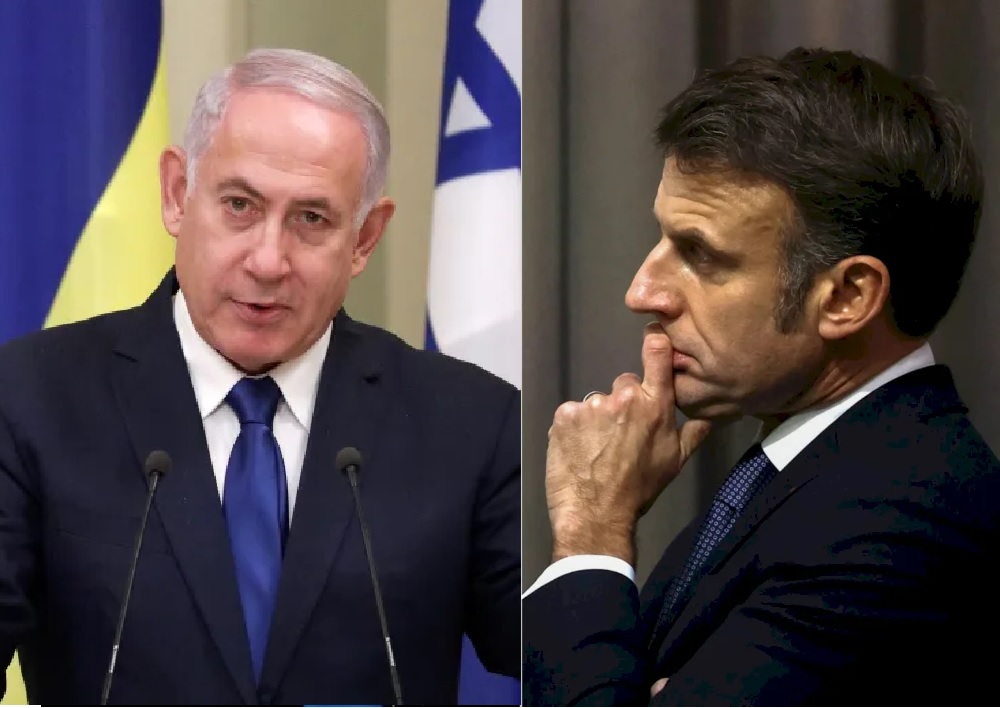
JERUSALEM, — March 31, 2026 : The Israeli Ministry of Defense has suspended all defense procurement from France and initiated steps to terminate existing government-to-government contracts, marking a significant shift in bilateral military-industrial relations. The decision was authorized by Defense Minister Israel Katz, with the support of Prime Minister Benjamin Netanyahu, and formally announced by Ministry Director-General Amir Baram on March 31, 2026.
The ministry stated that future procurement will be redirected toward domestically produced systems and suppliers from strategically aligned countries.
Airspace Dispute Triggers Immediate Policy Shift
The immediate cause of the decision was France’s refusal over the weekend to allow United States military aircraft carrying supplies for Israel to transit French airspace. The aircraft were linked to ongoing U.S.-Israeli operations targeting Iran.
Israeli officials described the move as a decisive turning point in already strained relations. One senior official said the airspace denial was “the straw that broke the camel’s back,” reflecting accumulated frustration over France’s policy stance in recent years.
U.S. President Donald Trump publicly criticized the French decision, stating that France’s refusal to permit transit of aircraft “loaded up with military supplies” was unhelpful and warning that the United States would take note of the action.
However, a French military source stated that France had not imposed a blanket ban on U.S. military flights. According to the source, landing conditions at Istres and Avord air bases remain unchanged, with restrictions limited to certain logistical transport aircraft.
Limited but Targeted Impact on French Defense Industry
The suspension affects a modest but technically significant segment of France’s defense exports to Israel. Official French data indicates that new defense orders totaled approximately €27.1 million in 2024, with deliveries declining compared to the previous year.
Most French exports consisted of specialized components, including avionics sub-systems, electronic parts, and dual-use materials. A significant portion of these components were integrated into Israeli systems for re-export or used in defensive platforms.
The halt is expected to disrupt ongoing and planned deliveries. Items such as alternators for Israeli unmanned aerial systems, including the Hermes 900, may require cancellation or redirection where government procurement is involved.
At the same time, private-sector commercial agreements between French and Israeli firms are not directly affected and may continue independently.
France has not exported major arms systems to Israel since 1998, limiting the broader financial impact. Analysts note that both countries largely operate as competitors in the global defense market.
Reciprocal Effects and Missed Opportunities
The procurement freeze is reciprocal, effectively cutting France off from Israeli defense technologies. This includes systems developed by companies such as Rafael Advanced Defense Systems, Israel Aerospace Industries, and Elbit Systems.
These firms produce combat-proven systems, including missile defense platforms and loitering munitions, which have seen growing international demand. European countries, including Germany, have recently procured systems such as the Arrow 3 missile defense system to enhance air defense capabilities.
The loss of access to Israeli technologies may affect France’s long-term military modernization, particularly in areas where Israeli systems have shown operational effectiveness.
Deterioration of Bilateral Defense Relations
The decision follows a gradual decline in Franco-Israeli defense relations over the past two years.
Key developments include:
- Suspension of French export licenses for defense sales to Israel following the Gaza conflict under President Emmanuel Macron
- Exclusion of Israeli defense companies from major exhibitions in France, including Eurosatory
- Closure of Israeli company stands — including Elbit Systems, Rafael, Israel Aerospace Industries, and UVision — at the Paris Air Show (June 2025)
- French support for a United Nations resolution advocating an arms embargo on Israel
- Recognition of a Palestinian state (September 2025) and calls to limit Israeli military operations in Gaza and Lebanon
Israeli officials have described these policies as politically restrictive and inconsistent with defense cooperation.
Strategic Shift Toward Domestic Production
The suspension aligns with Israel’s strategy to reduce reliance on politically uncertain suppliers. The Ministry of Defense has accelerated investment in domestic manufacturing, allocating substantial funding to expand local production of critical defense systems.
For technologies not yet produced domestically, Israel is developing alternative supply chains with European and global partners, while phasing out French suppliers from procurement networks.
While existing contracts are expected to be honored until completion, all new government-to-government procurement from France has been halted.
Broader Implications
The move reflects a wider realignment in defense partnerships amid ongoing tensions linked to the Iran conflict. It also highlights growing divisions between Israel and European countries over arms policy, military operations, and diplomatic positions.
No official response from the French government had been issued at the time of reporting. The development was first reported by Channel 12 News and confirmed by multiple sources.
The decision represents a structural and long-term shift in Israel’s defense procurement strategy, signaling a clear move away from France.
——— End of Article ———