BAGHDAD — March 15, 2026 : Iraq’s federal Oil Ministry has requested the Kurdistan Regional Government (KRG) to allow the immediate resumption of crude oil exports through the northern pipeline to Turkey, as the country seeks alternative export routes following the disruption of southern shipments caused by Iran’s closure of the Strait of Hormuz.
The request comes as Iraq attempts to stabilize government revenues that depend heavily on oil exports. Crude sales account for roughly 90 percent of the federal government’s income, making the restoration of export capacity a priority for Baghdad amid the ongoing regional crisis.
Federal Plan to Restore Exports Through the Northern Corridor
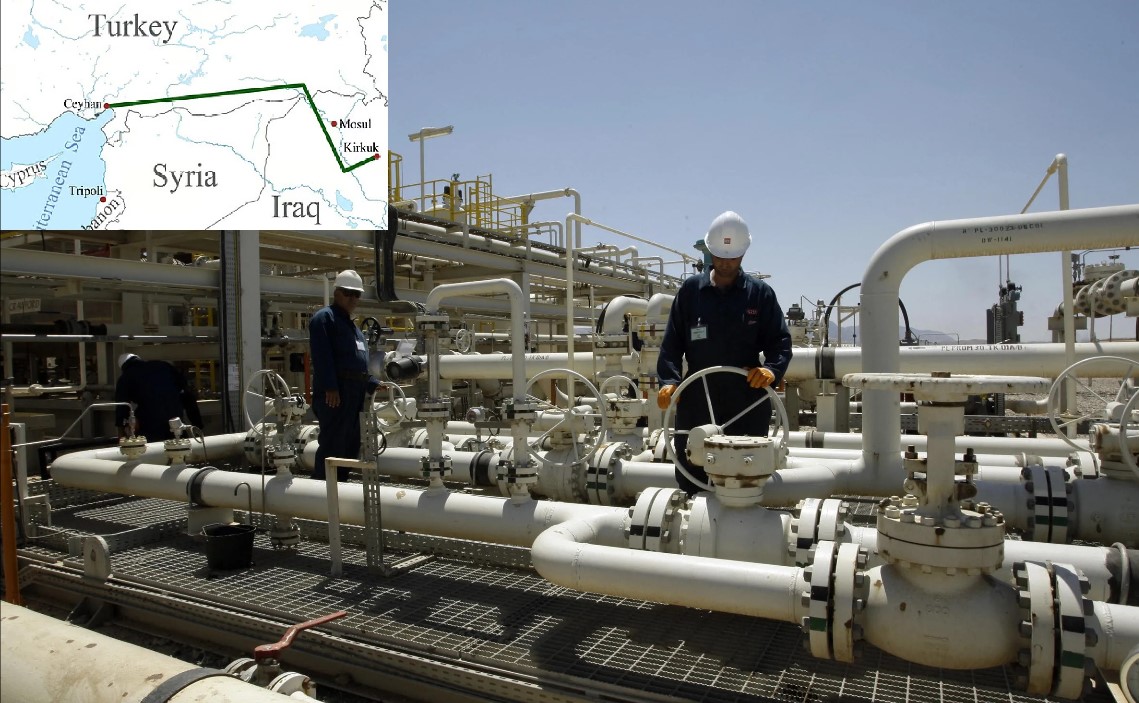
According to officials from the Oil Ministry, the federal government has proposed exporting up to 500,000 barrels per day (bpd) through the northern route that connects Iraq’s oil fields to Turkey’s Mediterranean port of Ceyhan.
The proposed export volumes include 300,000 bpd from the federally controlled Kirkuk oil fields and 200,000 bpd from fields located within the Kurdistan Region. Production in several Kurdish-operated fields has remained suspended after militia attacks targeting energy infrastructure in recent months.
The Kirkuk–Ceyhan pipeline, which stretches roughly 970 kilometers, serves as Iraq’s main northern export corridor. The pipeline runs from northern Iraq through the Kurdistan Region before crossing into Turkey and terminating at the Ceyhan export terminal on the Mediterranean coast.
Under current conditions, crude produced in the Kirkuk fields—normally capable of producing around 350,000 barrels per day—has largely been redirected to domestic refineries such as the Baiji refinery complex, following the halt of southern maritime exports.
Within the Kurdistan Region, the pipeline infrastructure is operated by the Kurdistan Pipeline Company, which connects Kurdish oil fields and federal infrastructure to the main Iraq–Turkey pipeline system at the border.
Hormuz Closure Forces Iraq to Seek Alternative Export Routes
The federal government’s request follows Iran’s closure of the Strait of Hormuz, a key maritime chokepoint through which the majority of Iraq’s southern oil exports normally pass. The closure has effectively halted shipments from Iraq’s southern export terminals in the Persian Gulf, which historically handle the majority of the country’s crude exports.
Since early March 2026, the disruption has significantly reduced Iraq’s overall export capacity and placed pressure on the federal budget, which relies primarily on oil revenues.
With southern exports suspended, Baghdad is attempting to restore shipments through the northern corridor in order to maintain access to international markets.
Kurdistan Regional Government Rejects Immediate Restart
Despite the federal request, the Kurdistan Regional Government’s Ministry of Natural Resources has formally declined to authorize the restart of pipeline exports under current conditions.
In its response, the Kurdish ministry said several financial and administrative disputes with Baghdad must be resolved before exports can resume. The KRG stated that these issues are linked to broader economic arrangements between the federal and regional governments rather than the technical operation of the pipeline itself.
A senior Kurdish official speaking to the Kurdish news outlet Rudaw stated that the Kurdistan Region supports the principle of restarting exports, noting that the northern pipeline remains the only stable route currently available for Iraqi crude to reach international markets.
However, the official said the regional government cannot proceed while restrictions affecting Kurdish trade remain in place.
Financial Dispute Over Access to U.S. Dollars
The primary disagreement centers on Baghdad’s implementation of a new digital customs and financial monitoring system that affects trade conducted in the Kurdistan Region.
Under the federal system, traders must pay federal taxes in advance before gaining access to U.S. dollars at the official exchange rate provided through Iraq’s central banking system.
Officials in Erbil argue that the system has not yet been integrated with the Kurdistan Region’s own financial and customs platforms. As a result, traders operating in the region are currently unable to access dollars through the official federal mechanism.
KRG officials describe the situation as a “dollar embargo” that restricts the region’s commercial activity and cross-border trade.
The Kurdish government has stated that it will not authorize the export of either regional or federally produced crude through the pipeline until the financial dispute is addressed.
Digital Customs System at the Center of the Dispute
The dispute is linked to the federal government’s adoption of the ASYCUDA digital customs platform, which is intended to modernize tax collection and improve oversight of cross-border trade.
However, the system has not yet been fully synchronized with the Kurdistan Region’s existing administrative infrastructure. This technical gap has created difficulties for merchants and businesses operating in Kurdish territory who rely on access to dollars at the official government rate.
Baghdad maintains that the customs system is a nationwide policy intended to standardize revenue collection and financial oversight. Federal officials have indicated that the issues raised by the Kurdistan Region could be addressed separately while oil exports resume.
Negotiations Continue Without Immediate Agreement
The Iraqi Oil Ministry has reiterated that restoring exports through the northern pipeline is necessary to protect the national economy and comply with provisions of Iraq’s constitution and federal budget law.
Federal authorities have called for the immediate restart of exports while negotiations continue on the financial and administrative disputes.
As of mid-March 2026, no agreement has been reached between Baghdad and the Kurdistan Regional Government. Discussions are ongoing regarding technical arrangements, financial mechanisms, and the broader economic relationship between the federal government and the Kurdistan Region.
Until a resolution is reached, Iraq remains without its primary alternative export route while southern oil shipments remain suspended due to the regional conflict affecting the Strait of Hormuz.
——— End of Article ———