TEHRAN / WASHINGTON : Western naval planners are paying renewed attention to a little-seen but potentially decisive element of Iran’s military arsenal: advanced seabed naval mines capable of threatening the world’s largest warships. Intelligence assessments circulating among U.S. and allied defense agencies identify Iran’s EM-52 rising mine—often informally referred to as the “M A52” in defense circles—as one of the most dangerous maritime weapons in the region, with the theoretical ability to cripple or sink capital ships, including aircraft carriers.
The concern is not merely the destructive power of the mine itself, but the strategic context in which it would be deployed. Iran’s expanding mine-warfare capabilities are viewed as particularly destabilizing in the narrow waters of the Strait of Hormuz, a critical global energy chokepoint through which a significant share of the world’s oil and liquefied natural gas (LNG) exports must pass each day.
A New Generation of Seabed Weapons
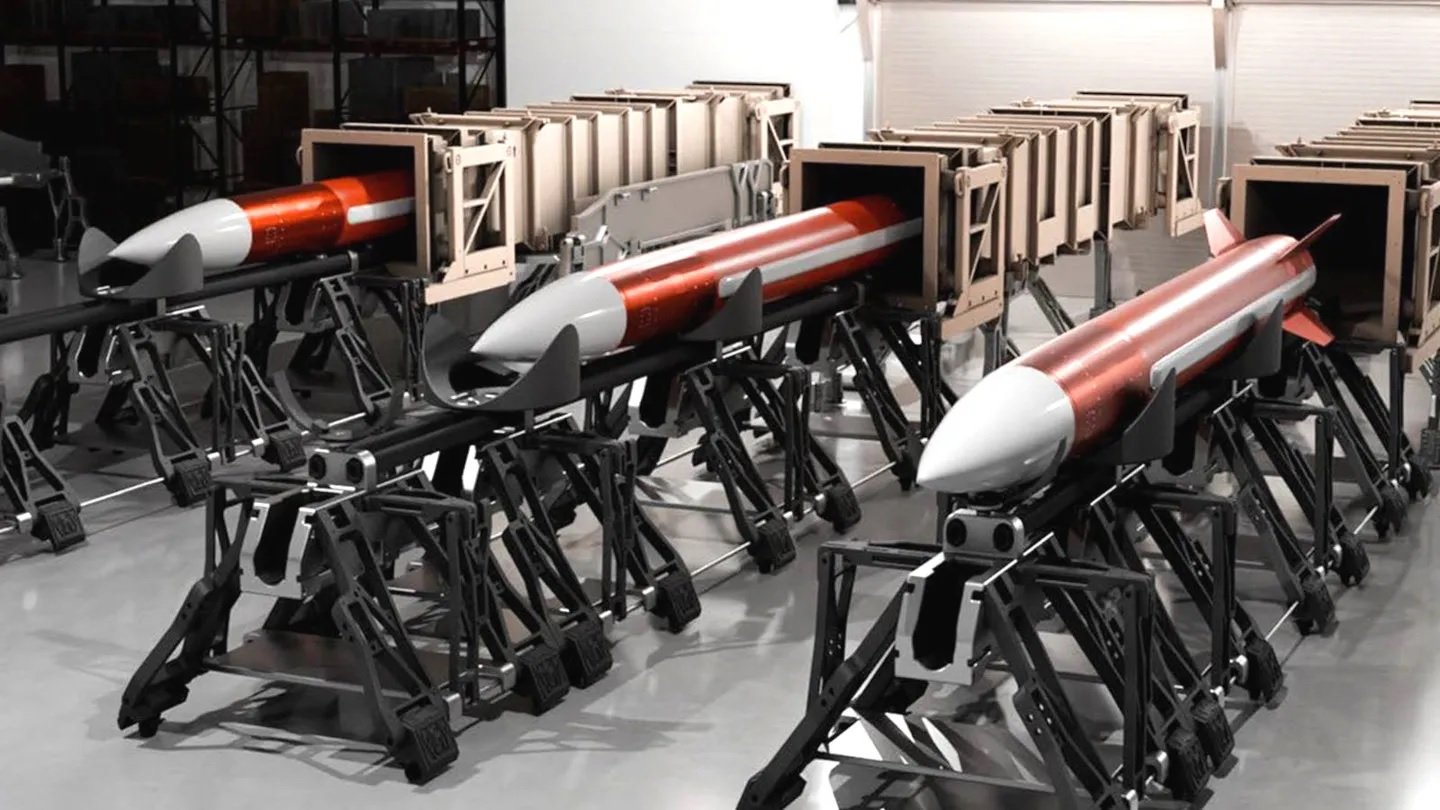
Unlike traditional naval mines that float on the surface or are moored just below it, the EM-52 belongs to a class of “bottom” or seabed mines. These weapons rest directly on the sea floor, blending into the natural environment and complicating detection by conventional mine-hunting sonar systems. Defense analysts note that the EM-52 is believed to be deployable in deep coastal waters, well beyond the shallow zones associated with older mine designs.
What distinguishes the EM-52 from simpler mines is its active attack mechanism. Rather than detonating on contact, the weapon uses a suite of multi-influence sensors to monitor the surrounding water for the unique acoustic, pressure, and magnetic signatures of large naval vessels. Once those signatures match a pre-programmed target profile, the mine launches a rocket-propelled projectile upward from the seabed toward the ship.
This “rising mine” concept is considered especially dangerous because it delivers its explosive force directly to the underside of a vessel. Naval architects have long acknowledged that the keel and lower hull of even the largest warships are among their most structurally vulnerable points. A sufficiently powerful underwater blast can break the ship’s backbone, leading to catastrophic flooding and potential loss of the vessel.
The Aircraft Carrier Threat Calculation
Western analysts estimate that the EM-52 is designed to carry a high-explosive warhead weighing several hundred pounds. In theoretical combat modeling, an underwater strike of that magnitude beneath a large surface combatant could disable propulsion systems, rupture fuel and ammunition compartments, or generate a keel-breaking shockwave. While modern aircraft carriers incorporate extensive compartmentalization and damage-control systems, U.S. Navy studies have repeatedly concluded that no surface ship is immune to a major underwater explosion.
Beyond the physical damage, the psychological and strategic impact is profound. Aircraft carriers are not only military assets but powerful symbols of U.S. global power projection. The prospect that a relatively low-cost naval mine could neutralize a multi-billion-dollar warship forces planners to reassess risk in confined waters near Iran.
The “Invisible” Mine Problem
Perhaps the most troubling development for Western navies is Iran’s reported progress in producing non-magnetic naval mines. Traditional mine-countermeasure operations often rely on generating artificial magnetic fields to safely trigger mines from a distance. Mines built with steel casings are particularly vulnerable to such techniques.
Iran, however, is believed to have developed mines using non-magnetic materials such as fiberglass and reinforced composite polymers. These casings drastically reduce a mine’s magnetic signature, rendering classic magnetic sweeping methods largely ineffective. As a result, mine-clearing forces must rely on slower, riskier approaches, including high-resolution sonar, unmanned underwater vehicles (UUVs), and manual identification.
Adding to the complexity are “smart” multiple-influence sensors. Intelligence assessments suggest advanced Iranian mines can be programmed to ignore smaller vessels, delay detonation until a specific class of warship passes overhead, or even count transiting ships—allowing escorts to pass before striking a high-value target such as an aircraft carrier.
Strait of Hormuz: Geography as a Weapon
The threat posed by these mines is magnified by the geography of the Strait of Hormuz itself. While the strait appears wide on maps, the reality for large commercial tankers and naval vessels is far more restrictive. The deep-water shipping lanes are narrow, shallow in places, and highly predictable, leaving little room for evasive maneuvering.
At its narrowest point, the strait spans roughly 33 to 55 kilometers, but designated traffic separation schemes compress vessels into corridors only a few miles wide in each direction. This predictability creates an ideal environment for seabed mine warfare, effectively turning the strait into a potential maritime kill zone.
Any credible mining of the Strait of Hormuz would have consequences far beyond the immediate military balance. Approximately 20 percent of global oil consumption and a substantial share of the world’s LNG trade pass through the strait. Even limited disruption—or the mere threat of undetected mines—could send energy prices soaring and trigger widespread economic shockwaves.
Strategic Leverage, Not Just a Weapon
Western officials emphasize that Iran’s mine arsenal should be viewed as a form of strategic leverage, not merely a tactical weapon. By deploying or threatening to deploy advanced, hard-to-detect naval mines, Tehran can exploit asymmetries against technologically superior navies. Clearing sophisticated, non-magnetic seabed mines is time-consuming, resource-intensive, and inherently dangerous—even for the most advanced naval forces.
As tensions periodically flare between Iran and the United States, the EM-52 and similar systems highlight how low-visibility weapons can produce outsized strategic effects. In the shallow, crowded waters of the Persian Gulf, naval mines—silent, hidden, and difficult to neutralize—remain among the most formidable challenges to modern maritime power.
——— End of Article ———