TEHRAN / WASHINGTON — March 20, 2026 : The Islamic Revolutionary Guard Corps (IRGC) has claimed that its Majid (AD-08) short-range air defense system was responsible for striking a U.S. Air Force F-35A Lightning II during a combat mission over central Iran on March 19.
The claim follows confirmation from U.S. Central Command (CENTCOM) that an F-35 sustained damage during operations and conducted an emergency landing at a U.S. airbase in the Middle East. The pilot was reported to be in stable condition, and the incident remains under investigation. U.S. officials have not formally confirmed the specific cause of the damage.
Reported Engagement and Operational Context
According to Iranian statements and supporting media releases, the engagement occurred at approximately 2:50 a.m. local time during ongoing military operations linked to the current regional conflict involving the United States, Israel, and Iran.
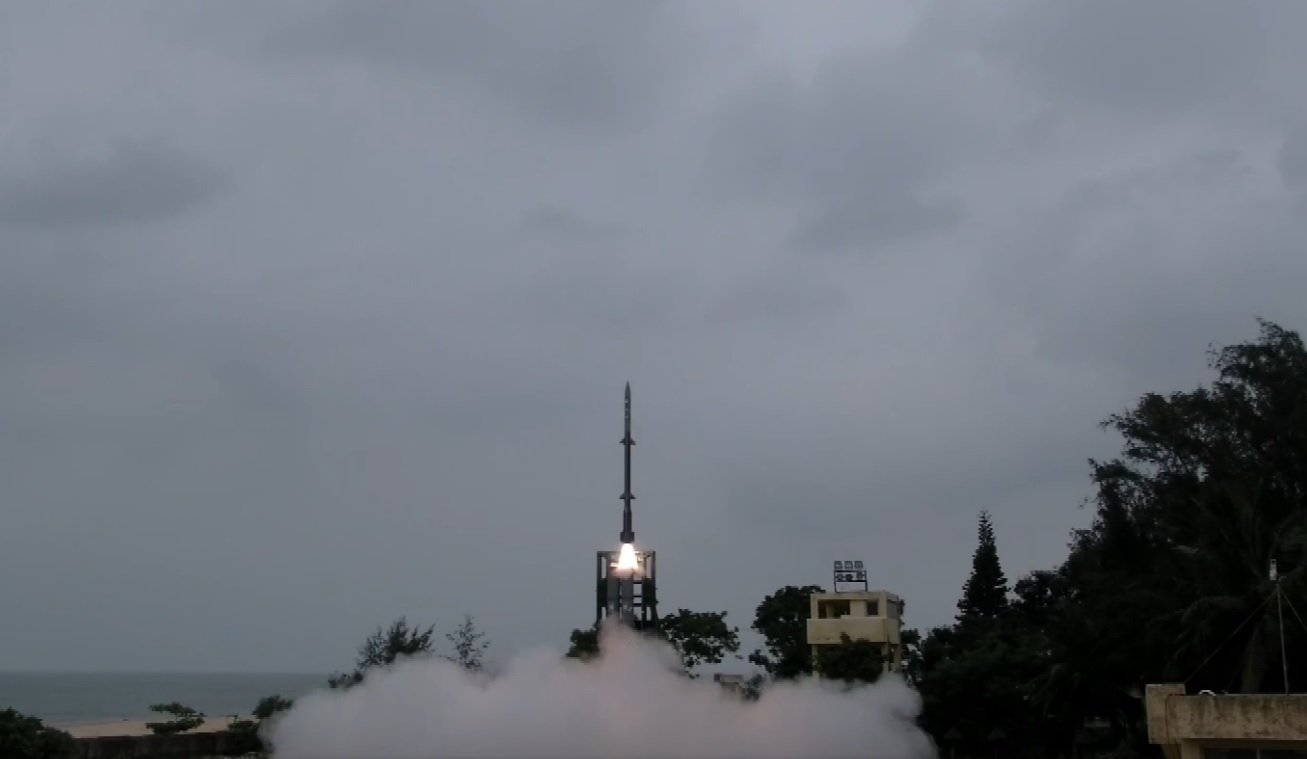
Iranian sources state that the aircraft was targeted by a surface-to-air missile launched from the Majid system. Video footage released by Iranian outlets, recorded through forward-looking infrared (FLIR) systems, shows a missile intercept event. Analysis of the footage indicates that the aircraft was not destroyed and remained airborne after the impact, consistent with U.S. confirmation that the jet returned to base.
If verified, the incident would represent the first recorded instance of a manned U.S. F-35 being successfully engaged by surface-to-air fire since the aircraft entered operational service in 2018.
Majid (AD-08) Air Defense System
The Majid system is produced by Iran’s Defense Industry Organization under the Armed Forces Logistics Department and was first publicly displayed on April 18, 2021. It is designed as a short-range, point-defense air defense system rather than a wide-area coverage platform.
Key characteristics include:
-
Engagement range: up to 8 kilometers (minimum approximately 700 meters)
-
Altitude ceiling: up to 6 kilometers
-
Detection range: up to 15 kilometers using electro-optical systems
-
Coverage: 360-degree azimuth with elevation from 0 to 12 degrees
-
Target tracking: capability to track up to four targets simultaneously
-
Target speed: engagement of targets traveling up to Mach 2
The system uses passive electro-optical and thermal sensors combined with infrared-guided missiles, allowing it to operate without emitting radar signals. This reduces its detectability and prevents activation of standard radar warning receivers on targeted aircraft.
The AD-08 missile associated with the system has a diameter of 156 mm, a length of 2,670 mm, and a weight of approximately 75 kilograms. It uses a passive imaging infrared seeker designed to track heat signatures.
Footage from the engagement suggests that only a single missile was launched, which analysts assess may reflect either tactical choice or limited ready-to-fire inventory.
Infrared Threats to Stealth Aircraft
The reported engagement highlights the distinction between radar stealth and infrared detectability. While the F-35 is optimized to reduce radar cross-section, managing engine heat signatures remains a technical challenge.
Infrared-guided systems such as the Majid do not rely on radar emissions, making them less susceptible to electronic jamming and harder to detect. This reduces warning time for pilots and increases vulnerability during low-altitude or close-range operations.
Iranian infrared-based systems have previously demonstrated effectiveness against high-value unmanned aerial systems, including MQ-9 Reaper and Heron drones, in various operational theaters.
Expansion of Short-Range Air Defense Capabilities
Iran has continued to invest in short-range air defense modernization. Leaked documents from February 2026 indicate that the Iranian Ministry of Defence signed a $580 million agreement with Russia for the procurement of 9K333 Verba man-portable air defense systems (MANPADS).
The reported acquisition includes:
-
500 launchers
-
2,500 9M336 missiles
The Verba system has an engagement range of 500 meters to 6.5 kilometers and an altitude ceiling of 4.5 kilometers. It is equipped with a three-spectral seeker operating in ultraviolet, near-infrared, and mid-infrared bands, enhancing resistance to countermeasures such as flares and directional infrared jamming systems.
The relatively short training requirements for Verba operators could allow rapid deployment if deliveries proceed during ongoing hostilities.
Implications for F-35 Operations
The incident also draws attention to ongoing limitations within the F-35 program, particularly related to Block 4 software upgrades. These upgrades are required to enable integration of advanced long-range, air-to-surface standoff weapons.
Delays in Block 4 implementation have limited the aircraft’s ability to engage targets from extended distances, requiring operations closer to defended airspace. This increases exposure to short-range air defense systems such as the Majid and Verba.
As a result, analysts assess that operational planning may require adjustments, including revised flight profiles, increased use of stand-off weapons where available, and enhanced countermeasures against infrared-guided threats.
Strategic Outlook
The reported strike occurs within the broader context of an ongoing regional conflict that began in late February 2026. While investigations continue, the event underscores the evolving threat environment posed by layered short-range air defense systems against advanced aircraft.
The combination of passive detection, infrared guidance, and mobile deployment is likely to remain a key factor in shaping air operations in contested environments. Military operators of the F-35 across multiple countries are expected to review tactics, procedures, and survivability measures in response to the engagement.
——— End of Article ———