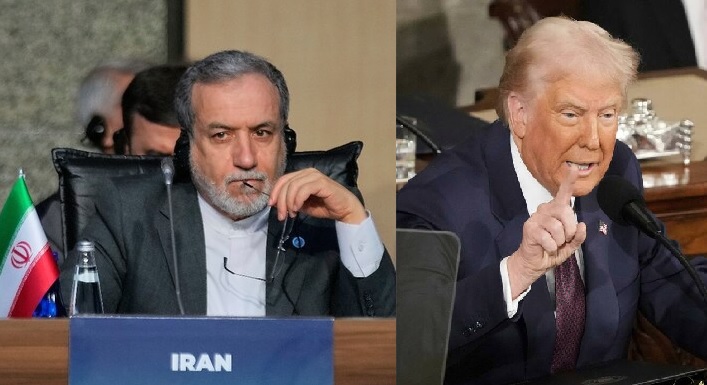
TEHRAN / WASHINGTON : Iran has formally announced the start of a new round of nuclear negotiations with the United States, outlining a tightly defined diplomatic framework that limits discussions strictly to its nuclear program while maintaining an elevated level of military preparedness. The announcement, issued early Tuesday, signals a cautious reopening of dialogue after months of heightened tensions between Tehran and Washington.
According to Iran’s Foreign Ministry, the talks are expected to take place in Istanbul and will focus exclusively on nuclear transparency, enrichment limits, and verification mechanisms. Iranian officials stressed that other longstanding areas of dispute, including the country’s ballistic missile program and its regional military posture, will not be part of the negotiations. Tehran described these elements as core components of its national defense strategy and therefore outside the scope of diplomatic bargaining.
Defined Scope of Negotiations
Iran characterized its approach as a “dual-track” strategy that combines diplomatic engagement with deterrence. While agreeing to return to negotiations, senior officials emphasized that Iran’s armed forces have been placed on a higher state of readiness in anticipation of potential escalation if talks fail.
Officials reiterated that Iran is prepared to discuss confidence-building measures related to its nuclear activities but will not accept conditions that extend beyond that file. The Foreign Ministry said the objective of the talks is to clarify Iran’s nuclear activities and seek relief from pressure measures, while preserving what it called the country’s legitimate defense capabilities.
U.S. Response and Military Posture
The limited scope of Iran’s proposal has drawn a firm response from Washington. Speaking at the Pentagon, U.S. Secretary of War Pete Hegseth said the United States would closely assess whether Tehran is negotiating in good faith. He warned that Washington retains a full range of options should the talks be used to delay substantive commitments.
Hegseth said the administration’s position remains that Iran must not acquire the capability to develop nuclear weapons. He referenced Operation Midnight Hammer, a U.S. military campaign conducted in June 2025, as evidence of Washington’s willingness to act if diplomacy fails. The secretary added that while military action is not the preferred outcome, preparedness is central to U.S. defense policy.
The Pentagon has confirmed the continued deployment of significant U.S. naval and air assets to the region, including a carrier strike group led by the USS Abraham Lincoln, as negotiations approach. U.S. officials describe the deployments as a deterrent measure rather than a signal of imminent action.
Operation Midnight Hammer
The renewed talks take place against the backdrop of Operation Midnight Hammer, a large-scale U.S. air operation that targeted Iran’s nuclear infrastructure last year. The campaign involved B-2 Spirit bombers and massive ordnance penetrators, aimed at hardened facilities, including the underground enrichment sites at Fordow and Natanz.
U.S. defense assessments at the time indicated that the strikes significantly degraded Iran’s nuclear program, setting it back by up to two years. Subsequent intelligence reporting has suggested that Iran has undertaken efforts to restore and reinforce damaged facilities, including construction work at greater depths underground.
Diplomatic Challenges Ahead
Diplomatic sources familiar with the negotiations say the distance between the two sides remains substantial. The United States is seeking a broader agreement that addresses enrichment levels, monitoring, and delivery systems, while Iran has made clear it will not discuss missiles or regional security issues.
Regional analysts note that confining the talks to the nuclear issue may simplify technical discussions but could also limit the durability of any agreement reached. They argue that unresolved security concerns have historically undermined previous accords.
U.S. envoy Steve Witkoff is expected to represent Washington in the Istanbul discussions, meeting with Iranian counterparts under close international scrutiny. Both sides have indicated that the talks are exploratory, with no guarantee of a comprehensive agreement.
As preparations continue, officials in Tehran and Washington alike have signaled that the coming negotiations will test whether diplomacy can stabilize the standoff or whether the failure of talks will lead to renewed confrontation.
——— End of Article ———