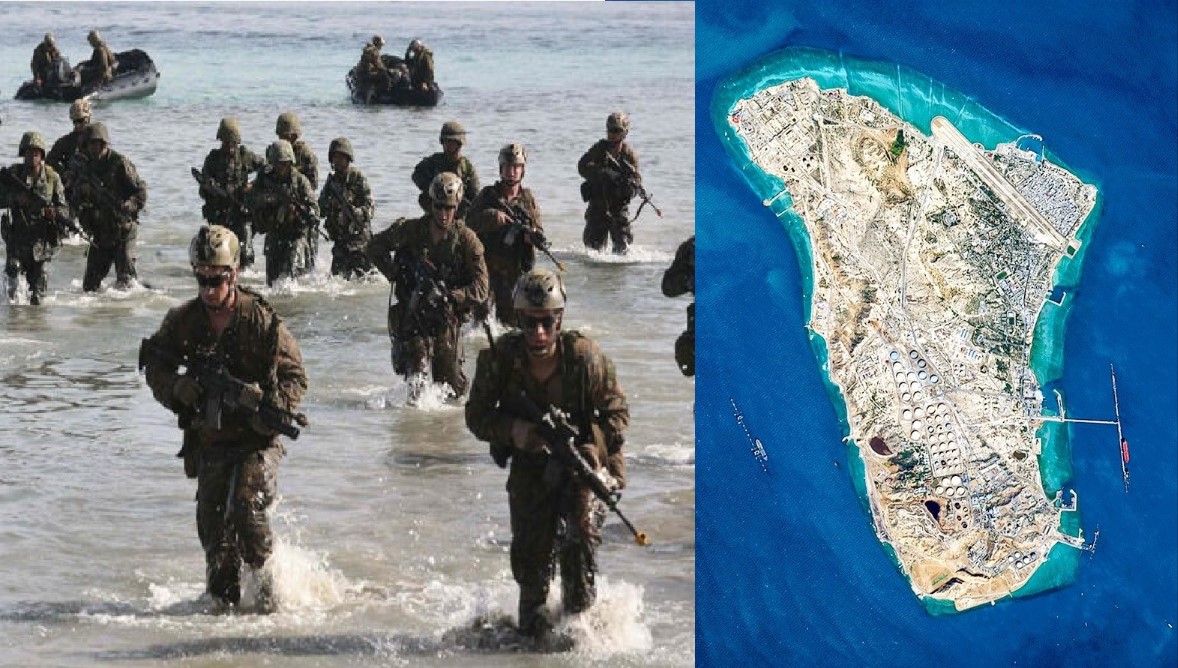
WASHINGTON / TEHRAN — March 27, 2026 : Iran has intensified defensive preparations on Kharg Island, reinforcing the strategic oil hub with additional troops, layered air defense systems, and extensive minefields amid growing indications that the United States is assessing options for a potential ground operation.
The island, located roughly 25 to 55 kilometers off Iran’s coast in the northeastern Persian Gulf, functions as the primary export terminal for Iranian crude oil and remains central to the country’s economic stability.
Military Reinforcements and Defensive Measures
According to multiple sources familiar with U.S. intelligence assessments, Iran has significantly strengthened Kharg Island’s defenses in recent weeks. These measures include the deployment of additional ground forces, portable surface-to-air missile systems (MANPADS), and the placement of anti-personnel and anti-armor mines along shorelines and likely amphibious landing zones.
The island was already protected by multi-layered defenses prior to the latest buildup. Recent reinforcements are intended to complicate any potential amphibious or airborne assault, particularly by U.S. Marine forces trained in rapid-response expeditionary operations.
Reports indicate that U.S. military planners are factoring in the heightened defensive posture. Officials have cautioned that any attempt to seize the island would involve substantial operational risks and could result in significant casualties.
U.S. Force Posture in the Region
The Iranian buildup coincides with an expanded U.S. military presence in the Persian Gulf. Two U.S. Marine Expeditionary Units have been deployed to the region, supported by an anticipated deployment of approximately 1,000 paratroopers from the U.S. Army’s 82nd Airborne Division.
The Pentagon has already conducted strikes earlier this month targeting military installations on Kharg Island, while avoiding damage to oil export infrastructure. The current posture suggests continued evaluation of both kinetic and non-kinetic options as part of broader contingency planning.
Strategic Importance of Kharg Island
Kharg Island handles approximately 90 to 94 percent of Iran’s crude oil exports, making it the central hub of the country’s energy infrastructure. Pipelines from major oil fields, including Ahvaz, Marun, and Gachsaran, connect directly to storage facilities and deep-water jetties on the island.
The terminal has historically supported loading capacities of up to 7 million barrels per day, although current export levels are estimated at 1.5 to 1.6 million barrels daily. The site also maintains storage capacity for tens of millions of barrels, serving as both an operational hub and a strategic reserve.
Revenue generated through Kharg Island constitutes a substantial share of Iran’s government income and supports key state functions, including operations linked to the Islamic Revolutionary Guard Corps (IRGC).
Operational Considerations and Deterrence Dynamics
Military analysts assessing a potential U.S. ground operation have highlighted both the strategic advantages and inherent constraints. Control of Kharg Island would provide Washington with significant leverage over Iran’s primary revenue stream and could influence broader negotiations, including maritime security in the Strait of Hormuz.
Analysts also note a specific deterrence dynamic tied to the island’s infrastructure. If U.S. forces were to establish control, Iran would likely avoid targeting the island with ballistic missiles or drone strikes, as such actions would risk destroying critical oil facilities essential to its own economy.
Instead, any Iranian response would likely focus on alternative regional or military targets to avoid self-inflicted economic damage.
Global and Regional Implications
A potential disruption or transfer of control over Kharg Island would have implications beyond Iran. China, the primary buyer of Iranian crude exports, relies heavily on shipments originating from the island, with imports often exceeding 1 million barrels per day.
Any interruption in loading operations or external control over the facility could affect China’s energy supply chain and require adjustments in sourcing from other producers.
At the regional level, concerns are increasing among U.S. Gulf partners. Several governments have reportedly conveyed private reservations regarding the risks of escalation, warning that a ground operation could lead to a prolonged conflict and draw neighboring states into a broader confrontation.
Iranian officials have reiterated that any foreign military presence on Iranian territory would prompt a response. Parliamentary Speaker Mohammad Bagher Ghalibaf stated that infrastructure in countries supporting such an operation could become targets of sustained attacks.
Debate Over Timing and Strategy
Within defense policy circles, some analysts have questioned the timing of a potential operation. A number of military experts argue that securing Kharg Island earlier in the current conflict—during its initial phase in late February—might have provided the United States with immediate leverage in negotiations.
Early control of the island, they suggest, could have strengthened Washington’s position in shaping outcomes related to regional security and economic access, potentially reducing the need for extended military engagement.
Outlook
U.S. officials continue to evaluate operational scenarios involving Kharg Island as part of broader strategic planning in the region. The island’s reinforced defenses, combined with its economic and geopolitical significance, remain central factors in ongoing assessments.
Developments related to Kharg Island are expected to play a key role in shaping the trajectory of U.S.–Iran tensions in the coming weeks.
——— End of Article ———