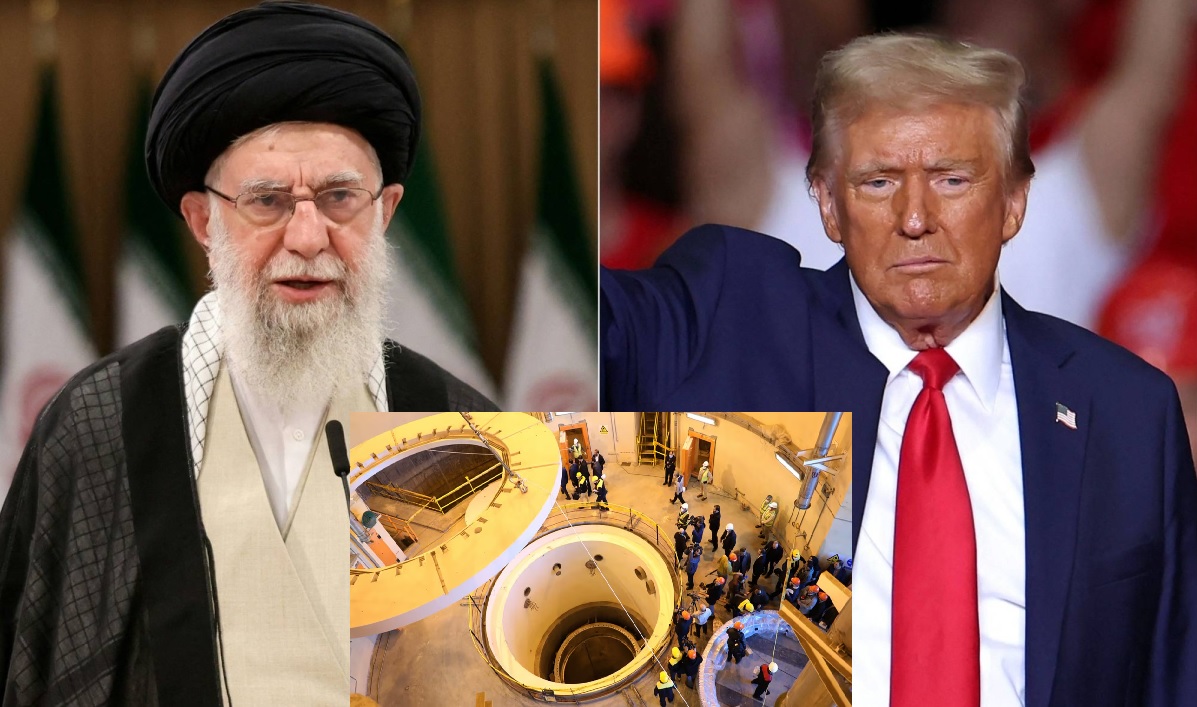
GENEVA, : Iran has proposed a three-year suspension of all uranium enrichment activities during indirect negotiations with the United States, offering what officials describe as a structured framework for nuclear de-escalation in exchange for comprehensive sanctions relief. The proposal was introduced during the second round of talks held in Geneva and was first reported by The Wall Street Journal.
The discussions are being conducted indirectly through Omani mediators. The Iranian delegation is led by Foreign Minister Abbas Araghchi, while the U.S. side is represented by Special Envoys Steve Witkoff and Jared Kushner under the administration of President Donald Trump.
Proposed Three-Year Pause
According to officials familiar with the negotiations, Tehran has offered to implement a complete halt to all uranium enrichment activities for a period of three years. Iranian representatives described the timeframe as a strategic pause intended to reduce tensions and rebuild trust following the collapse of earlier nuclear arrangements and the military escalations that occurred in 2025.
Under the proposal, enrichment activities would cease entirely during the pause period. After the three-year suspension, Iran has suggested that enrichment resume at a capped level of no more than 1.5 percent purity. This proposed cap is significantly lower than the 3.67 percent enrichment limit established under the 2015 Joint Comprehensive Plan of Action (JCPOA).
Transfer of Highly Enriched Uranium
As part of the framework, Iran has indicated its willingness to transfer a significant portion of its existing stockpile of highly enriched uranium, particularly material enriched to 60 percent purity, to a third country for storage and monitoring. Russia has confirmed that its earlier offer to receive and oversee such material remains available. Discussions have also referenced the possibility of Turkey serving as a recipient or transit location.
The relocation of 60 percent enriched uranium is intended to address concerns related to Iran’s breakout capacity. U.S. officials have consistently cited the accumulation of high-level enriched uranium as a central proliferation concern.
Economic Components of the Proposal
Tehran’s proposal links nuclear concessions to broad sanctions relief. Iranian negotiators have sought full access to billions of dollars in oil revenues currently frozen in foreign accounts and the removal of secondary sanctions affecting Iran’s energy exports.
In addition to sanctions relief, Iran has suggested the inclusion of direct commercial arrangements between U.S. and Iranian entities in sectors such as oil, gas, mining, and civil aviation. Iranian officials argue that formalized economic engagement could reinforce long-term compliance by embedding commercial interests into any future agreement.
The Iranian economy continues to face pressure from prolonged sanctions and domestic instability. Following nationwide protests in late 2025 and early 2026, the Iranian rial experienced further depreciation, increasing the urgency for financial stabilization and expanded oil revenue access.
U.S. Position and Conditions
The United States has maintained its existing position that any agreement must result in a permanent and complete cessation of domestic uranium enrichment. U.S. officials have stated that a temporary suspension does not meet Washington’s stated objective of achieving zero enrichment within Iran.
In addition to enrichment demands, the U.S. is seeking to expand the scope of negotiations to include binding restrictions on Iran's ballistic missile program and limitations on support for regional proxy groups. Iranian officials have stated that missile capabilities fall under national defense policy and are not subject to negotiation.
A senior U.S. official said that while the Iranian proposals are under review, broad sanctions relief is not currently under consideration without what Washington describes as tangible and permanent dismantlement of Iran’s nuclear infrastructure.
Technical Review and IAEA Involvement
The negotiations have now entered a technical phase involving the International Atomic Energy Agency (IAEA). Director General Rafael Grossi is expected to meet both delegations to assess verification mechanisms related to the proposed enrichment pause and to evaluate the logistical feasibility of transferring enriched uranium to a third country.
IAEA involvement would be central to monitoring compliance during any suspension period, including oversight of centrifuge activity, stockpile accounting, and potential reconfiguration of enrichment facilities.
Regional Security Context
The talks are taking place amid sustained U.S. military deployments in the Persian Gulf. The USS Gerald R. Ford carrier strike group remains positioned in the region. U.S. Secretary of State Marco Rubio has described the deployment as a protective measure intended to maintain regional stability while diplomacy continues.
Core Negotiation Positions
The current positions of both sides remain formally defined as follows:
-
Uranium Enrichment: Iran proposes a three-year suspension followed by a 1.5 percent cap; the United States demands permanent zero enrichment.
-
Uranium Stockpile: Iran offers to export 60 percent enriched uranium to a third country such as Russia; the United States seeks total removal or destruction of highly enriched material.
-
Missile Program: Iran declines to include it in negotiations; the United States seeks mandatory caps and inspections.
-
Sanctions Relief: Iran requests comprehensive access to frozen oil funds and removal of secondary sanctions; the United States proposes incremental relief contingent on compliance.
No formal agreement has been announced following the second round of talks. Both sides have indicated that further technical consultations are expected before the next diplomatic session.
——— End of Article ———