TEHRAN : Iran has imposed sweeping airspace restrictions and activated what analysts describe as a pre-war operational posture at dawn on Sunday, according to a series of aviation notices and intelligence assessments that point to preparations for a potential cruise-missile confrontation.
A review of multiple Notices to Airmen (NOTAMs), circulated to international aviation authorities and examined by regional security analysts, indicates that Tehran has quietly transitioned key elements of its civil aviation regime into what resembles a wartime footing. The measures include the activation of a live-fire zone, the suspension of low-altitude civilian flight, and ongoing warnings of GPS disruption across Iranian airspace.
Taken together, the steps suggest that Iran is preparing its skies not merely for exercises, but for the possibility of imminent hostilities.
Dawn Activation of a “Firing Zone”
According to NOTAM A0024/26, Iranian authorities scheduled the activation of a designated “firing” area beginning at approximately 03:30 UTC on Sunday morning. While such language can be associated with military training, defense analysts note that the scope and timing of the restriction are highly unusual.
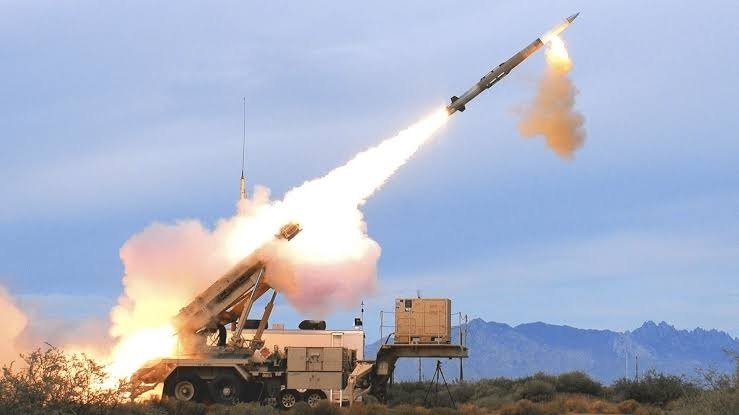
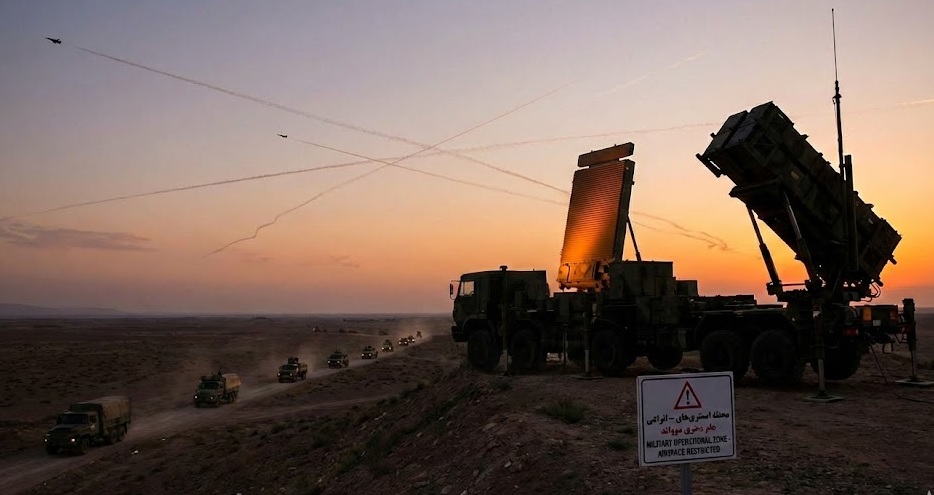
The zone extends up to 15,000 feet, a ceiling far above what would be required for routine ground-based exercises. Military aviation experts describe this configuration as a “sanitized zone” — an area cleared of civilian air traffic to allow the free movement of interceptor missiles, air-defense systems, or mobile launch units without the risk of accidental engagement of commercial aircraft.
The timing — first light on a weekend — has also drawn attention. In regional conflict planning, weekend dawn windows are often associated with the completion of troop rotations, air-defense redeployments, and readiness transitions, minimizing civilian traffic while maximizing operational surprise.
Low-Altitude Flights Effectively Grounded
A second notice, NOTAM B0825/25, goes further by suspending Visual Flight Rules (VFR) operations, effectively grounding private and low-altitude civilian aviation across affected regions.
From a military perspective, this measure addresses a longstanding vulnerability in air-defense environments: the difficulty of distinguishing slow-moving, low-altitude cruise missiles from small civilian aircraft. Platforms such as Tomahawk cruise missiles and certain long-range drones are specifically designed to fly low and evade radar, producing radar signatures similar to light aircraft.
By removing all legitimate low-altitude civilian traffic from the airspace, Iran significantly simplifies its rules of engagement. In practical terms, analysts say, the message to air-defense units is stark: any unidentified object flying low and slow can be treated as hostile.
This has led some observers to conclude that Tehran is preparing specifically for a cruise-missile or drone-based strike scenario, rather than exclusively for high-altitude airstrikes or ballistic missile threats.
Persistent GPS Disruption Signals Electronic Warfare Posture
Compounding the picture is NOTAM A2776/25, which continues to warn pilots of GPS interference across Iranian airspace. Unlike temporary advisories issued during isolated military exercises, this warning has remained in effect without cancellation or narrowing.
The persistence of the notice suggests that GPS jamming or spoofing is not an episodic event but a sustained operational condition. In modern conflicts, electronic warfare — degrading navigation, guidance, and targeting systems — is often activated before or alongside kinetic operations.
By formally notifying international aviation bodies of unreliable satellite navigation, Iran also establishes a legal and diplomatic buffer, signaling that any civilian aircraft experiencing disorientation or deviation does so within a declared electronic warfare environment.
A Pre-Positioned War Framework
Viewed individually, each of the NOTAMs could be explained as a defensive precaution. Taken together, analysts argue, they form a coherent and pre-scheduled framework for operating under near-wartime conditions.
The activation of a firing zone at dawn, the elimination of low-altitude civilian traffic, and the normalization of electronic interference collectively indicate that Iran has adapted its aviation laws to function under a state of “quasi-war,” even before any public declaration of hostilities.
Security analyst Talal Nahle, who highlighted the convergence of the notices, described the measures as evidence of a “war infrastructure” that was not assembled in haste but pre-positioned in advance, with specific escalation points embedded in civil aviation procedures.
Regional Implications
For commercial airlines and neighboring states, the developments raise immediate safety and geopolitical concerns. Airspace closures and navigation disruptions can ripple across regional flight routes, while the militarization of airspace increases the risk of miscalculation or accidental escalation.
Diplomatically, the measures may also serve as a strategic signal — both to adversaries and allies — that Iran expects confrontation and is prepared to absorb or respond to an initial strike without the delays of ad-hoc mobilization.
Whether the restrictions presage imminent conflict or are intended primarily as deterrence remains unclear. What is evident, analysts say, is that Iran has already begun acting as though the opening phase of a conflict may be measured not in days or weeks, but in hours, with the sky itself prepared in advance.
——— End of Article ———