Tehran / Brussels : Iran has formally designated the armed forces of European Union member states as “terrorist organizations,” escalating tensions with Europe after the EU classified Iran’s Islamic Revolutionary Guard Corps (IRGC) as a terrorist group. The move was reported by Reuters and follows a landmark decision by the European Union aimed at increasing pressure on Iran’s security establishment.
On Thursday, January 29, the European Union announced that it had placed the Islamic Revolutionary Guard Corps (IRGC) on its terrorist list, aligning the group with organizations such as al-Qaeda, the Islamic State, and Hamas. The designation represents one of the most far-reaching steps taken by the EU against Iran’s leadership since the founding of the Islamic Republic in 1979.
EU Sanctions and Rationale
Alongside the designation, the EU imposed new sanctions on 15 Iranian officials and six organizations accused of involvement in suppressing nationwide protests and committing human rights violations. The measures include asset freezes and travel bans within EU member states.
EU officials said the decision followed evidence linking the IRGC to what they described as the most violent crackdown on public demonstrations in Iran since 1979. European diplomats stated that the sanctions framework is intended to target individuals and institutions directly involved in repression, rather than the Iranian population at large.
Tehran’s Response and Legal Measures
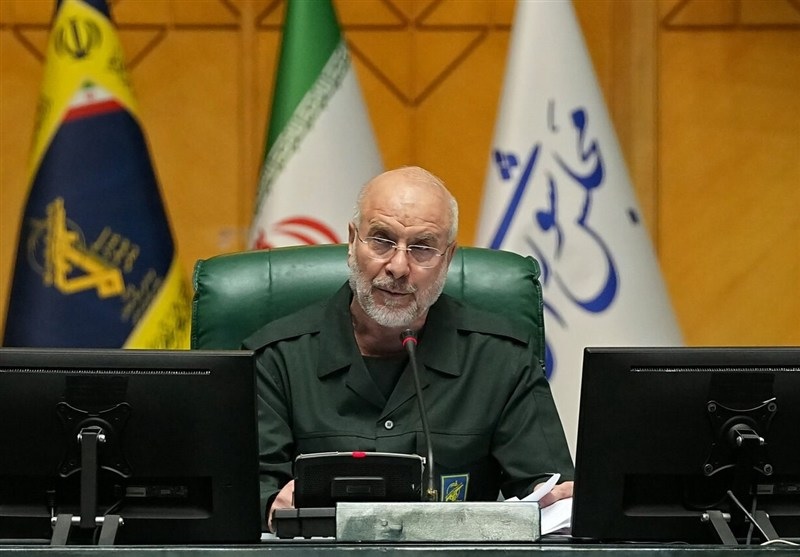
Iranian officials reacted sharply. Speaking in parliament, Speaker Mohammad Bagher Ghalibaf said the EU’s move had prompted reciprocal legal action under Iranian law. He cited Article 7 of legislation designed to counter foreign terrorist designations of the IRGC, stating that the armed forces of European countries would now be treated as terrorist groups by Iran.
Ghalibaf accused European governments of acting against their own interests and of aligning themselves with U.S. policy toward Iran. He also said that Iran’s parliamentary commission on national security would consider the expulsion of military attachés from EU countries and would coordinate future steps with the Ministry of Foreign Affairs.
Following his remarks, lawmakers in the chamber chanted slogans condemning the United States and Europe, underscoring domestic political support for a confrontational response.
IRGC Statement and Diplomatic Impact
On Sunday, the IRGC issued an official statement warning that the EU’s decision would complicate “the path toward constructive engagement and cooperation” and reinforce what it described as confrontational approaches. The statement did not outline specific retaliatory actions but emphasized that the designation would have long-term consequences for relations between Iran and European states.
Diplomatic contacts between Tehran and several European capitals have already been limited in recent years due to disputes over Iran’s nuclear program, regional activities, and its human rights record. Analysts say the latest exchange of designations further reduces the scope for diplomatic engagement.
Role and Structure of the IRGC
Established in 1979 after the Islamic Revolution, the IRGC is an elite military and political force tasked with safeguarding Iran’s Islamic system and revolutionary ideology. It operates independently of the regular armed forces and reports directly to Iran’s Supreme Leader, giving it broad authority across security, political, and economic spheres.
The organization is structured into Ground Forces, Aerospace Forces, and Naval Forces, and includes the Basij, a mass paramilitary organization used for internal security and mobilization. A key external arm is the Quds Force, responsible for operations beyond Iran’s borders and for supporting allied groups across the Middle East.
Regional and Economic Influence
The IRGC plays a central role in Iran’s regional policy, providing support to allied actors including Hezbollah in Lebanon, Shiite militias in Iraq, forces aligned with Bashar al-Assad in Syria, and the Houthis in Yemen. These activities have been cited by Western governments as contributing to regional instability and proxy conflicts.
Beyond its military functions, the IRGC wields significant economic influence. Companies linked to the organization operate across sectors such as energy, construction, transportation, telecommunications, and defense, giving it substantial leverage within Iran’s economy.
The mutual designations mark a new phase in relations between Iran and the European Union, with both sides hardening their positions. While EU officials frame their actions as a response to human rights concerns and security risks, Iranian leaders describe the measures as politically motivated and hostile. The developments leave limited room for de-escalation in the near term as diplomatic and military channels between Tehran and European capitals face increasing strain.
——— End of Article ———