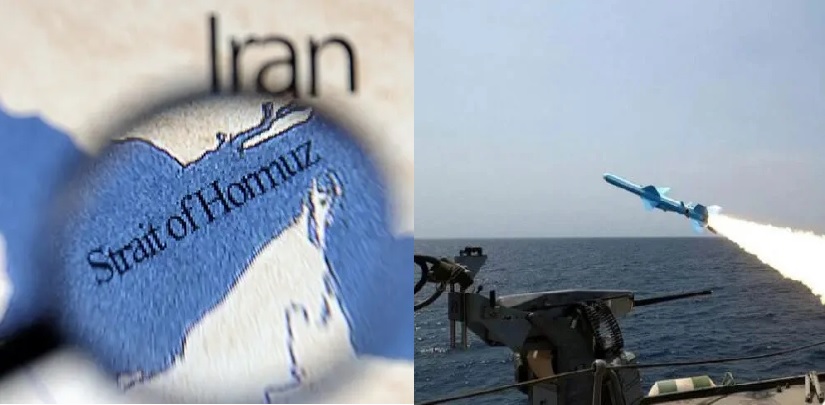
TEHRAN : Iranian officials on Thursday moved to clarify conflicting media reports about naval activity near the Strait of Hormuz and the Gulf of Oman, stating that the naval forces of Iran’s Islamic Revolutionary Guard Corps (IRGC) have no current plan to conduct live-fire exercises in the Strait of Hormuz, despite earlier reports suggesting otherwise.
The clarification followed reports by Iran’s state-run Press TV and the semi-official Tasnim News Agency, which said the IRGC Navy was preparing to carry out naval drills, including live-fire activity, in the strategically sensitive waterway.
An Iranian official, speaking to regional media, said those reports were inaccurate and resulted from a misunderstanding over the location and timing of separate naval exercises.
Conflicting Accounts Over Exercise Locations
The confusion deepened after Al-Mayadeen quoted a source within the IRGC as rejecting reports that Tehran was planning joint naval drills with Russia and China in the Gulf of Oman. That denial appeared to contradict other official Iranian statements regarding multinational exercises in nearby waters.
Iranian military officials later clarified that the eighth joint “Marine Security Belt” naval exercise is planned for the Northern Indian Ocean, not the Strait of Hormuz or the Gulf of Oman. The exercise is expected to involve Iran’s regular Army Navy, the IRGC Navy, and naval units from China and Russia.
Subsequent reporting indicated that the drills, originally expected earlier in the month, have been delayed and are now scheduled for the end of February. Iranian officials said the postponement was linked to coordination issues rather than heightened tensions or operational concerns.
Strait Of Hormuz Drills Called Off Amid Navigation Concerns
According to officials familiar with the matter, Iran decided not to proceed with previously discussed live-fire drills in the Strait of Hormuz to avoid misinterpretation and unintended escalation in a congested maritime environment. The strait is one of the world’s most critical energy chokepoints, handling a significant share of global oil and gas shipments.
The United States Central Command (CENTCOM) said it had urged the IRGC to ensure that any naval activity announced for the area be conducted in a safe and professional manner, stressing the importance of protecting freedom of navigation.
CENTCOM described the Strait of Hormuz as an international sea passage used daily by roughly 100 merchant vessels, and warned that unsafe or unprofessional actions near U.S. forces, regional partners, or commercial shipping could raise the risk of collision or unintended escalation.
At the same time, CENTCOM said it recognizes Iran’s right to operate in international airspace and waters, provided such activity adheres to accepted maritime norms.
Regional Military Context
The clarification comes amid increased multinational naval activity across the wider region. According to earlier reports, China has deployed two destroyers to the Northern Indian Ocean area in connection with scheduled exercises, consistent with patterns seen in previous iterations of the Marine Security Belt drills.
Iranian officials emphasized that the multinational exercise is intended to focus on maritime security, counter-piracy operations, and coordination among participating navies, rather than signaling confrontation in the Strait of Hormuz.
Media Reports Blamed For Confusion
Iranian sources said the initial reports about live-fire drills in the strait were incorrectly attributed and did not reflect finalized operational decisions. Officials stressed that no live-fire activity is currently planned for the Strait of Hormuz, and that separate exercises should not be conflated.
The episode highlights the sensitivity of military signaling in the region, where overlapping announcements, delayed exercises, and inaccurate reporting can quickly create confusion in heavily trafficked international waters.
——— End of Article ———