MADRID, Spain — March 5, 2026 : Spanish defense and technology company Indra has begun development of a new counter-battery radar system known as RALOFI (Radar de Localización de Orígenes de Fuego Indirecto), designed to identify the origin of indirect fire such as rockets, artillery, and mortars. The project is being carried out under Spain’s Special Modernization Program (PEM) led by the Spanish Ministry of Defense as part of broader efforts to upgrade military capabilities and align with NATO defense investment objectives.
The radar will provide the Spanish Armed Forces with a modern system capable of supporting operations in high-intensity combat environments. Development priorities reflect operational lessons from recent conflicts, including the Russian invasion of Ukraine, where rapid detection of artillery and rocket fire has proven critical for counter-battery responses.
The program has an initial budget of €30 million and is scheduled to run for three years, concluding in November 2028 with the completion of a pre-series prototype.
Replacement of Legacy Counter-Battery Systems
The RALOFI radar will replace the AN/TPQ-36 mortar-locating radars, which have been in service with the Spanish Army since 1989 and are approaching the end of their operational life.
The system will also introduce this capability to the Spanish Navy’s Marine Infantry, known as the Infantería de Marina, which previously did not operate its own counter-battery radar.
Once operational, RALOFI is expected to enhance the military’s ability to detect incoming fire, determine its launch location, and support rapid counter-fire operations.
Advanced Radar Architecture
RALOFI is designed as a next-generation radar platform integrating multiple advanced hardware and software technologies.
At the core of the system is Full Active Electronically Scanned Array (AESA) technology, which uses thousands of solid-state transmit and receive modules to electronically steer radar beams. Unlike traditional mechanically steered radars, AESA systems can scan areas rapidly, track multiple targets simultaneously, and maintain stronger resistance to electronic warfare interference.
The radar will also incorporate gallium nitride (GaN) semiconductor components, allowing operation at higher voltages and temperatures than traditional silicon-based systems. This improves detection range, increases signal power, and enhances target tracking precision.
Communications and signal processing will use software-defined radio (SDR) architecture, enabling digital reconfiguration of operating parameters to adapt to different mission requirements or electronic threat environments.
These technologies are intended to provide:
-
Extended detection range and high precision
-
Strong resistance to electronic interference and jamming
-
Rapid digital reconfiguration for different operational scenarios
-
High system availability and simplified maintenance
The system is designed for high levels of automation, reducing operator workload while enabling rapid deployment and redeployment in changing battlefield conditions.
Operational Capabilities
Although developed primarily as a counter-battery radar, RALOFI is intended to perform several operational functions across land, maritime, and air domains.
The radar will support counter-battery operations, including the detection, tracking, and classification of rocket, artillery, and mortar (RAM) projectiles. It will calculate the Point of Origin (POO) of incoming fire and estimate the Point of Impact (POI), enabling friendly forces to respond quickly.
In addition to its counter-battery role, the system will provide ground surveillance capabilities, allowing the detection and tracking of terrestrial targets and supporting the protection of forward operating bases.
RALOFI will also support maritime surveillance and coastal defense missions, enabling the detection and tracking of naval targets and assisting with coastal fire control.
The radar includes medium-range air surveillance capabilities, providing automatic detection, tracking, and classification of aerial targets along with kill-assessment functions.
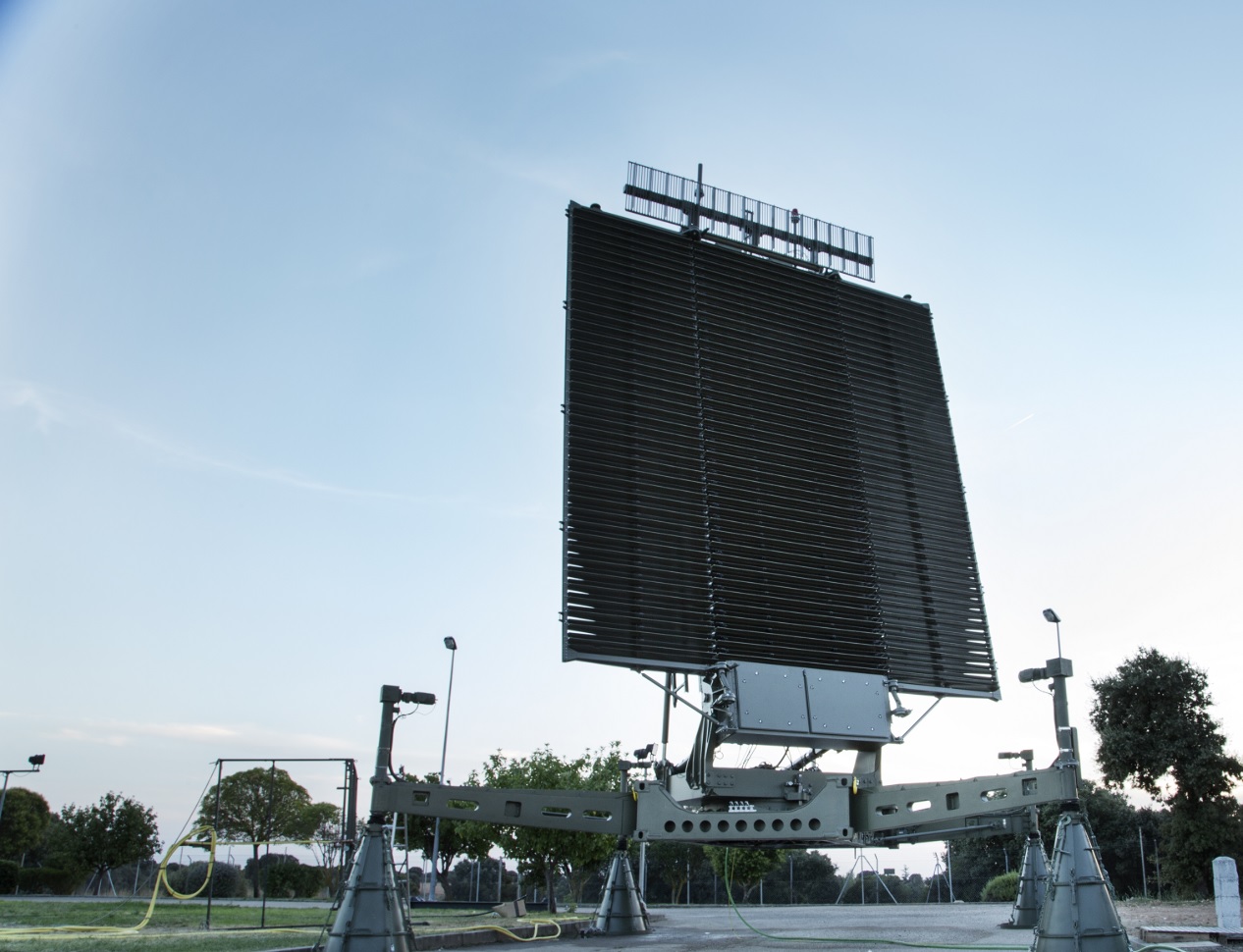
The system will be mounted on a truck platform and features an active antenna with integrated transmit/receive modules and radar processing equipment, combined with an elevation and deployment mechanism for operational flexibility.
It will be fully integrated into the command and control networks of the Spanish Armed Forces, allowing data sharing with other sensors and operational units.
Domestic Industrial Consortium
Indra is leading the project as the prime contractor and has assembled an industrial consortium involving both major technology firms and small- and medium-sized enterprises (SMEs).
Key partners include:
-
GMV, providing technology and systems expertise
-
Nord Motorreductores, supplying drive and mechanical components
-
Niasa, responsible for electromechanical systems
-
Teyde 2010, contributing engineering support
-
AC Precisión, providing specialized cooling solutions for radar computing equipment
According to Indra, 100 percent of the radar’s design, development, and production will be carried out within Spain, with more than 80 percent participation from domestic companies, the majority of which are SMEs.
Miguel Rodríguez Mora, Director of Indra’s Land Systems business unit, stated that the program aims to strengthen the national defense industrial base and incorporate companies with relevant technological capabilities, regardless of their previous experience in the defense sector. He added that the project is intended to reduce reliance on foreign suppliers and increase technological sovereignty.
Industrial Distribution Across Spain
The RALOFI program distributes development and manufacturing activities across multiple Spanish regions.
-
Madrid will host core engineering work and final systems integration.
-
Vigo, in the Galicia region, will focus on advanced sensor development and gallium nitride technologies.
-
Córdoba, in Andalusia, will host a specialized radar technology hub developed in cooperation with the local university.
-
The Basque Country, Aragon, and Catalonia will handle production and assembly of mechanical and electromechanical subassemblies.
This regional distribution is intended to support existing technological capabilities across the national defense sector and stimulate industrial activity in multiple areas.
Employment and Industrial Impact
The program is expected to generate employment opportunities in several technical fields, including advanced electronics, software development, radar engineering, systems integration, and precision manufacturing. Positions will also be created for vocational training specialists and other highly skilled technical professionals.
Indra, which has more than 40 years of experience in radar design and manufacturing, states that the RALOFI initiative will strengthen coordination across Spain’s defense industry while enhancing the country’s competitiveness in international defense markets.
The radar is intended to become a sovereign multi-mission sensor system supporting land, maritime, and air defense operations for the Spanish Armed Forces once development is completed.
——— End of Article ———