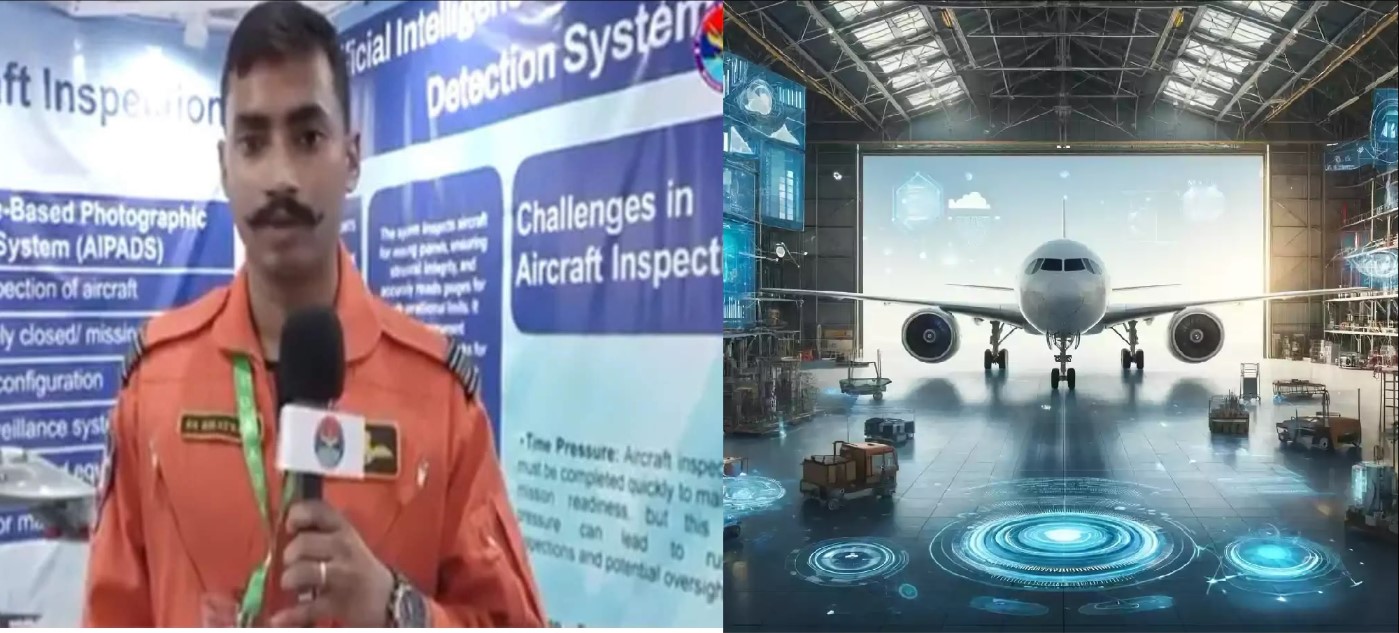
In a remarkable stride towards innovation in aviation, Indian Air Force (IAF) Squadron Leader SS Bhatkare, a Su-30 MKI pilot, has developed a cutting-edge, AI-driven aircraft inspection system. This pioneering development aims to address one of the critical challenges in aviation: reducing accidents caused by human error. The system, born out of the vision of a self-reliant India or "Aatmanirbhar Bharat," is a reflection of how the country's defence sector is embracing advanced technologies to enhance safety and efficiency.
Squadron Leader Bhatkare’s inspiration came from the increasing emphasis on innovation and indigenous development within the Indian defence sector over the past few years. "Since 3-5 years, there has been a lot of promotion given to startups and innovations to make things in India. That motivated me to innovate something of my own," Bhatkare shared in a recent interview. His system focuses on detecting faults in aircraft panels, gauges, and covers, areas that could be easily overlooked due to fatigue or human error during routine inspections.
Aircraft maintenance and inspection are critical components of aviation safety. Traditionally, pilots and technicians have relied on manual checks to identify potential issues, but this process has inherent limitations. Fatigue, distraction, and the sheer complexity of aircraft systems mean that there is always the possibility of missing small but crucial details. This is where Bhatkare’s AI-driven system steps in. Using an array of cameras and sensors, the system scans the entire surface of the aircraft, identifying any irregularities or potential damages that may compromise safety. The AI not only improves the accuracy of inspections but also significantly reduces the time taken for these checks.
By automating this process, Bhatkare’s innovation mitigates risks associated with human oversight, ensuring that every aircraft is thoroughly examined before it takes off. This could prove to be a game-changer in improving operational safety across the IAF and, potentially, other global air forces.
The system developed by Squadron Leader Bhatkare is aligned with India’s broader push towards indigenization in defence manufacturing. Over the years, India has made significant progress in developing its own military technologies, from light combat aircraft like the Tejas to radars and electronic warfare systems. Defence Minister Rajnath Singh, who recently attended the multilateral aerial exercise 'Tarang Shakti 2024,' reiterated the country’s commitment to self-reliance in defence, stating that India has taken "strong steps towards indigenisation in the manufacture of weapons, platforms, and aircraft."
The 'Tarang Shakti 2024' exercise itself showcased some of the IAF’s indigenously developed platforms, including the Surya Kiran aircraft and Tarang helicopters. These advancements, combined with innovations like Bhatkare's AI-driven inspection system, highlight India's growing capabilities in aerospace technology.
As the Indian Air Force continues to modernize its fleet and adopt new technologies, innovations like these will play an increasingly important role in ensuring that pilots and aircraft operate in the safest possible conditions. Bhatkare’s contribution not only enhances aviation safety but also underscores the importance of fostering home-grown talent and innovation within the defence sector.
By embracing AI and other advanced technologies, India is not only improving its military readiness but also setting an example for other nations in the field of aviation safety. With innovations like Bhatkare’s AI-driven inspection system, the future of Indian aviation looks more secure and efficient than ever.
——— End of Article ———