New Delhi : India’s Defence Research and Development Organisation (DRDO) is preparing to conduct the third developmental flight trial of the Long-Range Anti-Ship Missile (LR-AShM), a hypersonic glide vehicle (HGV) designed to provide long-range precision strike capability against maritime targets. The upcoming test follows the system’s first public appearance during the Republic Day parade on January 26, 2026, where the missile was formally unveiled.
According to officials familiar with the program, the third trial will focus on validating advanced terminal-phase maneuvers and assessing the performance of the missile’s indigenously developed X-band synthetic-aperture radar (SAR) seeker at sustained hypersonic speeds. These evaluations are intended to confirm the seeker’s ability to discriminate and track moving naval targets in complex electromagnetic environments.
System Design and Performance
The LR-AShM is a two-stage hypersonic glide vehicle powered by a solid-fuel booster that accelerates the weapon to hypersonic velocity before releasing the maneuvering glide body. The missile is designed to reach peak speeds of around Mach 10, with an average glide speed near Mach 5. Current configurations are intended to achieve operational ranges in excess of 1,500 kilometers, with extended-range variants planned to reach up to 3,500 kilometers.
Mid-course guidance is provided through an inertial navigation system (INS) supported by multiple global navigation satellite systems (GNSS), while terminal guidance relies on an active radio-frequency seeker optimized for hypersonic flight. The missile follows a quasi-ballistic trajectory with atmospheric glide phases, allowing it to maneuver laterally and vertically to reduce predictability.
Launch Platforms and Deployment Path
Initial deployment phases are focused on land- and sea-based launch options. The land-launched version is configured for mobile 12×12 transporter-erector-launchers (TELs), enhancing survivability and operational flexibility. A naval variant compatible with vertical launch systems (VLS) is also under development to support surface combatants.
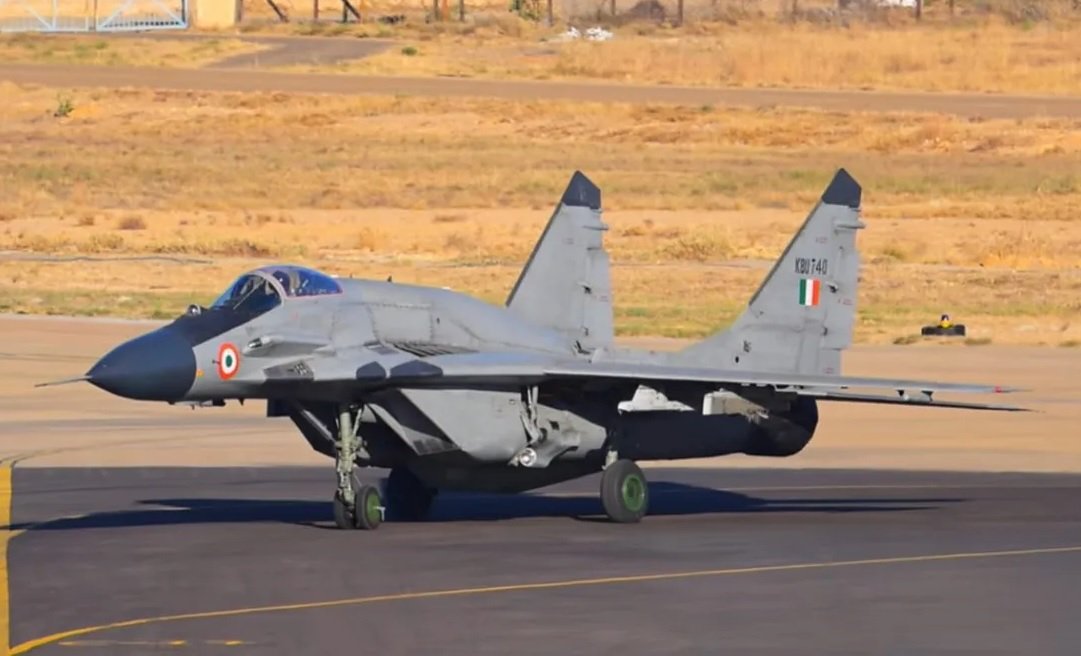
An air-launched variant is planned for a later phase, once the surface-launched versions complete developmental and user trials. This version is expected to be integrated with the Su-30MKI fleet, enabling long-range stand-off hypersonic strike capability from aerial platforms.
Land-Attack Variant Under Development
In parallel with the anti-ship configuration, DRDO has confirmed work on a land-attack variant of the LR-AShM. This version is intended to engage high-value fixed targets deep inside hostile territory and is currently at an earlier stage of development. Once matured, it is expected to be aligned with the proposed Integrated Rocket Force (IRF), contributing to a conventional hypersonic deterrence role.
Program Outlook
Officials indicate that successful completion of the third developmental trial would mark a key milestone for the LR-AShM program, clearing the way for additional validation flights and user-oriented trials. The system is expected to move toward limited series production following satisfactory performance across these stages, subject to further operational assessments.
——— End of Article ———