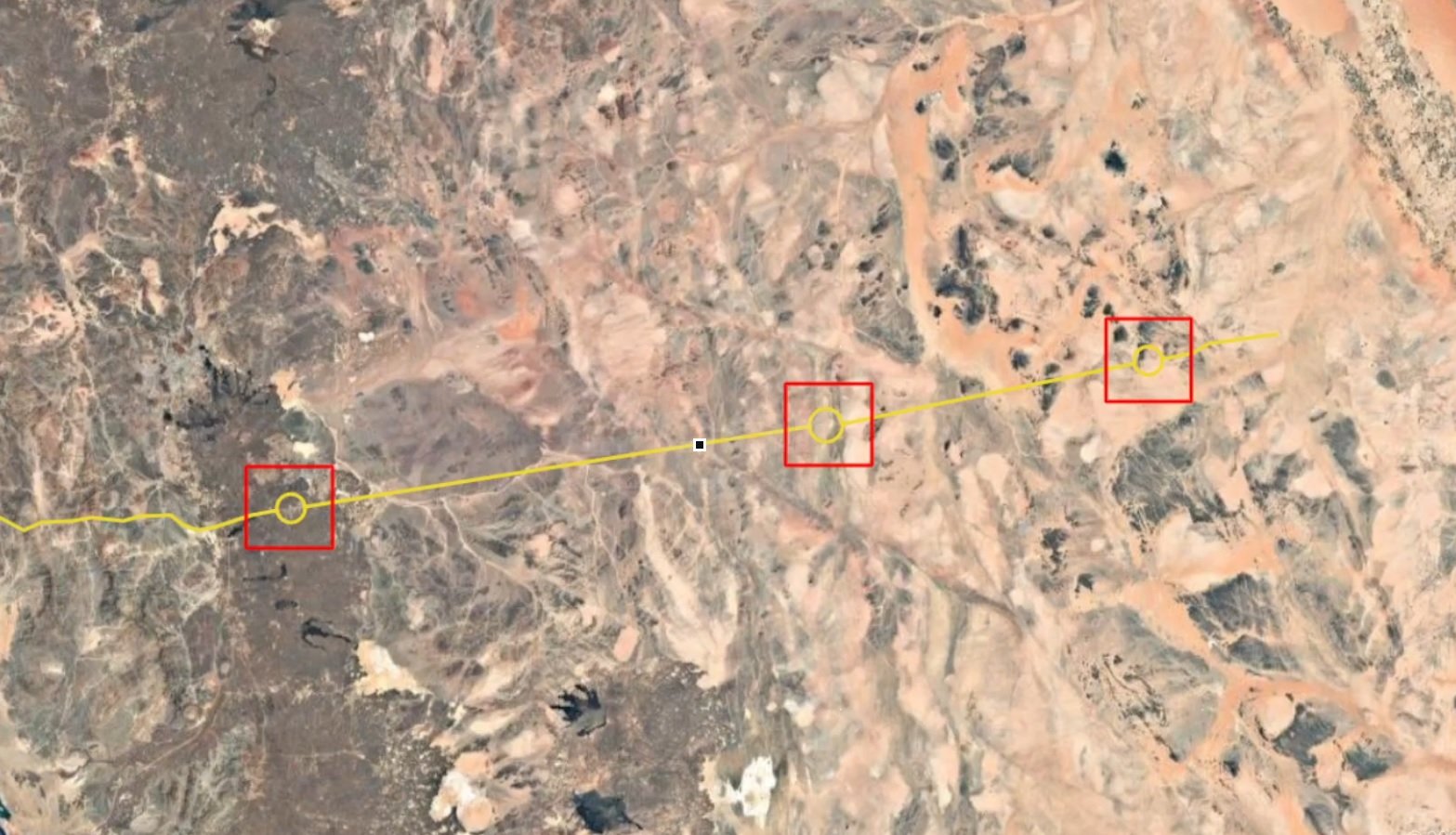
POKHRAN, Rajasthan — April 15, 2026 : India has successfully conducted a flight and strike test of the indigenous Sheshnaag-150 long-range loitering munition at the Pokhran test range, marking a significant step in the country’s development of AI-enabled autonomous strike systems. The trial was carried out by the Indian armed forces in coordination with Bengaluru-based defense start-up NewSpace Research and Technologies (NRT).
The test validated the platform’s long-range navigation, endurance, and precision targeting capabilities under operational conditions. During the trial, the Sheshnaag-150 covered a flight distance of 720 kilometers and demonstrated a Circular Error Probable (CEP) of less than 10 meters. The munition successfully delivered a 25-kilogram high-explosive (HE) warhead to the designated target area.
System Performance and Technical Parameters
The Sheshnaag-150 is an indigenous 150 kg-class loitering munition designed for deep-strike missions. Although the Pokhran test recorded a 720-kilometer flight, the system is engineered for an operational range exceeding 1,000 kilometers, with an endurance of approximately three to five hours. The platform supports a payload capacity ranging from 25 to 40 kilograms.
The drone is powered by a high-performance air-cooled Boxer engine optimized for long-endurance missions. It has been developed as part of a broader family of collaborative autonomous systems and is capable of executing multiple mission profiles, including precision strikes, suppression of enemy air defenses (SEAD), intelligence, surveillance and reconnaissance (ISR), and electronic warfare support.
Development of the Sheshnaag-150 began as an internal initiative by NRT, with its first flight conducted around early 2025. Subsequent trials included launches from mobile highway-based platforms and evaluations across multiple test ranges. Earlier controlled tests reportedly achieved CEP values as low as five meters.
AI-Driven Swarm Capability
A key feature of the Sheshnaag-150 is its integration of artificial intelligence-driven swarm technology. The system uses proprietary autonomy algorithms that enable multiple loitering munitions to operate as a coordinated unit. These drones can communicate with each other, share targeting data, synchronize flight paths, and execute saturation attacks designed to overwhelm layered air defense systems.
The platform is also designed to operate in GPS-denied or jammed environments. It incorporates a visual navigation system and onboard sensors that allow it to identify targets and maintain its flight path without reliance on satellite navigation signals. This capability is intended to improve survivability and mission reliability in contested electromagnetic environments.
Operational Role and Strategic Context
The Sheshnaag-150 is optimized for SEAD missions, targeting high-value enemy assets such as radar installations, surface-to-air missile systems, and communication nodes. By deploying coordinated swarms, the system is intended to degrade or neutralize enemy air defense networks prior to the use of manned aircraft or conventional strike systems.
The platform is positioned as a cost-effective and expendable alternative to traditional cruise missiles. Its relatively lower cost allows for mass deployment, enabling saturation tactics without the financial constraints associated with high-value munitions.
NRT has indicated that the Sheshnaag-150 draws conceptual inspiration from global loitering munitions such as Iran’s Shahed-136, while incorporating advanced indigenous swarm algorithms and navigation resilience tailored to Indian operational requirements.
Testing, Development, and Future Induction
The Pokhran trial focused specifically on range validation, strike accuracy, and warhead performance. Additional testing has been conducted at multiple facilities, including evaluations of high-altitude operations, endurance, and autonomous coordination.
The system was publicly showcased at the World Defense Show 2026 in Riyadh, highlighting India’s progress in autonomous combat systems. NRT, founded in 2017 by aerospace entrepreneurs Sameer Joshi and Julius Amrit, specializes in AI-enabled unmanned systems and swarm robotics.
The company is also developing shorter-range variants within the Sheshnaag family, including the canister-launched Sheshnaag-20, designed for battlefield missions with ranges up to 50 kilometers.
Following the successful validation of flight mechanics and strike accuracy at Pokhran, defense sources indicate that India may proceed with the induction of the Sheshnaag-150 into active service. Plans under consideration include procurement of large numbers of such systems for theatre-level operations.
The development and testing of the Sheshnaag-150 align with India’s broader push for indigenous defense capabilities under the Aatmanirbhar Bharat initiative. The system is expected to complement existing manned aircraft and missile systems, enhancing the armed forces’ long-range precision strike capabilities through scalable, AI-enabled unmanned platforms.
No official timeline for full-scale induction has been announced.
——— End of Article ———