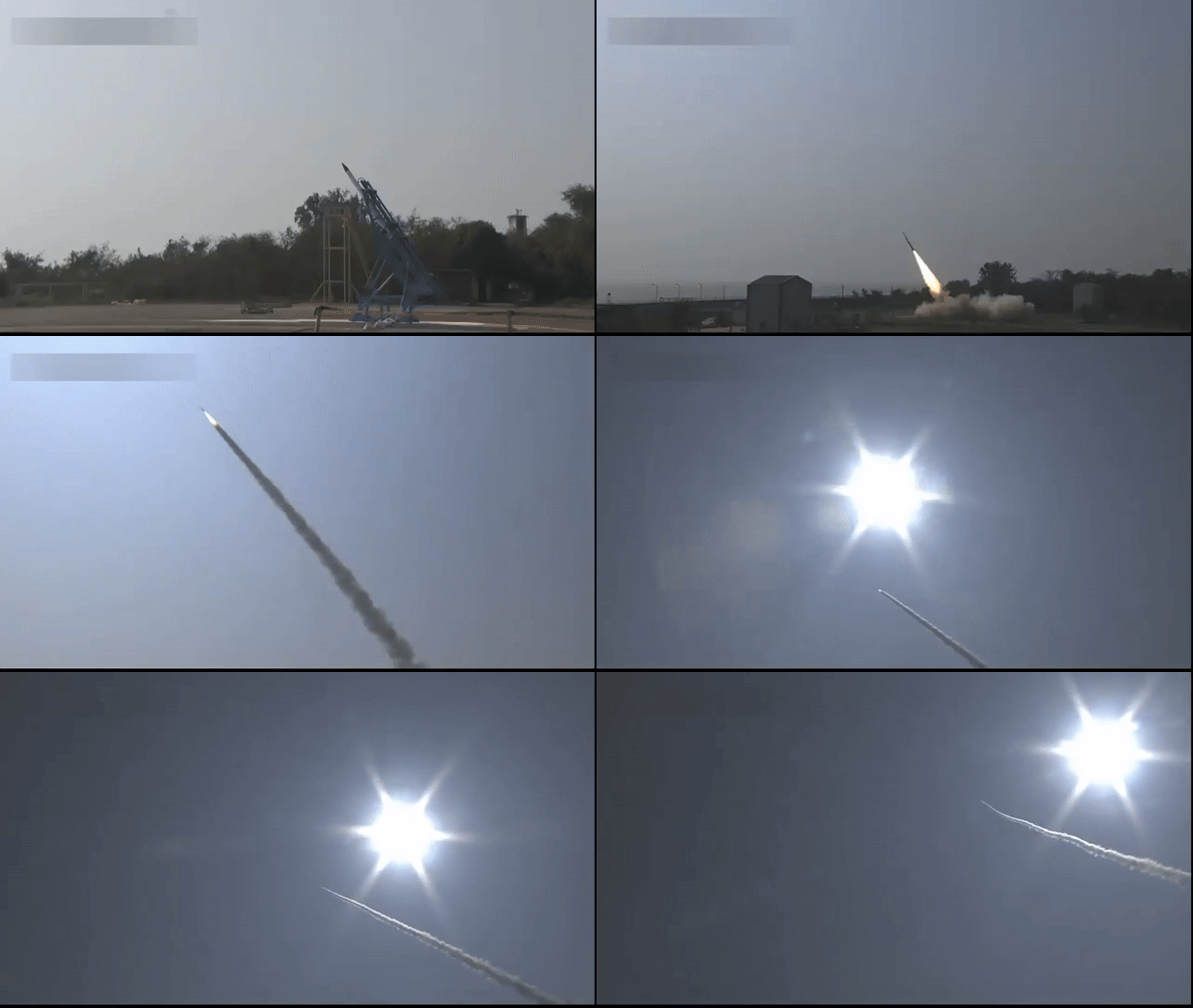
Chandipur, Odisha : India recorded a major advancement in indigenous missile propulsion capabilities on Tuesday with the successful flight demonstration of Solid Fuel Ducted Ramjet (SFDR) technology. The test was conducted by the Defence Research and Development Organisation (DRDO) at approximately 10:45 a.m. from the Integrated Test Range (ITR), located off the Odisha coast.
According to official data released by DRDO, the demonstration met all planned mission objectives and validated critical subsystems required for the development of long-range air-to-air missiles. With this achievement, India joins a limited group of countries possessing operationally relevant SFDR technology, a key enabler for next-generation Beyond Visual Range Air-to-Air Missiles (BVRAAMs), including the Astra Mk-III programme.
Flight Test Profile and System Performance
The SFDR system was subjected to a carefully sequenced flight profile designed to replicate air-launch conditions. The missile was initially accelerated by a ground-based solid booster to the required supersonic speed. After achieving the designated Mach number, the nozzle-less booster separated, allowing the SFDR motor to ignite and sustain propulsion during the cruise phase.
DRDO confirmed that all major subsystems performed as designed. These included the nozzle-less booster, the solid fuel ducted ramjet motor, and the fuel flow controller, which regulates the combustion process by precisely metering fuel into the ramjet combustor. The ability to maintain stable combustion at high supersonic speeds was a central objective of the test and was successfully demonstrated.
Instrumentation and Data Validation
System performance was verified through comprehensive flight data captured by a network of tracking instruments deployed along the Bay of Bengal coastline. Telemetry stations, radar systems, and electro-optical sensors monitored the missile throughout its flight, providing real-time data on speed, trajectory, combustion stability, and subsystem behaviour.
Officials stated that the collected data closely matched pre-flight predictions derived from extensive computational modelling and ground testing. The results confirmed sustained thrust generation by the SFDR engine and stable aerodynamic performance across the planned flight envelope.
Scientific and Institutional Oversight
Senior scientists from multiple DRDO laboratories were present at the launch site and monitored the test in real time. These included teams from the Defence Research and Development Laboratory (DRDL), High Energy Materials Research Laboratory (HEMRL), Research Centre Imarat (RCI), and the Integrated Test Range (ITR). Each laboratory contributed to different aspects of the system, ranging from propulsion and energetic materials to guidance integration and flight testing.
Relevance to Astra Mk-III Programme
The successful SFDR demonstration is directly linked to the development of the Astra Mk-III, also referred to as Gandiva, a future long-range air-to-air missile intended for deployment on Indian Air Force fighter platforms. Unlike conventional solid rocket motors, SFDR propulsion systems use atmospheric oxygen for combustion, eliminating the need to carry an onboard oxidiser.
This approach reduces overall propellant mass and allows the missile to sustain thrust over a longer duration. As a result, the missile can maintain high supersonic speeds deeper into its engagement range, improving end-game energy and increasing the effective no-escape zone against manoeuvring aerial targets.
Strategic and Programmatic Significance
Defence analysts note that mastery of SFDR technology is essential for achieving extended engagement ranges without compromising missile agility or payload. The successful test indicates that India has reached a level of technological maturity sufficient for integrating SFDR propulsion into operational missile configurations.
The demonstration also supports broader goals of self-reliance in critical defence technologies, reducing dependence on foreign propulsion systems for advanced missile programmes.
Official Statements
Following the test, Defence Minister Rajnath Singh congratulated DRDO and associated industry and scientific teams, acknowledging the achievement as an important step in strengthening indigenous defence capabilities.
Secretary, Department of Defence R&D and Chairman DRDO, Samir V. Kamat, also commended the teams involved, stating that the successful validation of the fuel flow controller and sustained ramjet operation confirmed the effectiveness of extensive simulations and ground trials conducted during the development phase.
Programme Status
DRDO officials indicated that this test marks the culmination of a series of developmental trials for the SFDR booster system. With the propulsion technology now demonstrated under flight conditions, the programme is expected to progress towards integration with the complete Astra Mk-III missile system and subsequent evaluation trials.
The February 3 demonstration represents a critical step in India’s ongoing efforts to field long-range, high-performance air-to-air missiles using fully indigenous technologies.
——— End of Article ———