NEW DELHI — March 27, 2026: The Ministry of Defence (MoD) has signed a ₹445 crore contract with Russia’s state arms exporter JSC Rosoboronexport for the procurement of Tunguska Air Defence Missile Systems for the Indian Army. The agreement was formalised in New Delhi in the presence of Defence Secretary Rajesh Kumar Singh, according to an official release.
The contract is part of a broader ₹858 crore defence package concluded on the same day, which also includes a separate agreement with Boeing India Defense Private Ltd for the maintenance of the Indian Navy’s P-8I maritime reconnaissance aircraft fleet.
The official statement noted that the deal includes “cutting-edge missiles”, which are expected to significantly enhance India’s multilayered air defence capabilities. These systems are designed to counter a range of aerial threats, including unmanned aerial vehicles (UAVs), low-flying aircraft, attack helicopters, and cruise missiles, reflecting the growing complexity of modern battlefield environments.
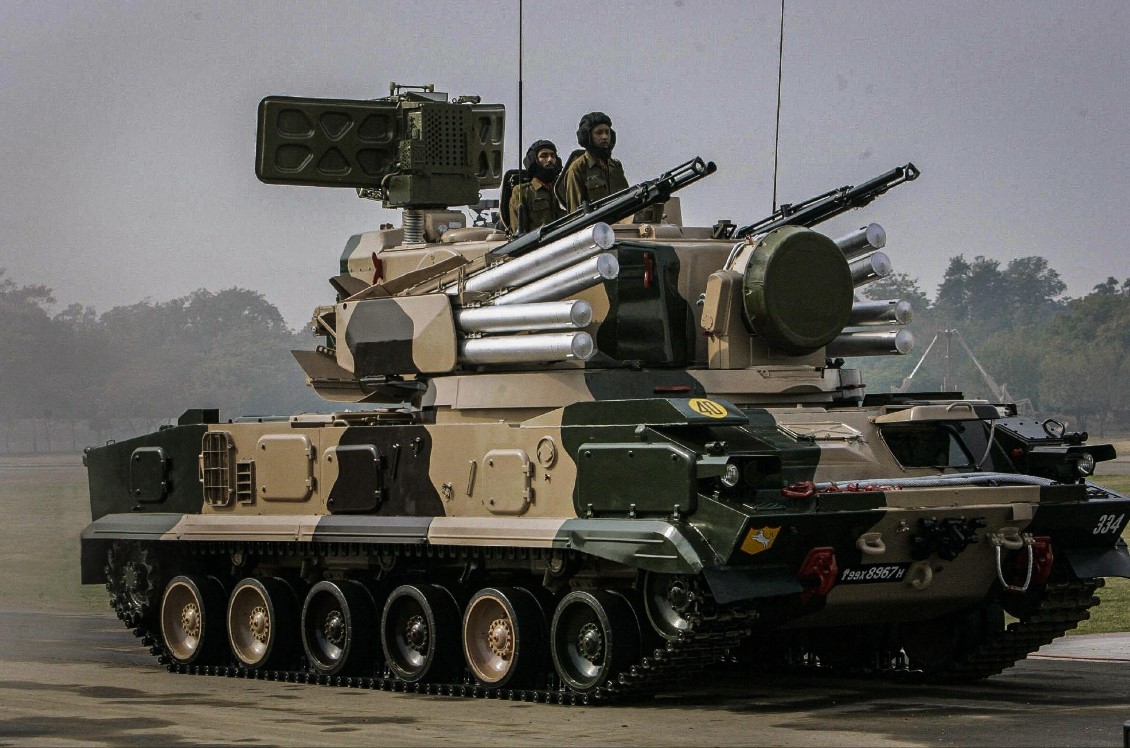
The Tunguska system, a self-propelled short-range air defence (SHORAD) platform, combines surface-to-air missiles with twin 30 mm autocannons, providing a layered hard-kill capability against low-altitude targets. Its mobility allows it to operate alongside mechanised and forward-deployed formations, offering continuous protection during manoeuvre operations.
While the government has not disclosed the exact number of missiles included in the ₹445 crore contract, defence cost assessments suggest that the deal could involve approximately 150 to 300 missiles, depending on the final package structure, which may include associated equipment, spares, and support services. This estimate remains unofficial.
The Indian Army currently operates around 80 Tunguska systems, inducted between 1997 and 2009. The new procurement is expected to replenish missile inventories and enhance operational readiness, particularly in the context of increasing threats from drone swarms and precision-guided munitions observed in recent conflicts.
The agreement also underscores the continued role of Russian-origin platforms in India’s defence ecosystem, particularly for sustaining and augmenting legacy systems. At the same time, India continues to pursue a diversified procurement strategy, balancing imports with domestic manufacturing under the Aatmanirbhar Bharat initiative.
Further details regarding delivery timelines and system integration have not been disclosed.
——— End of Article ———