NEW DELHI — March 16, 2026 : India has begun the development of the Integrated Indian Combat Aerial System (I²CAS), a next-generation air combat architecture designed to support sixth-generation warfare concepts expected to mature in the mid-2040s. The programme aims to connect manned fighter aircraft, unmanned combat systems, satellites, and ground-based sensors into a unified operational network based on a “system-of-systems” approach.
The concept marks a shift from standalone aircraft platforms toward a distributed combat ecosystem in which multiple assets operate simultaneously through a shared digital battlespace. The architecture is intended to enhance operational coordination, extend strike reach, and enable manned–unmanned teaming across future Indian Air Force missions.
AMCA to Function as the Central Command Platform
At the centre of the I²CAS framework is the Advanced Medium Combat Aircraft (AMCA), India’s indigenous stealth fighter currently under development. Within the architecture, the aircraft will function as the central command node or “mothership” coordinating multiple unmanned and manned platforms during combat operations.
The AMCA Mk2 variant is expected to incorporate more advanced computing capacity, enhanced sensor fusion systems, and expanded data-processing capabilities. These onboard systems will allow the aircraft to collect and process information from multiple sources simultaneously, including unmanned aerial vehicles, satellites, and ground sensors.
Through this capability, the AMCA can manage mission coordination across distributed assets while maintaining situational awareness within contested airspace. The aircraft’s sensors and mission computers will enable pilots to monitor multiple autonomous platforms and direct their operations during reconnaissance, strike, and electronic warfare missions.
Loyal Wingman Drones Under the CATS Programme
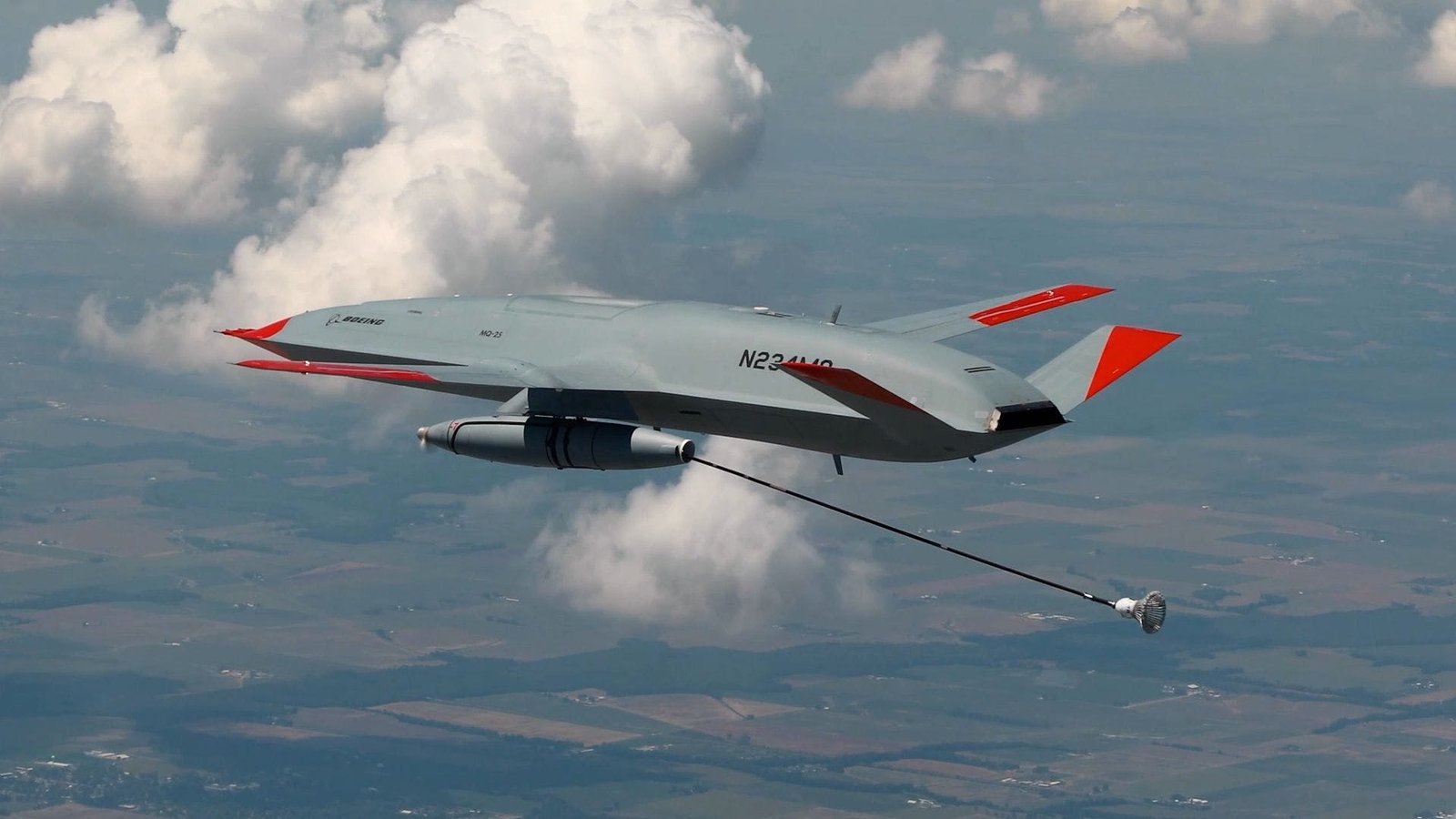
A major component of the architecture is the integration of autonomous escort drones developed under the Combat Air Teaming System (CATS) initiative. These platforms are designed to operate alongside manned fighters and extend their combat capabilities.
The primary loyal-wingman platform is the HAL CATS Warrior, developed by Hindustan Aeronautics Limited through its Aircraft Research and Design Centre in collaboration with NewSpace Research and Technologies.
The CATS Warrior is designed as a low-observable unmanned combat aerial vehicle capable of operating with multiple Indian fighter platforms. These include the AMCA, the HAL Tejas, Sukhoi Su-30MKI, the Twin Engine Deck Based Fighter (TEDBF), and the SEPECAT Jaguar.
Operating under manned-unmanned teaming (MUM-T) principles, the drone can perform multiple operational roles. These include reconnaissance missions, electronic warfare operations, decoy activities to draw enemy fire, and additional missile carriage to increase the firepower of the manned aircraft formation.
The platform can function autonomously using onboard systems or operate under direct control from a command aircraft such as the AMCA. It is designed to support take-off and landing from both land-based airfields and aircraft carriers. According to programme plans, the first flight of the CATS Warrior is scheduled for 2025.
Ghatak UCAV for Deep Penetration Strike Missions
Another core component of the I²CAS architecture is the DRDO Ghatak UCAV, a stealth unmanned combat aerial vehicle being developed by the Defence Research and Development Organisation (DRDO) through its Aeronautical Development Establishment.
The Ghatak UCAV uses a flying-wing design intended to reduce radar visibility while enabling long-range strike missions. Within the I²CAS operational concept, the aircraft is planned to function as a first-wave penetration platform.
Its mission profile includes the suppression and destruction of enemy air defence systems, radar installations, missile batteries, and command infrastructure prior to the entry of manned aircraft into contested airspace. By neutralizing these threats in advance, the UCAV is intended to improve survivability for follow-on forces.
India’s Defence Procurement Board has cleared the programme for further development, allowing the project to proceed toward advanced testing and capability expansion.
AI-Enabled Combat Cloud Network
The operational backbone of I²CAS is an artificial-intelligence-enabled combat cloud that connects multiple platforms through a secure digital network. This architecture is designed to link the AMCA mothership, loyal wingman drones, the Ghatak UCAV, satellite systems, and ground-based sensors in real time.
Through this network, the system performs data fusion from numerous sources, generating a consolidated battlefield picture that can be shared across participating platforms. Artificial intelligence assists in analyzing incoming data, identifying targets, and supporting rapid operational decision-making.
The combat cloud also enables sensor sharing between aircraft and drones. For example, information collected by one platform can be immediately transmitted to others within the network. This allows aircraft to engage targets using data from remote sensors without exposing themselves directly to enemy defenses.
The architecture is designed so that a single pilot can control or coordinate multiple unmanned assets during a mission while maintaining distributed lethality across the formation.
Future Capabilities Under Development
The I²CAS framework is being designed to support several advanced technologies expected to emerge during the next two decades. These include drone swarm operations, directed-energy weapons, and advanced electronic warfare systems.
Drone swarm capability would allow large numbers of smaller unmanned vehicles to be deployed simultaneously to overwhelm enemy radar systems or missile defenses. Directed-energy weapons such as high-energy lasers or microwave systems are being considered for precision engagement roles and potential missile defense functions.
Advanced electronic warfare systems integrated into the architecture would enable spectrum dominance by detecting, disrupting, or deceiving adversary radar and communication networks.
Integration With Ongoing Indian Air Force Programs
Development of I²CAS draws heavily on technologies being developed through existing Indian aerospace programmes. The Combat Air Teaming System provides the foundation for loyal-wingman integration, while the AMCA programme contributes stealth fighter capabilities and advanced sensor fusion.
The Ghatak UCAV programme supplies a stealth unmanned strike platform capable of operating ahead of manned aircraft. Together, these programmes form the technological base for the larger integrated architecture.
Testing of individual I²CAS components is expected to begin in the near term as progress continues across these projects.
Long-Term Operational Objectives
The Integrated Indian Combat Aerial System is aligned with the Indian Air Force’s long-term modernization plans aimed at building a highly networked air combat environment by the mid-2040s.
Rather than relying solely on individual aircraft performance, the system emphasizes coordinated operations between multiple platforms operating within a shared digital battlespace. This approach is intended to extend operational reach, reduce risks to human pilots in heavily defended environments, and improve overall mission effectiveness.
The programme represents a gradual transition from current fifth-generation fighter concepts toward a fully integrated, multi-domain combat ecosystem in which manned aircraft, unmanned systems, and digital networks operate as a single coordinated force.
——— End of Article ———