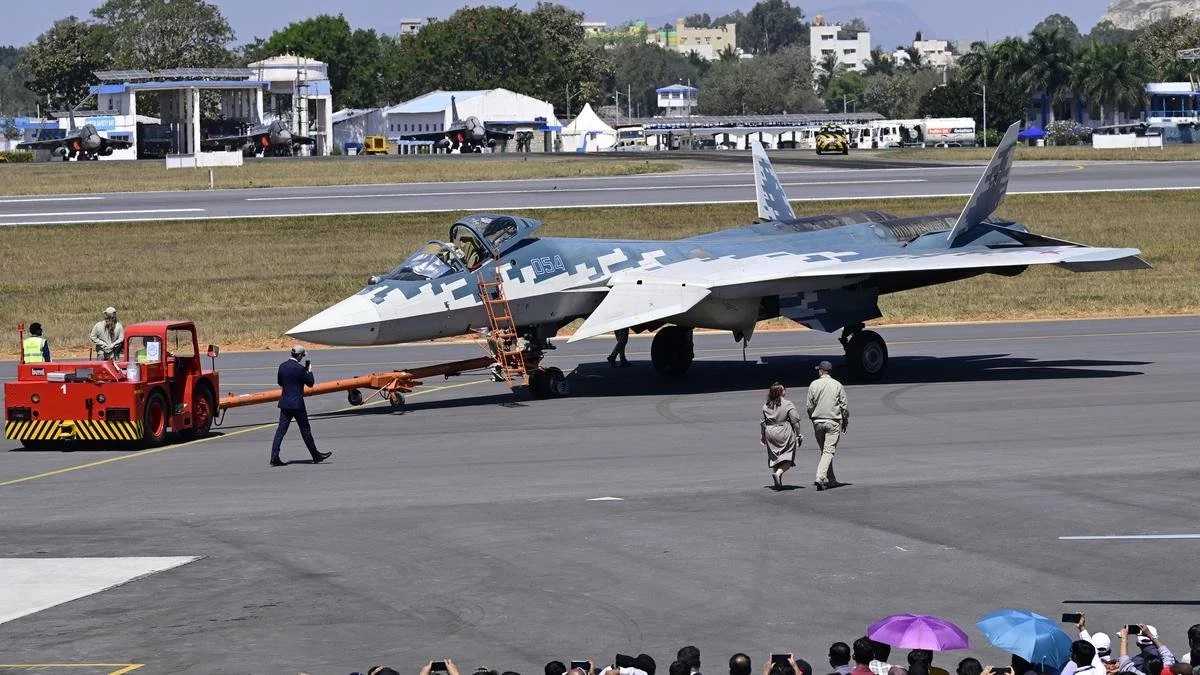
India is currently assessing a Russian proposal to manufacture the fifth-generation Sukhoi Su-57 stealth fighter jets within its own borders. This initiative, if realized, could significantly enhance India's indigenous fighter production capabilities and further solidify its defense partnership with Russia.
The Su-57: Russia's Premier Stealth Fighter
The Sukhoi Su-57, known by its NATO designation "Felon," represents Russia's most advanced combat aircraft. Designed to compete with Western fifth-generation fighters such as the U.S. F-35 Lightning II and F-22 Raptor, the Su-57 boasts a range of cutting-edge features:
-
Design and Dimensions: The Su-57 features a sleek, twin-engine design optimized for stealth and superior aerodynamic performance. The aircraft measures 20.1 meters in length, with a wingspan of 14.1 meters and a height of 4.6 meters. Its wing area is 78.8 square meters. The empty weight is approximately 18,500 kilograms, with a normal takeoff weight of 26,700 kilograms and a maximum takeoff weight of 35,000 kilograms.
-
Performance: The Su-57 is capable of reaching speeds up to Mach 2.0 and can supercruise at Mach 1.3, allowing it to sustain supersonic flight without afterburners. It has a supersonic range exceeding 1,500 kilometers, more than double that of its predecessor, the Su-27.
-
Armament: The aircraft is equipped with multiple internal weapon bays, housing a variety of air-to-air and air-to-surface missiles, precision-guided bombs, and a 30mm autocannon. This configuration maintains its stealth profile while ensuring multirole versatility.
-
Avionics and Stealth: The Su-57 incorporates advanced sensor systems, including active phased-array radar, and emphasizes supermaneuverability. Its design includes extensive use of composite materials and internal weapon storage to reduce radar cross-section, enhancing its stealth capabilities.
India's Strategic Considerations
India's interest in the Su-57 aligns with its broader defense modernization efforts. The country has previously collaborated with Russia on the Fifth Generation Fighter Aircraft (FGFA) program, which aimed to develop a variant of the Su-57 tailored to Indian requirements. Although the FGFA project was shelved, the current proposal indicates a renewed focus on acquiring advanced stealth capabilities.
Several factors influence India's decision-making process:
-
Geopolitical Dynamics: Deepening defense ties with Russia must be balanced against India's relationships with Western nations, particularly the United States and France. The recent U.S. offer to sell F-35 fighter jets to India adds complexity to the decision.
-
Indigenous Development: India is concurrently advancing its own fifth-generation fighter project, the Advanced Medium Combat Aircraft (AMCA). The potential acquisition of the Su-57 raises questions about resource allocation and the integration of multiple stealth platforms.
-
Operational Integration: Incorporating the Su-57 into the Indian Air Force's diverse fleet—which includes Russian Su-30MKIs, French Rafales, and indigenous Tejas fighters—requires careful logistical and operational planning.
Potential Benefits of Domestic Production
Manufacturing the Su-57 domestically offers several advantages:
-
Technology Transfer: Russia's proposal includes a full transfer of technology, enabling India to develop and maintain the aircraft independently, reducing reliance on external sources.
-
Economic Impact: Local production would stimulate India's defense industry, create jobs, and align with the "Make in India" initiative aimed at boosting domestic manufacturing.
-
Strategic Autonomy: Developing indigenous capabilities enhances national security and reduces vulnerability to international sanctions or supply chain disruptions.
As India evaluates the Russian proposal, it faces a multifaceted decision involving technological, geopolitical, and economic considerations. The outcome will significantly impact the future trajectory of India's air defense capabilities and its position within the global defense landscape.
——— End of Article ———