TEHRAN, — April 4, 2026 : Iran’s Islamic Revolutionary Guard Corps (IRGC) announced that it will soon unveil new air defense systems intended for battlefield deployment against the United States and Israel, according to statements by an IRGC spokesman carried by the state-run Fars News Agency. The announcement comes one day after Iranian officials reported the downing of two U.S. military aircraft over southern Iran.
According to the IRGC spokesman, the forthcoming systems are designed to strengthen Iran’s defensive posture amid ongoing military operations and heightened regional tensions. No technical specifications or deployment timelines were disclosed in the initial report.
Aircraft Losses and Rescue Operations
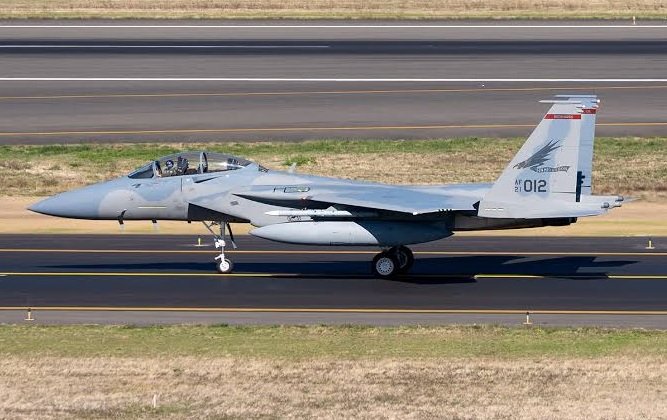
On April 3, 2026, Iranian air defense units reportedly shot down a U.S. Air Force F-15E Strike Eagle over southwestern Iran. The aircraft’s two crew members ejected prior to impact. U.S. forces conducted a combat search and rescue mission, successfully recovering one crew member. As of April 4, 2026, the second crew member remained unaccounted for, with search operations ongoing.
During the same period, an A-10C Thunderbolt II operating in the region was also lost. The pilot ejected safely and was subsequently rescued.
Two HH-60W Jolly Green II combat search and rescue helicopters deployed during the recovery operation sustained damage from ground fire. Despite the damage, both aircraft were able to return to base.
Reported Use of Passive Detection Technology
A report by ABC News indicated that Iranian forces may have used an advanced passive infrared detection system to engage the F-15E. Such systems rely on infrared sensors to detect heat signatures emitted by aircraft engines and airframes. Because they do not emit radar signals, they are not detectable by conventional radar warning receivers and are less susceptible to electronic jamming.
This method of detection differs from traditional radar-based air defense systems that form the basis of many modern air superiority doctrines. The reported use of passive tracking technology could allow Iranian air defenses to operate with a reduced electronic signature in contested environments.
Some reports have suggested that the system used may be linked to equipment supplied by Russia. In recent years, Russia has provided Iran with various air defense-related technologies, including radar systems and components integrated into the national air defense network. However, no official confirmation has been issued regarding the origin of the specific system involved in the April 3 engagement.
Context of Ongoing Military Operations
The incidents occurred during U.S. Central Command’s Operation Epic Fury, which began on February 28, 2026. The operation has included strikes targeting Iranian military infrastructure, such as air defense installations, missile facilities, and command and control centers.
Iranian state media, including Fars News Agency, have reported multiple recent engagements involving IRGC air defense units. These include claims of intercepting unmanned aerial systems and aircraft using integrated elements of the country’s air defense network.
The IRGC has previously reported operational successes against unmanned systems, including engagements involving MQ-9 Reaper drones, citing the ability of its systems to function in contested electromagnetic environments.
U.S. Response and Information Gaps
U.S. officials have acknowledged the loss of the F-15E Strike Eagle and confirmed that search efforts for the missing crew member are ongoing as of April 4, 2026. However, no official statements have verified the specific detection or engagement methods used by Iranian forces in the incident.
The loss of the A-10C Thunderbolt II and the damage sustained by rescue helicopters have also not been detailed in official U.S. disclosures beyond confirmation of personnel recovery.
Future Developments
The IRGC’s announcement of new air defense systems follows a series of Iranian claims regarding ongoing enhancements to its integrated air defense network amid sustained U.S. and Israeli operations.
While the Fars News Agency report did not provide further details on the capabilities or deployment schedule of the new systems, additional information is expected to be released through official Iranian channels in the coming days.
——— End of Article ———