The Indian Radar Development Establishment (IRDE) has called on Indian industries to participate in an ambitious project aimed at developing stealthy conformal domes for high-speed aircraft. This initiative is part of India’s ongoing effort to advance its indigenous defence technologies and reduce reliance on foreign imports, particularly in sensitive aerospace applications.
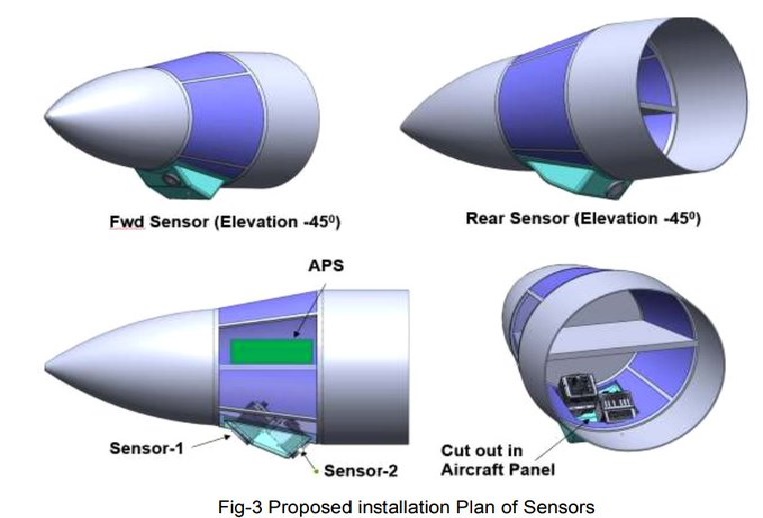
Conformal domes are critical to the performance of high-speed aircraft, serving as protective covers for electro-optical (EO) payloads such as infrared and visible spectrum cameras. These payloads are essential for high-altitude surveillance, targeting, and navigation, making them a crucial part of modern air warfare. What sets conformal domes apart is their ability to maintain aerodynamic efficiency and stealth capabilities, which are vital for high-speed aircraft operating in hostile environments.
One of the key challenges IRDE has outlined is the need for conformal domes to minimize both drag and radar cross-section (RCS). Reducing the aircraft's RCS makes it harder for enemy radar to detect, while minimizing drag improves fuel efficiency and speed. This combination of stealth and aerodynamic performance is particularly important for next-generation aircraft expected to operate at supersonic or even hypersonic speeds.
The materials used in these domes are equally critical to their performance. IRDE has specified the use of multiple sapphire windows for the domes. Sapphire, known for its exceptional transparency in both infrared and visible wavelengths, offers superior hardness and thermal resistance. These properties make it ideal for use in high-speed flight, where environmental conditions such as heat and pressure can be extreme. Sapphire’s ability to withstand such conditions while maintaining optical clarity ensures that the EO payloads function effectively in real-time, even during the most challenging missions.
However, incorporating sapphire into a complex dome structure presents a significant challenge. Expertise in material science, optics, and precision engineering is required to integrate the sapphire windows into the dome without compromising image quality or operational functionality. The domes must ensure distortion-free imaging, which is vital for the EO systems to capture accurate surveillance data and target information.
Another critical aspect of the project involves creating a hermetically sealed environment inside the dome to protect the sensitive EO payloads from environmental contaminants such as dust, moisture, and extreme temperatures. Achieving this level of protection, while maintaining the dome’s structural integrity at high speeds, is a key technical hurdle that the participating industries will need to overcome.
Additionally, IRDE has emphasized the need for the domes to be seamlessly integrated with the aircraft’s body, particularly its belly. This ensures that the dome’s aerodynamic profile does not interfere with the aircraft’s overall stealth and performance. By reducing airflow disturbances around the dome, designers can enhance both the aircraft’s speed and its radar evasion capabilities.
This project not only highlights India’s push towards self-reliance in defence technology but also offers a significant opportunity for Indian industries to contribute to a critical aspect of modern aerospace engineering. Companies involved in this collaboration will gain invaluable experience in developing advanced aerospace components, particularly in material science and aerodynamics.
As the development of conformal dome technology progresses, it could unlock further advancements in the field of high-speed aircraft, particularly in stealth and reconnaissance operations. Given the global interest in hypersonic flight and stealth technology, this initiative may have far-reaching implications for India’s defence capabilities and its position in the international aerospace industry.
The collaboration between IRDE and Indian industry in this project is not just about creating a single component but about building expertise and capacity for future advancements in India’s aerospace sector.
——— End of Article ———