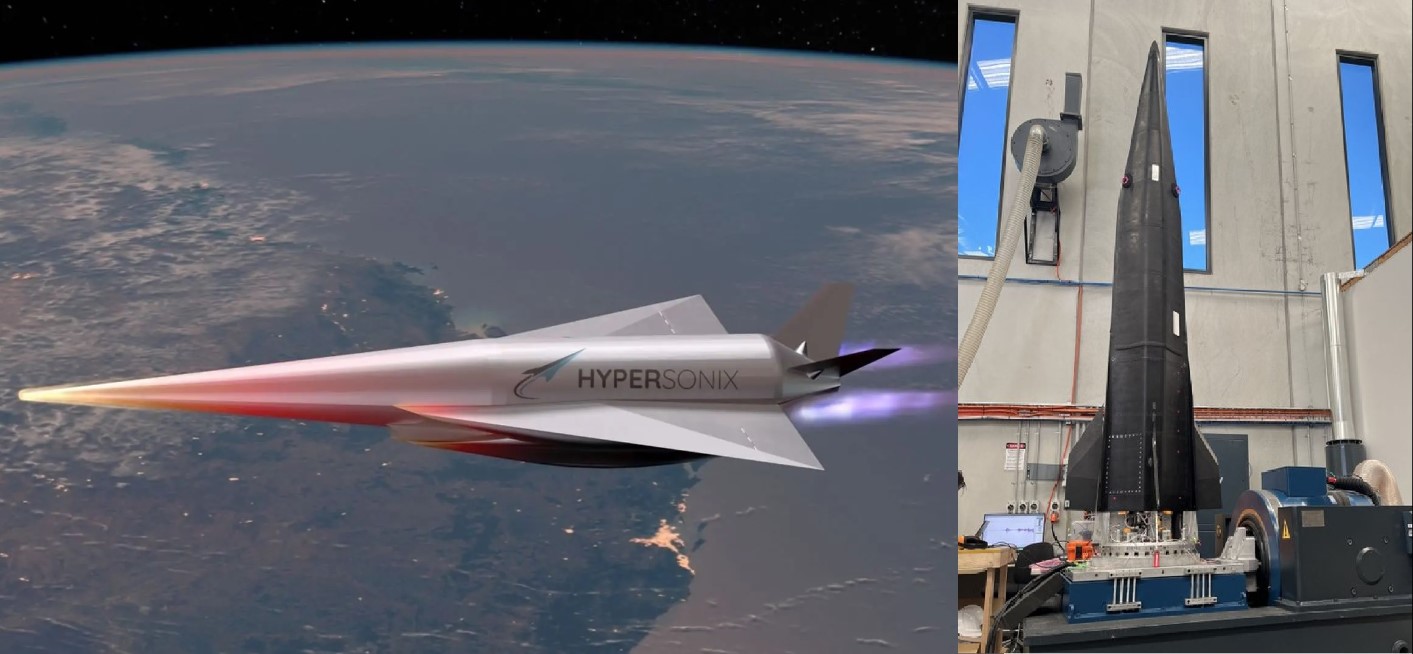
SYDNEY : Australian aerospace firm Hypersonix Launch Systems has cleared a major technical milestone on the path to the first flight of its hydrogen-fueled scramjet demonstrator, announcing that its DART-AE vehicle has successfully completed full-scale vibration testing. The company confirmed the results on Wednesday, January 28, 2026, formally authorizing the vehicle for shipment to the United States ahead of a planned suborbital launch later in the first quarter of the year.
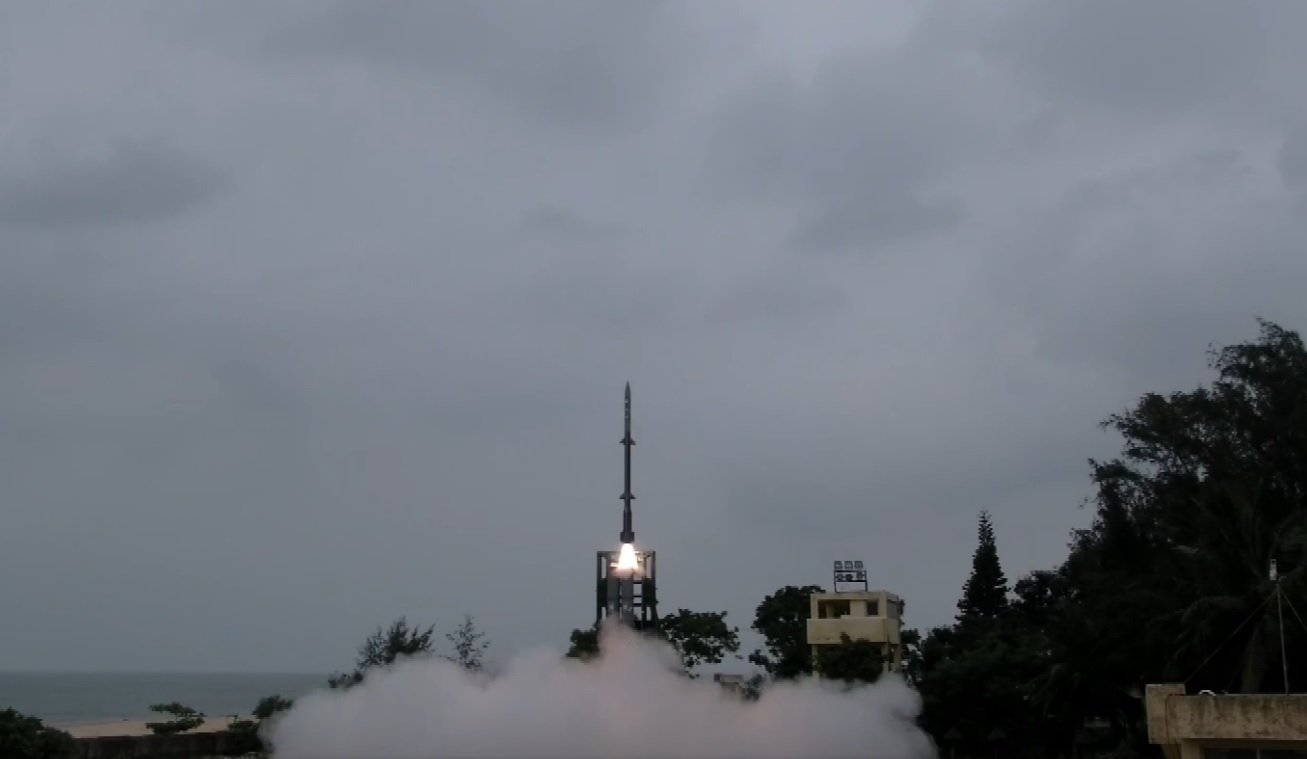
The demonstrator, known as DART-AE—short for Demonstrator for Accelerated Reusable Technology with Additive Engineering—is scheduled to fly aboard a Rocket Lab HASTE (Hypersonic Accelerator Suborbital Test Electron) rocket. The launch will take place from the Wallops Flight Facility in Virginia, where final integration activities are expected to begin shortly after the vehicle arrives from Australia.
Structural Qualification and Additive Manufacturing
Vibration testing, commonly referred to within the aerospace sector as the “shake and bake” qualification process, is designed to replicate the intense acoustic loads and mechanical stresses experienced during launch. According to Hypersonix, the DART-AE airframe and onboard systems were subjected to launch-level vibration profiles representative of the Rocket Lab HASTE ascent environment.
The tests carried particular significance because DART-AE is among the first hypersonic vehicles to be produced almost entirely through high-temperature additive manufacturing. The vehicle’s primary structure is fabricated from Inconel, a nickel-based superalloy selected for its strength and thermal stability at hypersonic temperatures. Successful completion of the tests confirms that the 3D-printed airframe, internal avionics, fuel systems, and propulsion interfaces can withstand high-G loads prior to separation from the launch vehicle.
Hypersonix stated that no structural anomalies or avionics faults were detected during or after the test campaign, allowing the program to advance directly into flight preparations without redesign or requalification.
Launch and Flight Sequence
The upcoming mission will be conducted under the U.S. Defense Innovation Unit’s HyCAT (Hypersonic and High-Cadence Airborne Testing) program, which aims to accelerate the development and demonstration of hypersonic technologies through rapid, lower-cost flight testing.
Under the current mission profile, the HASTE booster will loft the DART-AE to an altitude of approximately 30 kilometers, accelerating it to around Mach 5 before release. Following separation, the vehicle will ignite its SPARTAN scramjet engine, transitioning from a boost phase to autonomous powered hypersonic flight.
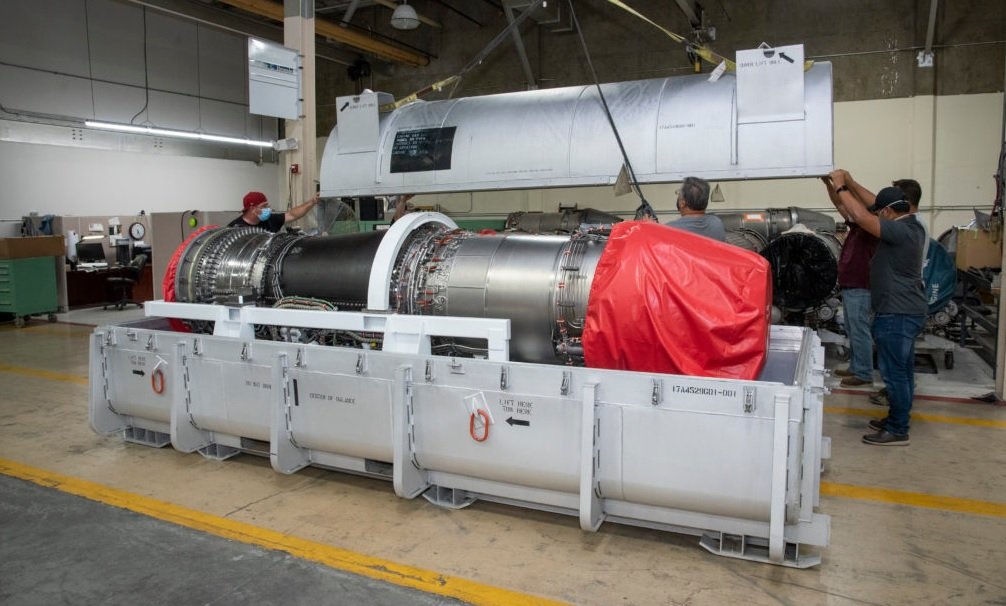
Unlike conventional rocket engines, the SPARTAN scramjet does not carry an onboard oxidizer. Instead, it ingests atmospheric oxygen at high speed, compressing the airflow through its inlet to sustain supersonic combustion of hydrogen fuel. This approach reduces vehicle mass and enables efficient operation within the hypersonic flight regime.
During the test, DART-AE is programmed to accelerate to speeds approaching Mach 7, or roughly 8,600 kilometers per hour. The objective is to demonstrate stable, sustained, non-ballistic hypersonic flight while collecting data on propulsion performance, thermal loads, structural behavior, and vehicle control.
Transportation and Integration in the United States
With vibration qualification complete, Hypersonix is preparing the demonstrator for trans-Pacific transport to Rocket Lab’s U.S. integration facilities at Wallops. Once on site, the vehicle will undergo final checkouts, interface verification with the HASTE launch vehicle, and range safety approvals before entering the launch window.
Rocket Lab’s HASTE platform is a suborbital variant of its Electron rocket, modified to support hypersonic test payloads requiring precise deployment conditions. The system has been positioned as a rapid-response option for government and commercial hypersonic testing, offering repeatable access to relevant speed and altitude regimes.
Hydrogen Scramjets and Emissions Profile
The DART-AE flight also serves as a technology demonstration for hydrogen-based hypersonic propulsion. When operating in scramjet mode, the SPARTAN engine’s primary by-product is water vapor, rather than carbon-based exhaust. Hypersonix has emphasized that while the broader launch system still relies on conventional rocket propulsion, the scramjet phase represents a lower-emission approach to sustained hypersonic flight within the atmosphere.
If the Q1 2026 mission proceeds as planned, it will represent one of the most advanced demonstrations to date of a reusable, additively manufactured, hydrogen-fueled scramjet operating at hypersonic speeds. Data from the flight is expected to inform future DART variants and potential applications across defense testing, space access concepts, and high-speed atmospheric research.
——— End of Article ———