WASHINGTON / TEHRAN : If the United States were to carry out direct military strikes against Iran, Tehran’s response would almost certainly be swift, multi-layered, and deliberately calibrated to reassert deterrence while stopping short of provoking a full-scale regional war, according to a wide range of regional security analysts and former military officials.
Rather than a single dramatic escalation, Iran is expected to rely on a combination of precision missile strikes, drone attacks, proxy operations, cyber warfare, and limited maritime disruption. The objective would be to impose tangible costs on U.S. forces and interests across the Middle East, signal strength to domestic and regional audiences, and restore strategic balance without crossing thresholds that could invite overwhelming American retaliation.
Missile and Drone Strikes as the Primary Response
The most immediate and visible component of an Iranian response would likely involve ballistic missiles and long-range drones targeting U.S. military installations in the region. Iran possesses one of the largest missile arsenals in the Middle East, with systems capable of ranges exceeding 2,000 kilometers, allowing it to reach virtually every major U.S. base from the eastern Mediterranean to the Arabian Gulf.
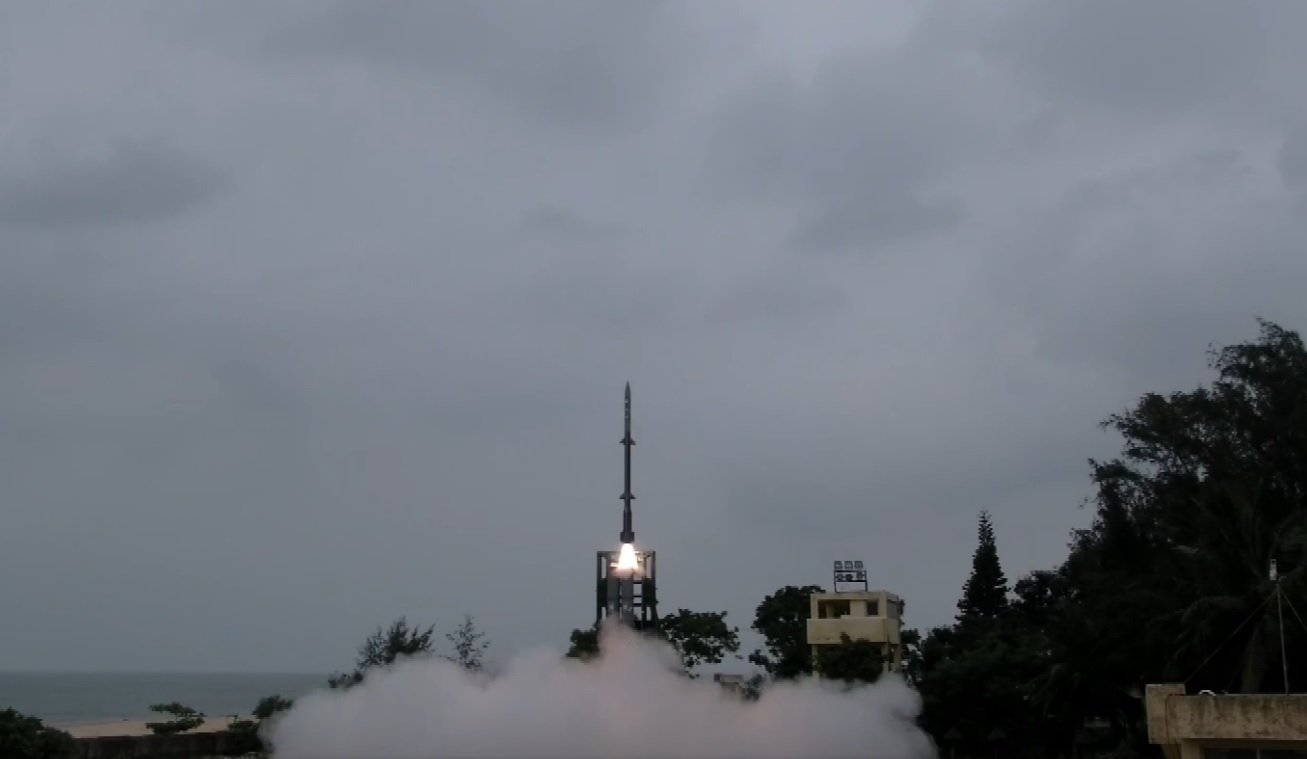
Weapons such as the Kheibar Shekan medium-range ballistic missile and the Fattah hypersonic missile—unveiled by Tehran as a maneuverable system designed to evade missile defenses—would form the backbone of such a response. Iranian officials have repeatedly emphasized precision guidance and saturation tactics, aiming to overwhelm air defenses rather than maximize civilian casualties.
Some defense analysts have pointed to recent Iranian missile tests and argued that certain designs could represent technological steps toward intercontinental capability. U.S. and allied intelligence agencies, however, continue to assess Iran’s operational missile forces as regional rather than true ICBMs, noting that no verified long-range nuclear-capable missile has been fielded. Even so, the perception of expanding reach plays a critical role in Iran’s deterrence messaging.
U.S Bases Squarely in Range
Iran’s planners would not need to look far for high-value targets. Key U.S. facilities across the Middle East lie well within the range of Iranian missiles and drones, and many have been publicly named in Iranian military exercises and state media broadcasts over the years.
These include Al Udeid Air Base in Qatar, which hosts the forward headquarters of U.S. Central Command, the U.S. Fifth Fleet headquarters in Bahrain, Al Dhafra Air Base in the United Arab Emirates, Prince Sultan Air Base in Saudi Arabia, and Iraq-based installations such as Al Asad Air Base. Strikes on such sites would likely be limited in scale, designed to damage infrastructure, disrupt operations, and demonstrate reach rather than cause mass casualties.
Iran’s 2020 missile attack on Al Asad, launched after the killing of General Qassem Soleimani, is often cited as a model response: a direct, acknowledged strike that injured dozens of U.S. personnel but avoided fatalities and stopped short of broader escalation.
Proxy Warfare Across Multiple Fronts
Beyond direct strikes, Iran would almost certainly activate its network of allied militias and regional partners. In Iraq and Syria, Iran-aligned armed groups could increase rocket and drone attacks on U.S. positions, logistics routes, and diplomatic facilities, raising the operational and political cost of maintaining a U.S. footprint.
In Yemen, the Houthi movement could intensify attacks on Red Sea shipping lanes, using anti-ship missiles and drones to threaten commercial and military vessels linked to U.S. and allied interests. Such actions would not only pressure Washington but also reverberate through global energy and trade markets.
Meanwhile, Hezbollah in Lebanon could escalate military pressure on Israel along the northern border, forcing Jerusalem to divide its attention and resources. While a full Hezbollah-Israel war would be risky for Tehran, controlled escalation serves Iran’s broader deterrence strategy.
Cyber Operations and Maritime Pressure
Iran’s cyber capabilities would likely be deployed alongside kinetic operations. Previous Iranian cyber campaigns have targeted U.S. financial institutions, energy infrastructure, water systems, and government networks. In a post-strike scenario, cyberattacks could be used to disrupt services, gather intelligence, and signal Iran’s ability to retaliate below the threshold of armed conflict.
In the maritime domain, Iran could also conduct limited disruptions in or near the Strait of Hormuz, through harassment of vessels, drone surveillance, or the seizure of commercial ships linked to adversaries. Such moves would be carefully calibrated to raise oil prices and international concern without triggering a direct naval confrontation that Tehran could not sustain.
Deterrence, Not Total War
Taken together, Iran’s likely response to a U.S. strike would be lethal, region-wide, and carefully measured. The aim would not be to defeat the United States militarily, but to reestablish deterrence by proving that attacks on Iranian territory carry significant and unavoidable consequences.
For Tehran, escalation management would be as important as retaliation itself. Iranian leaders understand that an uncontrolled spiral could threaten the survival of the regime. As a result, any response would be designed to leave space for de-escalation, whether through back-channel diplomacy, regional mediation, or a mutual decision to halt further strikes.
In that sense, a U.S. attack on Iran would not mark the beginning of a conventional war, but the opening of a complex and dangerous phase of calibrated confrontation—one played out across missiles, proxies, cyberspace, and strategic waterways, with the entire Middle East caught in between.
——— End of Article ———