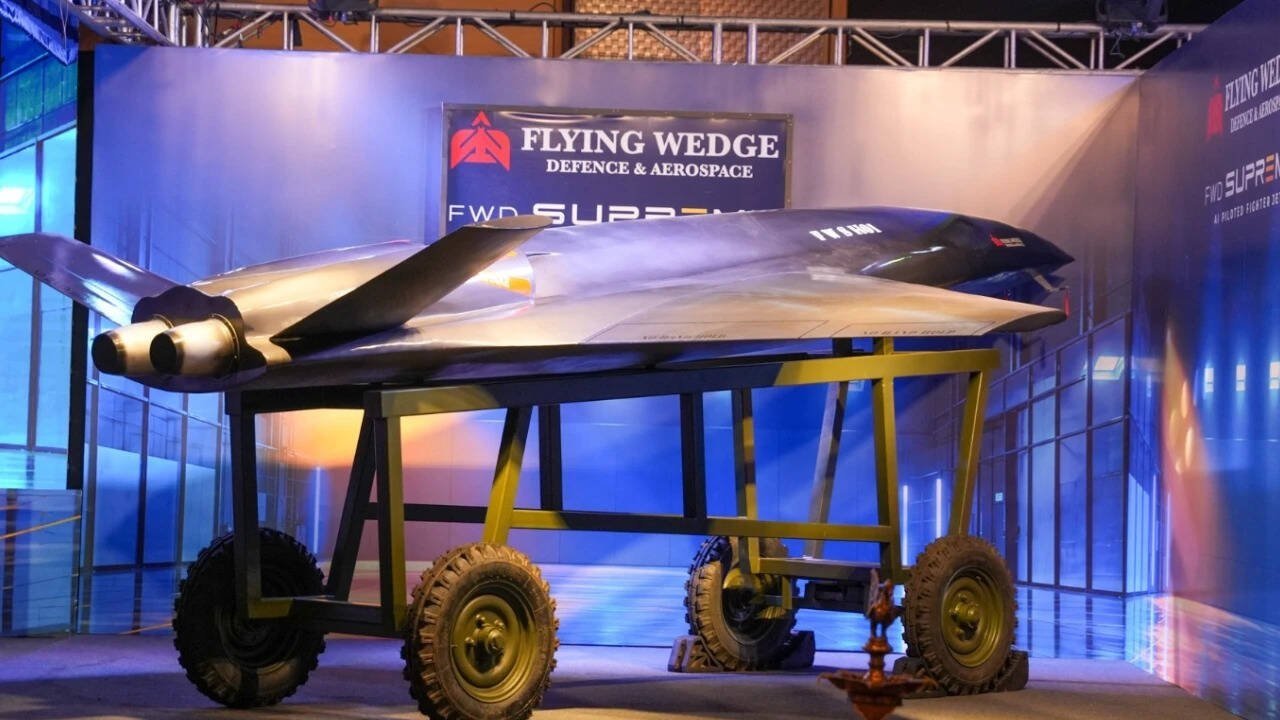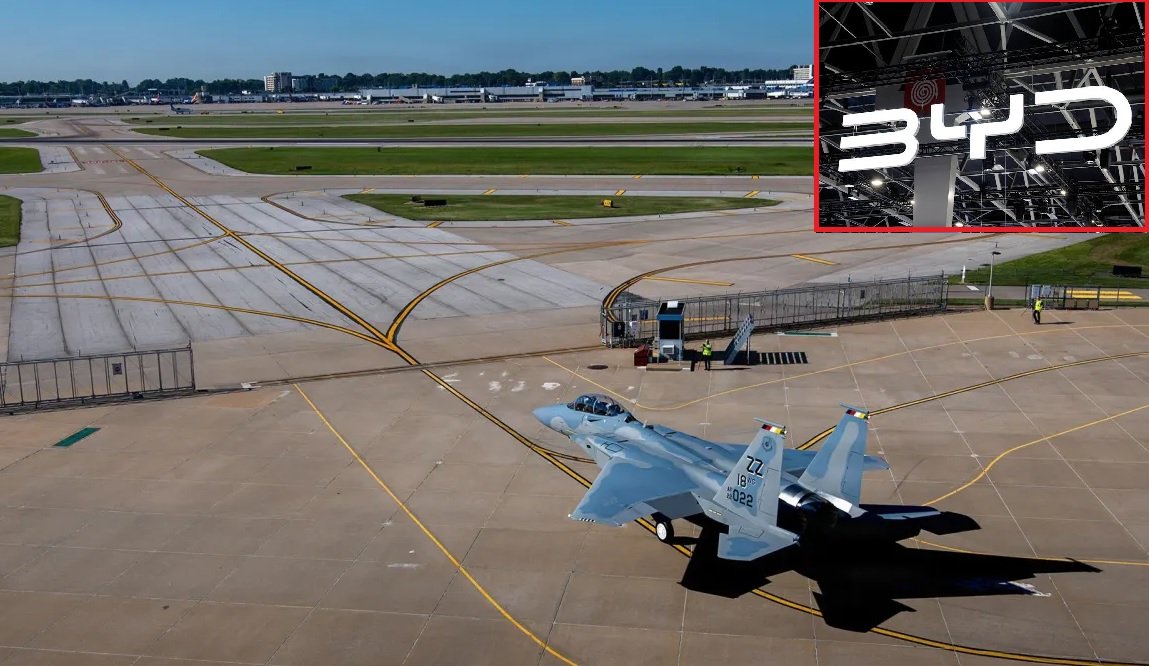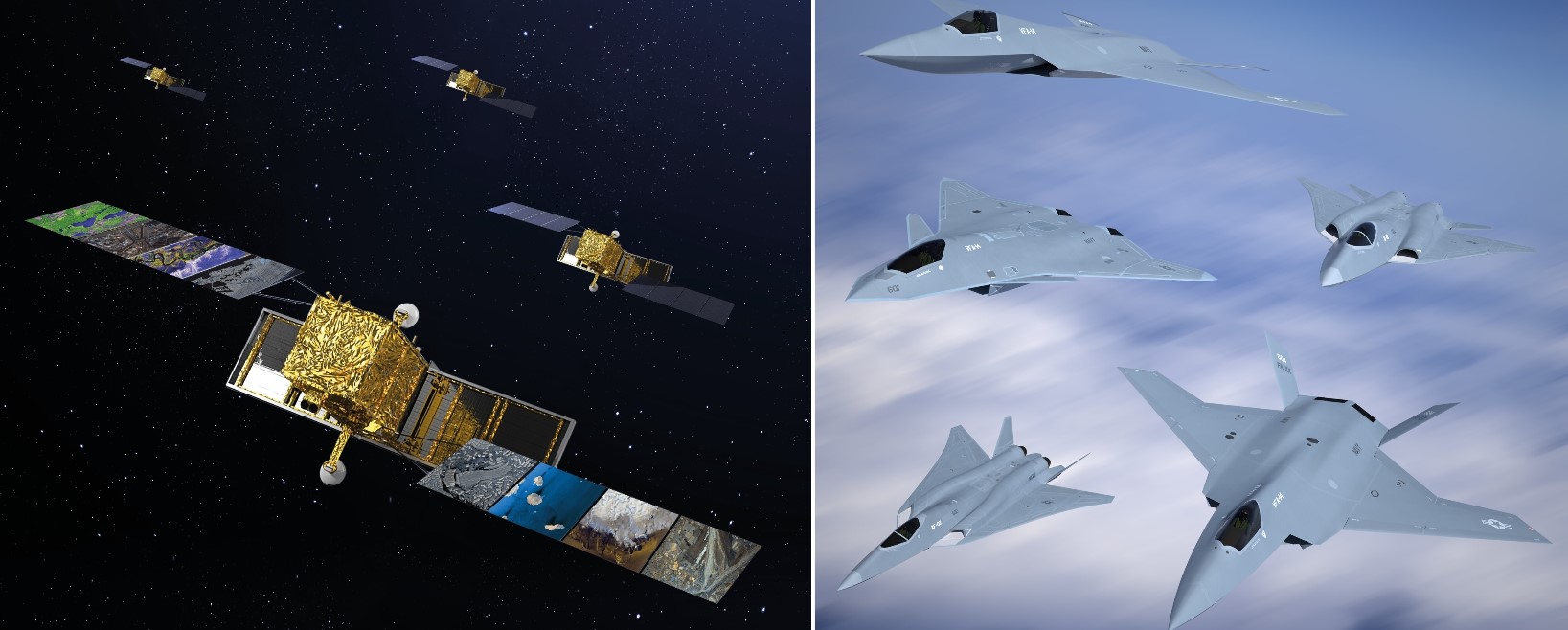
Stealth aircraft such as the U.S. F-22 Raptor, F-35 Lightning II, and reconnaissance drones like the RQ-170 are designed to avoid detection by conventional radar systems. They achieve this through radar-absorbing materials and carefully contoured surfaces that scatter radar waves away from the transmitter. Yet stealth technology is not absolute — it works best against specific radar frequencies. Traditional air-defense radars operating in the X-band or Ku-band (centimeter wavelengths) struggle to detect stealth aircraft, but longer-wavelength radars, especially in the VHF or UHF range, can partially defeat these features. When radar wavelengths approach the size of an aircraft’s wings or fuselage, the aircraft’s stealth shaping becomes less effective, producing detectable reflections even from highly advanced stealth platforms.
The Concept Behind China’s Dual-Radar Satellite
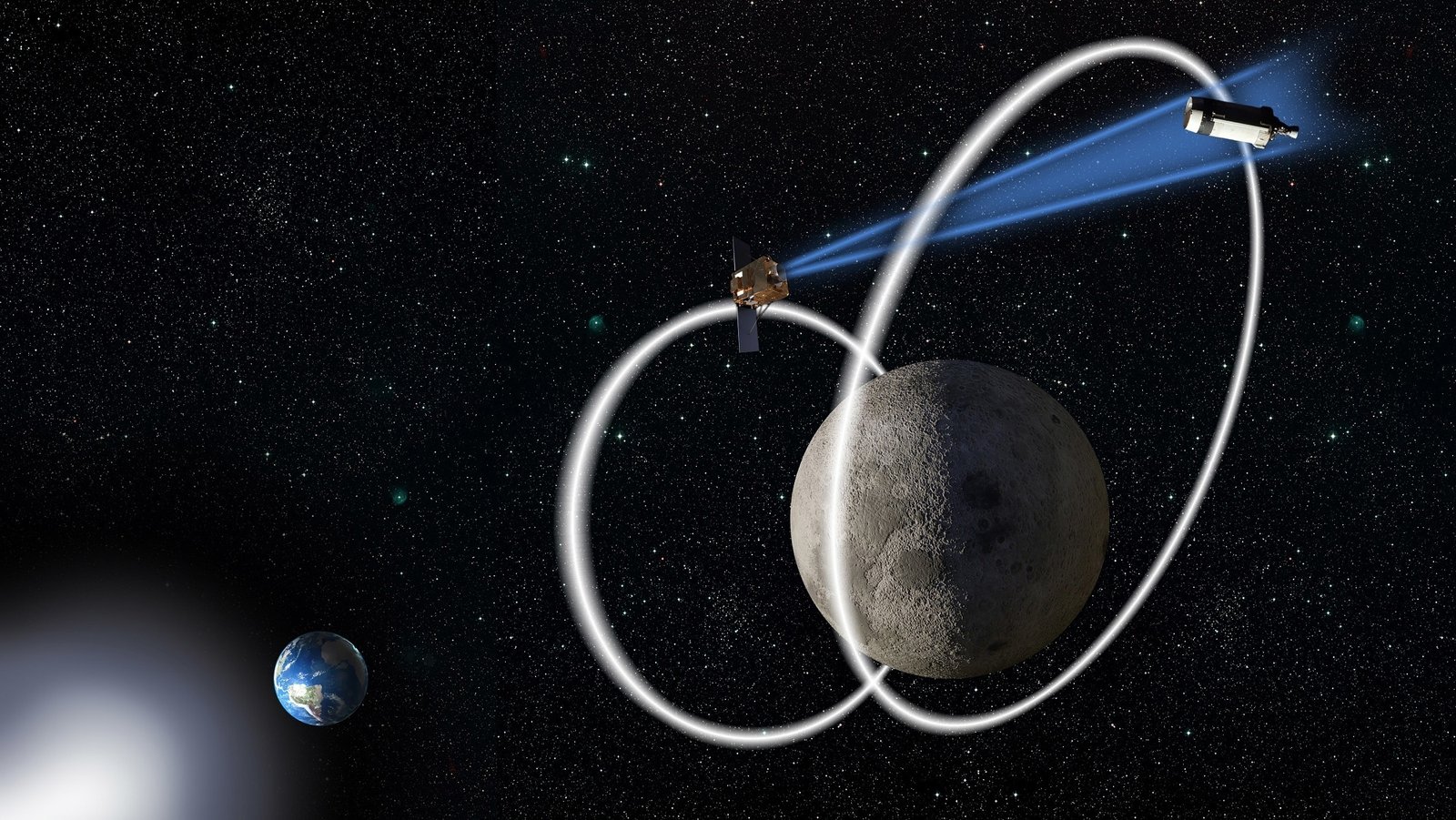
China’s dual-radar satellite concept leverages this principle by combining two complementary radar technologies into a single space-based system. The lower-frequency radar — operating in VHF or UHF bands — acts as a wide-area detector, scanning for anomalies in radar returns that may indicate the presence of stealth aircraft. Once a potential target is identified, the high-frequency Synthetic Aperture Radar (SAR) takes over to refine the image, enhance positional accuracy, and help classify the target. Essentially, the low-frequency radar provides the “eyes,” while the high-frequency radar provides the “focus.” Together, they form a networked detection chain capable of spotting stealth jets and drones from orbit.
How Dual-Radar Satellites Work in Practice
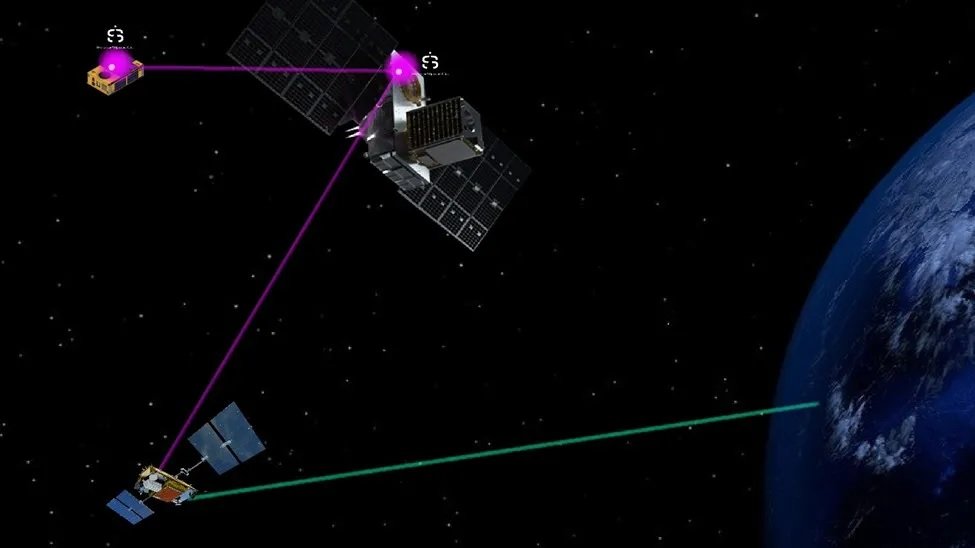
Detecting stealth aircraft from space is not simply a matter of turning up the radar power. Spaceborne radar must overcome the enormous signal loss caused by distance and atmospheric interference. To compensate, China’s approach may use multistatic and bistatic radar configurations, where one platform transmits radar pulses while another receives the reflections from different angles. This geometry makes it much harder for stealth aircraft to deflect all incoming energy. Moreover, researchers are exploring passive radar techniques that use signals from existing satellite constellations, such as communication or navigation networks, to detect disturbances caused by moving objects. When multiple satellites share data, they can fuse weak signals into coherent tracks, turning faint blips into reliable detections.
Signal Fusion and the Role of Artificial Intelligence
A major enabler of this technology is data fusion — integrating inputs from multiple radar bands, optical satellites, and infrared sensors to form a composite picture. Low-frequency radar might indicate the presence of a stealth aircraft, while higher-frequency SAR can confirm its shape and movement. Artificial intelligence (AI) plays a crucial role here, using algorithms to filter out noise and distinguish aircraft signatures from environmental clutter. Chinese academic studies over the past few years have detailed the use of machine learning and micro-Doppler analysis to enhance weak-signal detection. This allows satellites to detect subtle oscillations or reflections that betray the presence of aircraft otherwise invisible to conventional radar.
Engineering Challenges and Technical Constraints
Despite the theoretical promise, building an operational dual-radar satellite faces serious obstacles. Low-frequency radar requires very large antenna apertures to achieve useful resolution, which makes satellite design complex and costly. Long wavelengths are also affected by the ionosphere, introducing distortions that complicate signal processing. Because radar returns are extremely weak from orbital altitudes, high-powered transmitters, large receiving arrays, and sophisticated onboard computing are essential. Even if detection occurs, achieving precise tracking in real time remains difficult, especially when stealth aircraft employ tactics like flying low, using terrain masking, or deploying decoys and jamming.
China’s Progress and Strategic Motivation
China has steadily increased its investment in radar-based space technology. Academic papers and state-affiliated research institutions have discussed long-wavelength SAR imaging, dual-frequency radar models, and AI-based weak-signal extraction techniques. Although many details remain classified, these studies indicate that China aims to integrate its space-based radar with ground-based VHF systems as part of a larger anti-stealth network. Strategically, this fits within China’s anti-access/area-denial (A2/AD) doctrine, intended to monitor and restrict U.S. stealth operations near its borders, particularly in the South China Sea and Taiwan Strait. A functioning dual-radar satellite constellation would allow China to detect, track, and potentially target stealth aircraft over vast regions previously considered safe from surveillance.
Other Countries Pursuing Similar Technologies
China is not alone in this pursuit. Russia has a long history of developing meter-wave radar systems such as the Nebo-M and Konteiner over-the-horizon radar, capable of detecting stealth aircraft at long ranges. While Russia’s experiments with space-based long-wavelength radar are less public, its expertise in ground-based systems remains unmatched. The United States and NATO nations are taking a different approach, focusing on networked radar systems, distributed sensors, and AI-enhanced data fusion to detect stealth threats. U.S. research into quantum and photonic radar aims to improve sensitivity to faint radar reflections, although these technologies are still at the experimental stage. India, through its Defence Research and Development Organisation (DRDO), is developing VHF radar and exploring photonic radar principles, while European countries such as France and the UK are integrating long-wavelength radar data into their space and air surveillance frameworks.
Limitations and Countermeasures
Even with advanced radar constellations, stealth aircraft are unlikely to become obsolete. Detection does not automatically translate to tracking or engagement capability. Stealth designers are already working on broadband radar-absorbent materials (RAM) that can suppress reflections across multiple frequency bands. In addition, electronic warfare systems, deception jamming, and decoy drones can overwhelm radar networks with false targets. Operational tactics, such as emission control or low-altitude flight, will continue to complicate satellite-based detection. Thus, while dual-radar satellites can narrow the stealth advantage, they do not eliminate it entirely.
The Global Race Between Stealth and Detection
The contest between stealth and radar is evolving into a broader race between concealment and awareness. China’s dual-radar satellite represents an ambitious attempt to extend radar coverage beyond the atmosphere, merging spaceborne sensing with terrestrial systems. Yet the same concept — combining low-frequency detection with high-frequency imaging and advanced processing — is now being explored worldwide. The next decade will likely see more hybrid sensing architectures, where satellites, ground radars, and airborne sensors work in coordination.
In the end, stealth will remain valuable but increasingly contested. Just as radar once reshaped warfare in the 20th century, multi-frequency, space-based radar may define the surveillance environment of the 21st. China’s dual-radar satellite program is a signal of that future — one where the balance between invisibility and detection becomes a high-technology struggle fought not only in the skies but across the electromagnetic spectrum itself.
——— End of Article ———